Advocates For Farmworker Protections Embrace A Marathon Mindset
There is a heartbreaking irony to the work Evie Reyes-Aguirre does for Arizona farmworkers and the work those farmworkers do for Arizonans. The same men and women who work in sweltering fields to harvest produce under oppressive summer heat often don’t have access to the healthy food they’re pulling from the ground.
The Harsh Reality for Arizona Farmworkers
Not only is food sometimes hard to come by, but heat relief is, too. Reyes-Aguirre, through her leadership with the nonprofit Tonatierra, is doing her best to tackle both issues while raising awareness about the challenges the farmworkers face.
“Our goal is to provide resources and tools, but also make sure they’re being protected as well with access to water, access to electrolytes, and then working with the farms to make sure they’re providing them with enough breaks,” she said. “They don’t have typical worker rights. Because they are here on visas and some are not, they don’t have the same kinds of rights or protections.”
Tonatierra’s Fight for Protections and Food Access
Tonatierra, an organization that advocates for protection and progress for indigenous peoples, runs a pair of vital programs for Arizona farmworkers that address labor inclusivity and protections as well as food distribution. Sometimes the work is challenging and other times, Reyes-Aguirre said, she finds a welcome, kindred appreciation in agricultural business leaders for the needs of Arizona farmworkers.
Step by step, conversation by conversation, the work the organization is doing to raise awareness about heat relief — with the public and with farm owners — is meaningful.
Partnerships With Farms and Communities
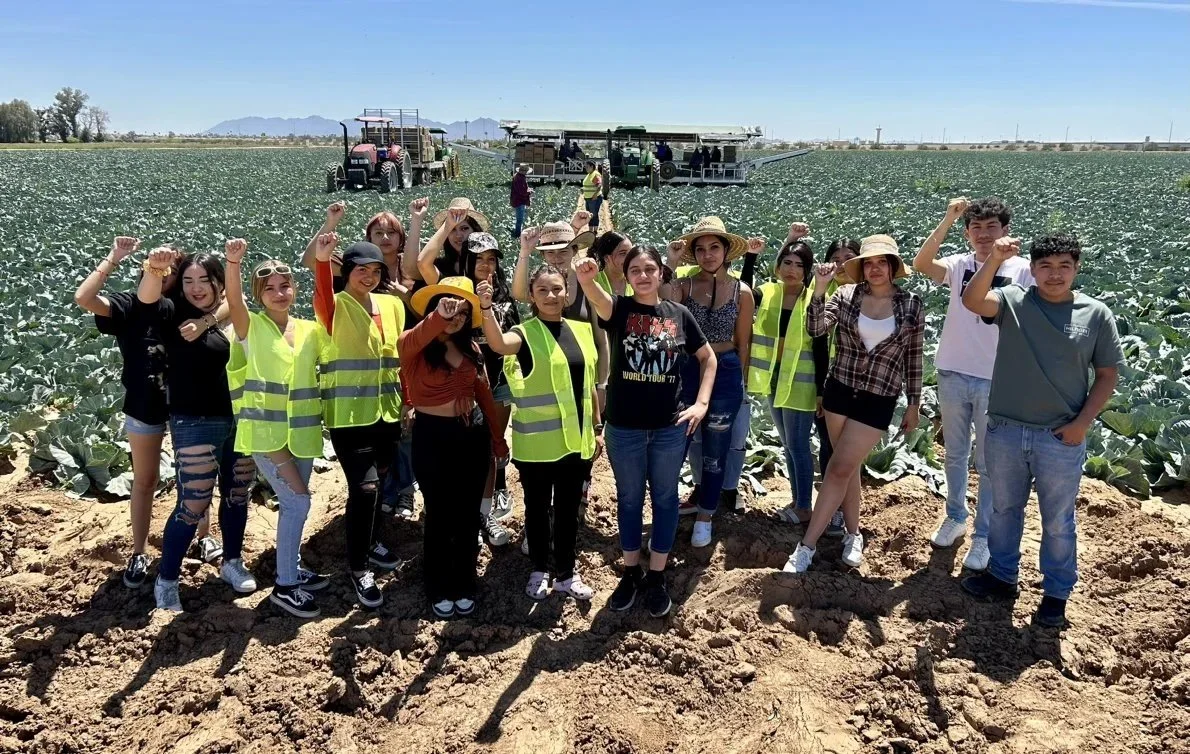
“The family-owned farms definitely recognize the hard work the folks are doing and they want to do what they can to protect them. They are a vital piece of their family. They consider them family,” Reyes-Aguirre said. “Larger agricultural farms look at them as workers. They look at them as a burden when they have to provide basic human rights.”
As a state, Arizona employs nearly 100,000 migrant and seasonal farmworkers, the bulk of which work in Yuma County. According to 2023 data published by the University of Arizona, more than 80% of these farmworkers focus on crop production, giving them significant exposure to the elements. And they do that work as the temperature routinely surpasses 110 degrees.
How You Can Help
To ensure that farmworkers are getting what they need, Tonatierra raises funds for and accepts donations of protective clothing, sunscreen, electrolyte packets and water. The organization holds donation drives throughout the year, especially during the hotter months, and keeps donation boxes available at select locations throughout the Valley. In fact, Reyes-Aguirre encourages the public to host a collection box or drive themselves to help the organization, and most importantly the farmworkers, out.

Tonatierra shares information and locations of collection boxes on their social media channels.
“Mutual aid is probably how we’ve been able to sustain our organization for so long,” she said. “The people in the communities we work with believe in the work we do. And we pride ourselves on representing the voice of the people.”
Reyes-Aguirre said beyond donations, the next easiest way for individuals to get involved and support farmworkers is by volunteering at a food distribution event. They are held every third Friday of the month.
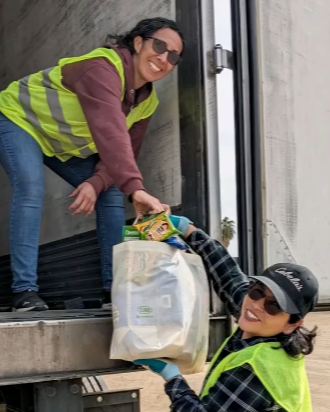
“It’s difficult because it’s really hot,” Reyes-Aguirre said of the food distribution work, which is done under the cover of a shade. “Our volunteers get to come help and really feel physically what it is to be a laborer and work in the field. It’s so important for us to serve them because they are providing the food for us every single day to eat and they don’t even get access to that food.”
The name of the food distribution program, Miltecayotl, translates from the indigenous Nahuatl language to mean “the people who are the essence of the fields.” Everkrisp Vegetables, a family-owned produce farm in the West Valley, was the first local farm Tonatierra worked with for farmworker protections. It was also Tonatierra’s first partner for food distributions. And that network is poised to expand, in part by word of mouth.
Reyes-Aguirre said one off-hand conversation between a volunteer and an artisan baker at Barrio Bread led to a beautiful, regular donation.

“She said she was going to volunteer at the food bank and he said he had bread,” Reyes-Aguirre said. “He filled her SUV with artisan bread just because she mentioned she was going to volunteer. Since then, he’s been donating bread every month.”
A Movement That Demands Endurance
With every food distribution event, and every summer heat relief campaign, Reyes-Aguirre is reminded that the work Tonatierra is doing is a generational commitment. It is a movement that can take one step forward and then fall two steps back, as protections are rolled back or the temperature for social progress changes. Despite setbacks, and maybe even in response to setbacks, the organization has to keep moving forward, she said.
“It really is about making those connections and providing a human understanding to what folks are going through. We’re starting to see it more,” Reyes-Aguirre said. “It’s taken this administration to do horrific things to people for people to stand up and say it’s unjust. We need to use our privilege of having status and protections, and we have something that others don’t. And that’s the real guiding force behind grassroots movements like ours.”
Related Information:
Learn more about protecting the health & rights of Arizona farm workers.
Visit the Tonatierra website for information on volunteering or donating.