
Markets That Only Look Free: Amazon and Wal-Mart
In the first installments of this series, we explored increasing consolidation and how it has reshaped the food system and why it matters so deeply in Arizona. But food is only one place where this pattern shows itself.
The same forces that determine what ends up on our plates also shape where we shop, what we read, how we search for information and which businesses survive in our communities. To understand consolidation fully, we have to look beyond food and recognize how deeply it has woven itself into nearly every part of American life.

Monopolies and unfair practices squeeze the life out of independent local businesses.
Consolidation across American life
But this pattern is much broader. The classic, very visible example is Walmart. Walmart expanded by selling goods at very low prices and paying low wages, while locally-owned stores that paid their workers fairly could not compete. Many closed. Once they disappeared, shoppers had no choice but to rely on Walmart, and their dominance completely altered the landscape of America, whose once-vibrant downtowns filled with empty storefronts and out-of-business signs.
Amazon carried these tactics into the digital world. It attracted customers with low prices and fast shipping; it attracted sellers with access to millions of buyers. Once everyone depended on the platform, Amazon increased fees for sellers, required participation in expensive programs like Fulfillment by Amazon and used its data to clone successful products. Many sellers now pay between 45 and 51 cents of every dollar earned to Amazon through fees. Those sellers must raise their prices everywhere, including their own websites. This is why prices rise across the entire retail landscape.
Amazon also sells search placement. The first result in many Amazon searches is not the best product but the one that paid the platform the most. Many items at the top of search results cost significantly more than better alternatives hidden further down. The digital marketplace has become a pay-to-play arena that disguises itself as a free market.
Local journalism has collapsed under consolidation as well. National chains buy local newspapers, cut staff, reduce coverage and extract profit until the paper closes. Communities lose their watchdogs. Civic engagement falls. Corruption grows. Stories of local impact go untold.
Across these examples, the pattern remains consistent. Consolidation centralizes power. Centralized power reduces choice. Reduced choice erodes freedom.
When “low prices” are engineered behind the scenes
One of the clearest recent examples of how consolidation distorts everyday life comes from newly unredacted court documents involving PepsiCo and Walmart. According to reporting from the Institute for Local Self-Reliance, internal records released as part of a Federal Trade Commission complaint show that Pepsi systematically gave Walmart preferential pricing while actively undermining competing grocery stores.
When regional supermarket chain Food Lion attempted to match Walmart’s lower prices on Pepsi products, Pepsi responded by cutting promotional support and raising Food Lion’s wholesale prices. Internal emails revealed that Pepsi had a “foundational commitment” to maintaining a price gap that kept Walmart cheaper than its competitors. If that gap disappeared, a Pepsi executive wrote, Walmart would pressure the company to take corrective action.
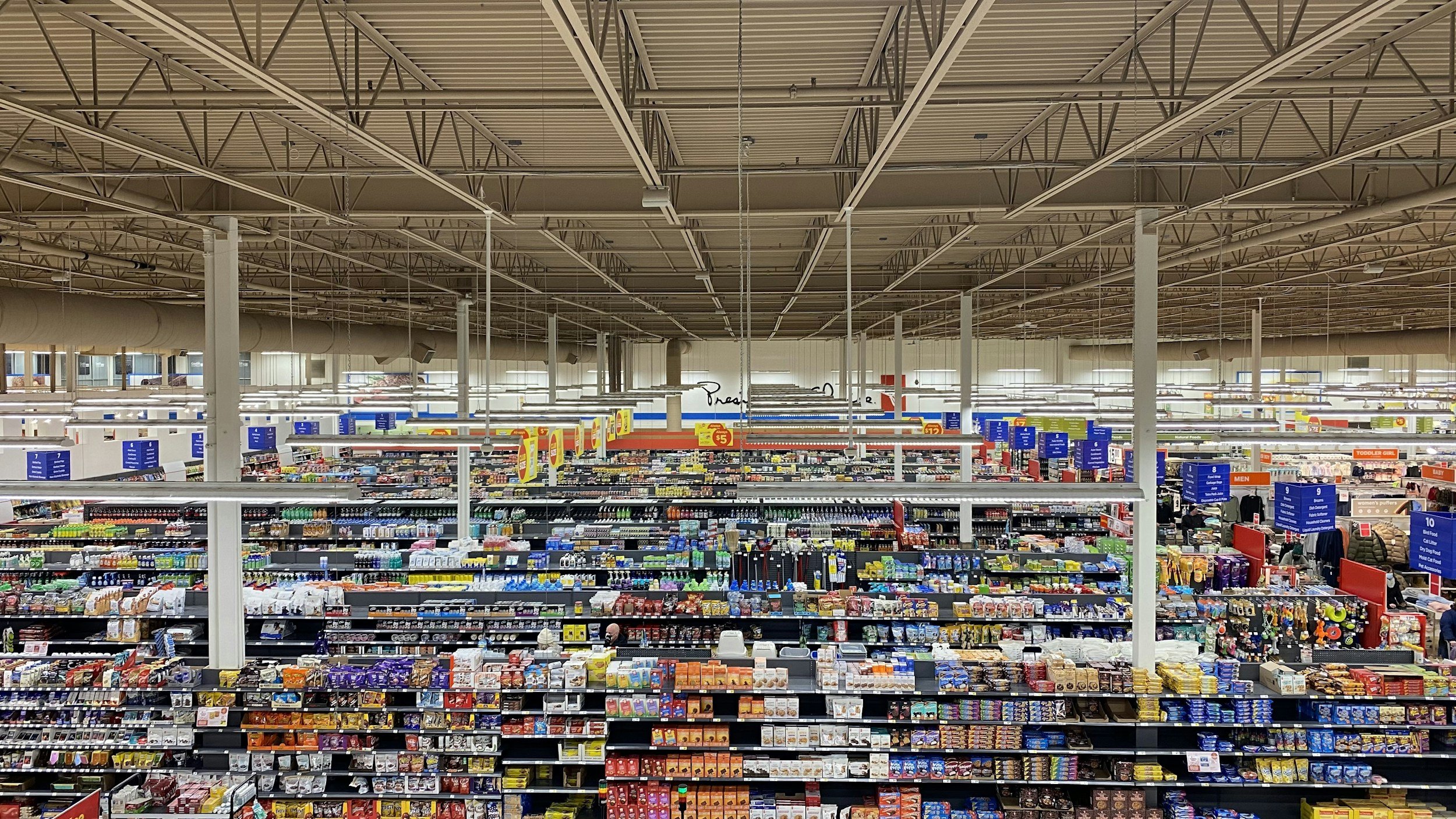
To shoppers, Walmart’s prices appear lower because of efficiency or scale. Behind the scenes, however, the documents suggest a different reality. Walmart maintains its low-price image by working with powerful suppliers to raise costs for rival retailers. Independent grocers and regional chains end up paying more for the same products, forcing them to raise prices or lose customers. Shoppers who avoid Walmart still pay more, and local grocery stores are put at a structural disadvantage they cannot overcome through hard work or innovation.
This case matters far beyond soda. It illustrates how corporate concentration allows powerful companies to coordinate behavior that looks like competition on the surface but functions as price manipulation underneath. It also highlights why transparency matters. The FTC filed its complaint under former chair Lina Khan, but the case was later abandoned, leaving the evidence sealed from public view. The Institute for Local Self-Reliance went to court to unseal the documents so the public could understand how these practices affect grocery bills and local businesses. Their reporting has since reached hundreds of thousands of people online, a reminder that accountability depends on access to information.
For consumers, the lesson is sobering. Consolidation does not always raise prices directly. Sometimes it raises prices everywhere else while protecting the dominance of a single giant. In those moments, the loss is not just higher grocery bills. It is the quiet erosion of local choice and the slow disappearance of independent stores that once anchored communities.
Where To Go From Here
When consolidation spreads across many sectors at once, its effects compound. Fewer choices at the grocery store coincide with fewer retailers on Main Street. Fewer independent sellers online coincide with higher prices everywhere. Fewer local newspapers coincide with less accountability and weaker civic life. These changes are not isolated. Together, they redefine what freedom and opportunity look like in everyday life.
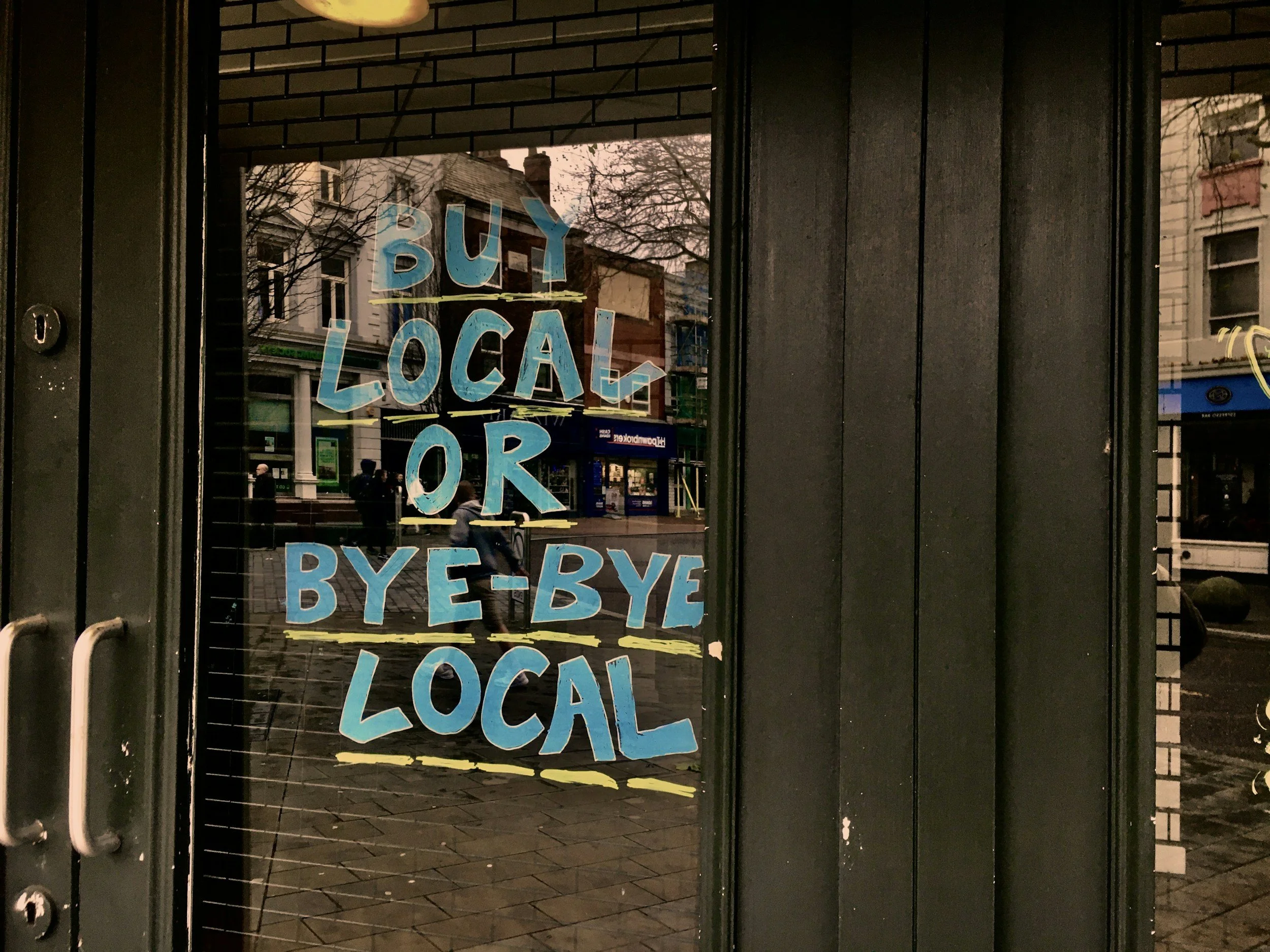
This series is about making those connections visible. When we see consolidation as a shared thread rather than a collection of separate problems, we gain the power to respond with intention. Supporting local businesses, choosing independent retailers, subscribing to local journalism, and paying attention to who controls the platforms we rely on all help push back against the quiet erosion of choice.
As this series continues, we will explore what it looks like to rebuild systems that are rooted in community rather than concentration. The work of reclaiming local identity does not happen in a single sector. It happens wherever people decide that their dollars, their attention and their values belong close to home.
Learn more
Read the first installment of the series on consolidation, The Cost of Sameness: How Consolidation Threatens Local Food, Local Business and Local Identity in Arizona
Read the second installment, A Consolidated Food System: Built for Scale, Not Fairness or Flavor
Explore our Good Food Finder Directory that connects you to local Arizona farms, food businesses, and restaurants
Check out the our Local Business Directory to find locally-owned businesses of all kinds that you can support near you
Explore our entrepreneurship development programs for businesses, farms and food entrepreneurs
Read more about monopolies and consolidation in the food system in Barons: Money, Power, and the Corruption of America's Food Industry by Austin Frerick
Watch this video “I Tracked Down the Company Ruining Restaurants“ from More Perfect Union about how Sysco has overtaken the food system
Read more about how internet companies such as Amazon and Google amass power, gobble up competition and then make life worse for clients and customers in Enshittification: Why Everything Suddenly Got Worse and What to Do About It by Cory Doctorow