What targeted investment makes possible for Arizona’s local food economy
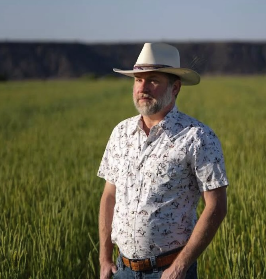
Dax Hansen of Oatman Farms
The 665 acres of rural Arizona farmland that has been in Dax Hansen’s family for generations has had many lives. Most recently, it was a cotton farm. It’s also the site of the historical Oatman massacre. Hundreds of years before that, it was farmed by Indigenous communities.
“There’s so much history,” Hansen said. “People have been living here for thousands of years.”
Its latest incarnation is a regenerative, certified organic farm growing heirloom grains — the first of its kind in the American Southwest.
Reclaiming the Land With a New Approach
Over time, climate change and a falling water table made cotton farming — a water-intensive endeavor — increasingly difficult. Hansen’s extended family wanted out. But tied to the land’s history, and the memories it held from his childhood, Hansen decided to step in and take it over, despite a busy career as a fintech attorney.
He and his wife knew they needed a fundamentally different approach.
“I remember how beautiful it was as a kid,” Hansen said of the farm he now owns about 30 miles west of Gila Bend. “We knew we needed a new approach to farming, so we decided to lean into white Sonoran wheat that’s adapted to our region. It was probably growing right there on our farm 250 years ago.”
From Heirloom Grains to a Growing Supply Chain
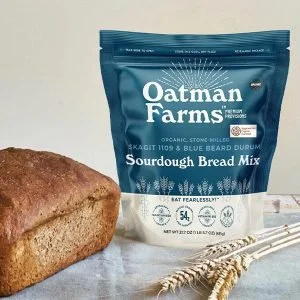
Grains grown at Oatman Farms are milled and turned into food for local schools, bakeries and restaurants — a local supply chain in action.
Seven years after Hansen purchased the land from his family, Oatman Farms has become one of the largest growers of heirloom grains in the country. Those grains now become flours, pancake mixes and vanilla extract — supporting partnerships with schools, Phoenix-area bakeries and restaurants.
“We’ve built out the supply chain,” Hansen said.
They’ve also built a loyal following. Hansen’s favorite fan? A student in a nearby district who goes to school, he joked, “just for the bread.”
The Missing Piece: Infrastructure and Control
What Oatman Farms lacked wasn’t demand — it was control over logistics. The need for refrigeration made the operation dependent on third-party transportation and off-site cold storage, driving up costs and limiting flexibility.
That’s when Hansen noticed a grant opportunity through the USDA’s now-discontinued Regional Food Business Center program. He applied, and Local First Arizona, which administered the funds, selected Oatman Farms and two other operations as recipients of the three available Business Builder Awards. The awards were announced in September, and funding has begun to roll out.
Building Resiliency Through Local Systems
One of the biggest barriers to accessing local food in Arizona is a lack of infrastructure — from processing to distribution — for small and mid-sized farming and food operations. That gap is both a symptom and a consequence of a highly consolidated food system, one that reduces local control and increases vulnerability.
The Business Builder Awards, administered through the Southwest Regional Food Business Center, were designed to address exactly that need.
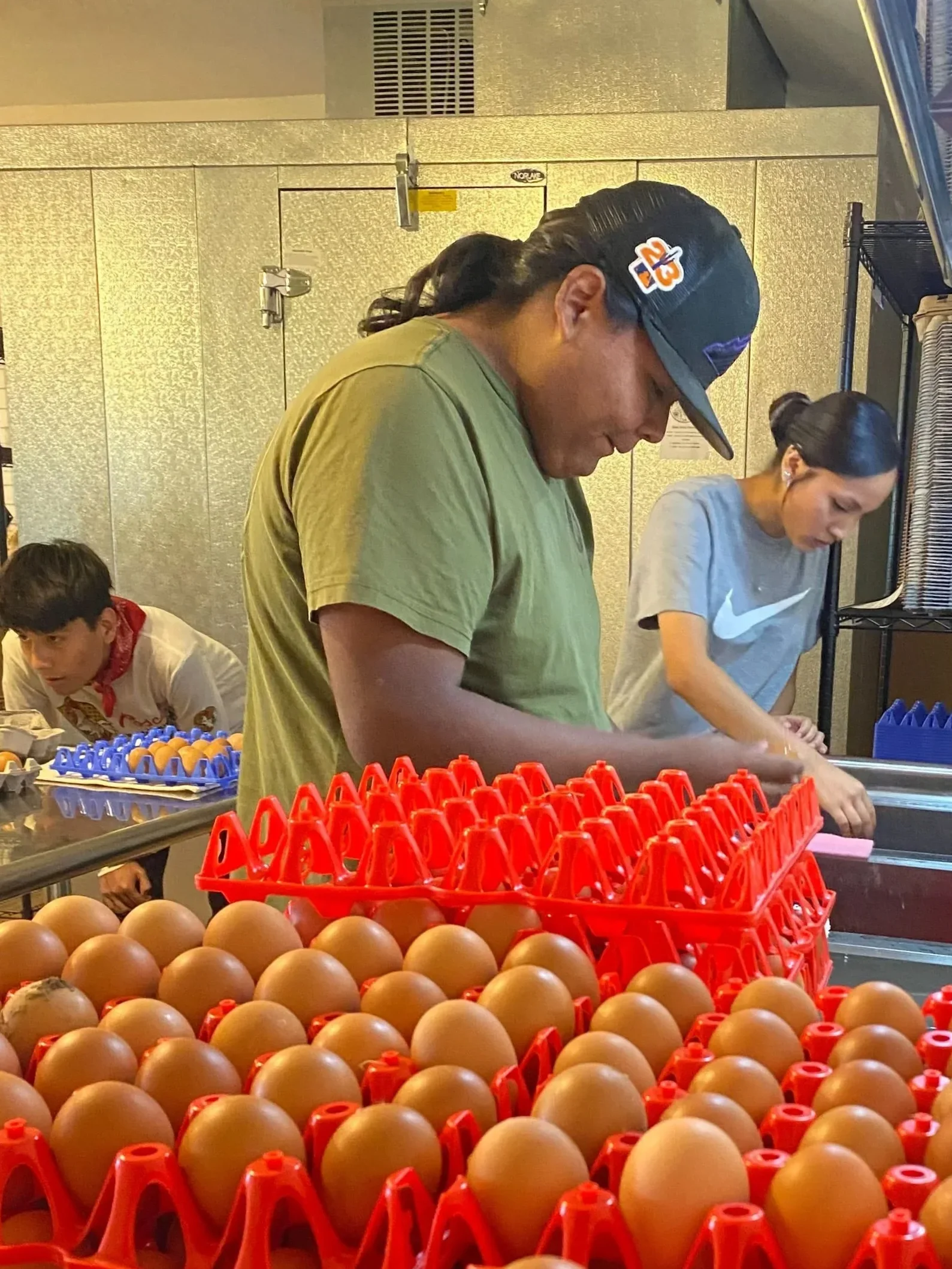
A new commercial egg washer will increase efficiency for the Nalwoodi Denzhone Community’s 200-hen operation on the San Carlos Apache Reservation — strengthening local food production close to home
Although the program was originally funded for five years, both the awards and the regional center lost funding when the Trump Administration revoked support. Despite that loss, Local First Arizona remains committed to strengthening Arizona’s local food economy through programs like its Ag Business Boot Camp and partnerships that expand access to capital.
Continued Support for Awardees and Local Growers
Local First Arizona will continue supporting the Business Builder Award recipients while encouraging consumers to strengthen local food systems by shopping at farmers markets, enrolling in CSAs and spreading the word about the value of locally rooted food economies.
The award recipients exemplify that work in different ways.
The Nalwoodi Denzhone Community on the San Carlos Apache Reservation plans to use its funding to purchase a commercial egg washer, increasing efficiency for its 200-hen operation.
Cattlemen’s Processing, located in Cochise County near Willcox, is expanding its processing capacity to better serve the region’s robust cattle community.
Hansen initially hoped to use the funds to purchase a stone mill — but unable to wait for the grant timeline, he purchased it outright and reallocated the award toward other critical needs.
More Control, Less Dependence
Since receiving the funds, Hansen has invested in freezers for retail partners, a refrigerated shipping container for the farm, reusable bread trays and a pallet wrapper — all coming in under $100,000.
Those additions give Oatman Farms more autonomy over its retail line and reduce reliance on distributor schedules.
“If we’re able to reduce expenses and control our own destiny, it allows us to be more efficient,” Hansen said. “It lets us use the farm as a hub — building a local regenerative food network that starts here and moves through local partners to get food from point A to point B.”
What This Means for Arizona’s Food Future
The upgrades also solved a practical problem. The stone mill, while transformative, took up valuable space previously used for cold storage and packing. With new storage and wrapping capacity in place, the farm can now process, store and ship goods on its own timeline.
But the impact goes beyond efficiency. Investments like these strengthen regional food supply chains by reducing dependence on long-distance, fragile distribution networks. When more steps of production, processing and storage happen closer to home, food systems become more adaptable — better able to respond to disruptions caused by climate extremes, supply chain breakdowns or sudden shifts in demand. The result is not just fresher food, but greater stability, local jobs and stronger food security for Arizona communities.
Hansen put it in perspective:
“Let’s say COVID happened today. With a tight supply chain, you can go from wheat berries to bagels in a matter of two weeks and maintain nutrition,” he said. “We’re making our local economy and food system more resilient — and fresher. It’s regenerative, organic certified food. Who does that?”
Related Information:
Explore stories of other Business Builder Award winners
Learn more about consolidation in food systems
Check out the Devour Good Food site for information on buying and supporting local food across Arizona
Learn about Local First’s programming for food entrepreneurs, from our Good Food Boot Camp and Community Kitchen Incubator to our recently launched Ag Business Boot Camp and more