
What Are Desert-Adapted Crops? Arizona’s Climate-Smart Foods Explained

In Arizona, farming has always been an act of adaptation.
With limited water, intense heat, sandy soils and unpredictable rainfall, the crops that thrive here are often the ones that have spent centuries learning how to survive in the desert.
These are called desert-adapted crops: foods naturally suited to arid environments that require less water, tolerate extreme temperatures and often improve soil health while producing deeply flavorful, nutrient-dense food.
In a hotter, drier future, they may also help shape a more resilient food system for Arizona and the Southwest.
From tepary beans and blue corn to prickly pear, agave and heritage wheats, these crops are rooted in Indigenous agricultural knowledge and are increasingly being embraced by Arizona chefs, brewers, farmers and consumers looking for sustainable ways to eat and grow food in the desert.
Common Desert-Adapted Crops in Arizona
Arizona is home to a surprising number of crops that thrive in desert conditions. Some have been cultivated here for thousands of years, while others are now being rediscovered as climate-smart alternatives to water-intensive agriculture.
Some of Arizona’s best-known desert-adapted crops include:
Prickly pear cactus, including the fruit and pads, called nopales
Chiles, such as chiltepin
Squash, like Cushaw squash
Desert herbs and native fruits like elderberry and wolfberry
What Makes a Crop “Desert-Adapted”?
Desert-adapted crops have evolved, or have been selectively cultivated over generations, to survive in dry climates with minimal water.
These crops often:
Require less irrigation
Tolerate extreme heat
Thrive in poor or rocky soils
Resist drought and pests naturally
Work well with regenerative agriculture practices
Support pollinators and biodiversity
Many also pair well with climate-smart farming techniques such as drip irrigation, cover cropping, rainwater harvesting and reduced tillage.
Unlike conventional commodity agriculture, which often depends on large amounts of water and chemical inputs, desert-adapted farming works with the realities of the Southwest landscape rather than against them.
Tepary Beans: Arizona’s Ancient Superfood

Tepary beans have been cultivated in the Southwest for thousands of years and are considered one of the world’s most drought-tolerant beans. Indigenous communities, especially the Tohono O’odham, developed these beans specifically for desert growing conditions.
They are rich in protein and fiber, naturally low-water-use and increasingly recognized as a climate-smart crop for the future.
At Three Sisters Bean Farm, Shonri Begay is focusing heavily on tepary beans as drought conditions intensify. The farm uses cover cropping and soil-building practices to improve resilience while growing food in a small urban Flagstaff setting.
Tepary beans are also becoming more visible on restaurant menus across Arizona as chefs embrace heritage foods with strong ties to the region.
Blue Corn: A Heritage Grain Built for the Desert
Blue corn has been grown in the Southwest for centuries, particularly by Indigenous communities practicing dryland farming. Compared to conventional corn, blue corn requires less water and thrives in arid environments.
Its earthy, nutty flavor and high antioxidant content have made it increasingly popular in tortillas, tamales, pastries and even craft beer.
Like many desert-adapted foods, blue corn is both culturally significant and environmentally resilient, making it a powerful example of how Indigenous agricultural knowledge continues to shape Arizona’s food future.
White Sonora Wheat: Arizona’s Heritage Grain Revival

White Sonora wheat is one of North America’s oldest wheat varieties and has become a symbol of Arizona’s local grain movement.
Unlike many modern commodity wheats, White Sonora grows well in Arizona’s dry climate, develops deep roots and requires relatively little water.
Today, Arizona chefs, bakers and breweries, from Barrio Bread to Pizzeria Bianco to Wren House, use White Sonora wheat to create foods with a true sense of place.
Its revival reflects a broader shift toward foods that are not only delicious, but also adapted to Arizona’s environment.
Agave: One of the Southwest’s Most Resilient Crops
Agave may be best known as the plant behind tequila and mezcal, but it’s not just for beverages. Agave has long been used throughout the Southwest for food, fiber and medicine.
Few crops are better adapted to desert life.
Agave can survive extreme heat, grow in poor soils and thrive with very little water. It stores moisture in its thick leaves and uses an ultra-efficient photosynthesis process that minimizes water loss.
At Montapata Farms, Dominique and Trinity are growing agave alongside prickly pear and elderberry while exploring value-added desert food products.
Meanwhile, Forever Yong Farm is cultivating agave southwest of Tucson using low-water desert farming methods.
Prickly Pear: Arizona’s Iconic Desert Food
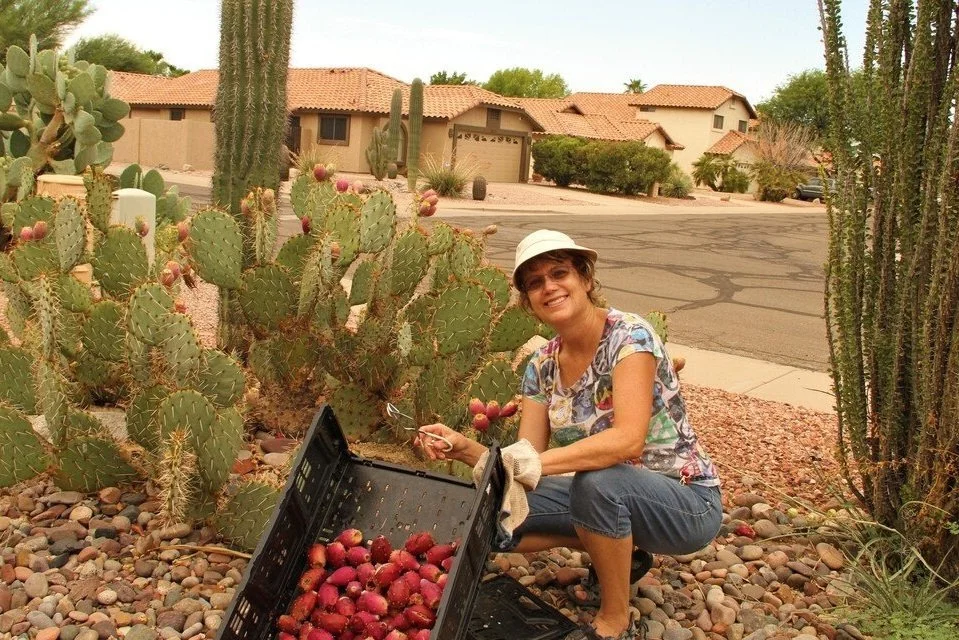
Prickly pear cactus grows naturally throughout Arizona, but farmers are increasingly cultivating it as both a culinary ingredient and a desert-adapted crop.
Its fruit can be turned into syrups, jams and beverages, while the pads — called nopales — are eaten as a vegetable rich in fiber and nutrients.
At Toadlet Farm, prickly pear grows alongside fruit trees and livestock on historic farmland near Mission San Xavier del Bac.
In southeastern Arizona, Arevalos Farm grows nopales on a large multi-generational family farm, while Desert Sky Produce focuses on prickly pear fruit production.
Urban growers are also joining the movement. Rachel Opio at Little Lighthouse Urban Farm is helping introduce prickly pear into Phoenix’s emerging urban agriculture scene..
The Future of Food in the Desert
Desert-adapted crops are not just relics of the past: they may be essential to the future of food in the Southwest.
As Arizona faces increasing climate pressure, these crops offer a model for how agriculture can adapt while preserving culture, supporting local economies and producing incredible flavor.
They remind us that the desert is not barren. It is abundant — if we learn to grow with it.
And increasingly, Arizona farmers, chefs and communities are doing exactly that.