
The Cost of Sameness: How Consolidation Threatens Local Food, Local Business and Local Identity in Arizona

Think back to the last time you went out for a simple meal. Maybe a burger. Maybe some wings. You flip through a familiar set of appetizers: the same fried pickles, the same onion rings, the same jalapeno poppers. You take a bite, enjoy it well enough and then see the bill. The price stings. As you leave the restaurant, a surprising thought creeps in. You could have eaten this exact meal almost anywhere in the country.
You are not imagining the sameness, and you are not imagining the rising cost.
Many restaurants, especially chains, now get most of their ingredients from the same handful of national distributors. Grocery stores face the same pressures. Shoppers face rising prices and declining quality. Online retailers sell products that break within weeks. Meanwhile, paychecks cover less and less. Search engines serve more ads than answers. Local newspapers close. Local farms disappear. Local restaurants either struggle or narrow their menus. The experience of daily life feels thinner and more expensive.

There is a reason for this. It is not a single decision or a single company. It is a pattern that has reshaped American life for decades: consolidation.
Consolidation is the process through which many independent producers, sellers and distributors become absorbed into the control of a few very large companies. As these very large companies grow larger, they stifle competition, bend political will in their favor and find new ways to extract profits.
Americans from every walk of life feel the effects in their homes, their wallets and their communities, even if they have never used the word monopoly for anything beyond the board game. Accelerating rapidly over the past 40 years, the story of consolidation has become the story of why food tastes the same, why groceries cost more and why small businesses and family farms find it harder to survive.
Arizona feels the impact of consolidation earlier and more intensely than many states. Water scarcity makes our farms especially vulnerable to the decisions of a few powerful players, including the twenty families in California’s Imperial Valley who hold more Colorado River water than the entire state of Arizona. At the same time, we have lost nearly 2,400 farms in five years — a 12% drop that reshapes food access and weakens the diversity of crops grown here.
And the pattern extends far beyond food. Arizona has also watched local newspapers close or consolidate under out-of-state chains, leaving many communities without meaningful local reporting or accountability. When large distributors, large growers and large media companies dominate the landscape, it becomes harder for Arizona restaurants to source local ingredients, harder for small farms to survive, harder for local businesses to compete and harder for our stories to be told by people who live here.
The long American tradition against monopoly power
Concerns about monopolies are older than the United States. Adam Smith, viewed by many as the father of capitalism, warned that large companies would always try to limit competition, raise prices and tilt the market toward their own interests. He believed that concentrated corporate power was a danger to personal freedom and described monopolies as an order of men whose interest would never align with the public.

The Founding Fathers agreed. The Boston Tea Party was as much a rebellion against monopoly power as it was against taxation. Colonists were protesting the East India Company’s exclusive control over tea. Thomas Jefferson wanted freedom of commerce protected against monopolies, while James Madison described monopolies as sacrifices of the many to the few. Across the political spectrum of their era, the message was the same: economic power must be dispersed so liberty can survive.
Two hundred fifty years later, many sectors of American life are dominated by a small number of corporations, and the rhetoric of an open market is used to justify a landscape that does not resemble a free market at all. When four companies control 85% of grocery store meat, when one distributor can determine what most restaurants serve and when a few internet giants mediate nearly every online transaction, the market is not open. It is captured.
How monopolies gain power
Large companies grow through a combination of deregulation, aggressive mergers and favorable legal interpretations. Once they grow past a certain point, they gain market power, and market power allows them to raise prices without losing customers. It allows them to set the prices paid to farmers, ranchers and small businesses. It allows them to acquire competitors or force them out.
Unchecked market power allows corporations to:
Charge unfair prices
Stifle innovation
Set the prices paid to independent producers
Break labor unions
Lower wages
Shape supply chains
Acquire competitors before they can grow
Once these conditions exist, the market no longer responds to the choices of many companies; it responds to the decisions of a few executives. These dynamics have played out across American agriculture, technology, retail, media and more, yielding an economy where a handful of companies set the terms for everyone else.
And there are consequences for everyone. For example, CEO pay at the largest American companies has increased by more than 1,300% over the past 30 years; in the same timeframe, worker pay has increased by 18%. You may think the minimum wage has stayed the same, but the inflation-adjusted minimum wage has fallen from $12.54 in the early 1970s to $7.50 today. For the poorest workers, real wages have fallen by about 40%.
These are the hallmarks of monopoly power.
Where We Go From Here
This moment calls for clarity and curiosity. The forces reshaping our daily lives did not arise overnight, and understanding them is the first step toward reclaiming the choice and character that once defined our communities. This blog marks the beginning of a series that will explore consolidation in greater depth, starting next with the food system, where the effects are most visible in Arizona and most urgent for our future.
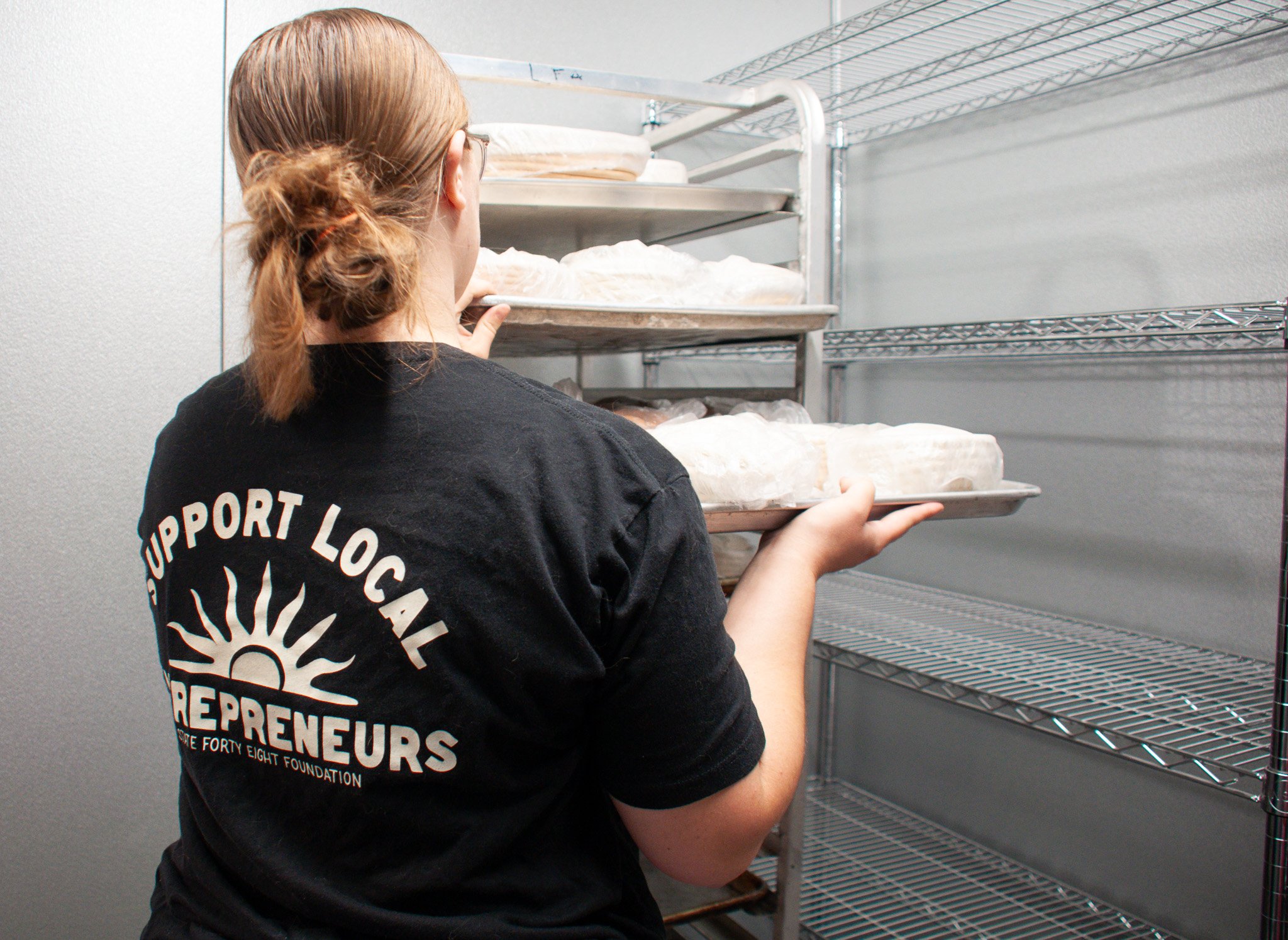
As the series continues, you will see how the ingredients on our plates, the farmers who grow them, the restaurants that serve them, and the distributors who move them are all shaped by the same pressures. You will also see how Arizona’s growers, chefs, and small businesses are carving a different path, one rooted in resilience, flavor, and community pride.
Your role in that future is real. Every local purchase strengthens a small business. Every local meal preserves culinary identity. Every locally grown ingredient keeps our dollars circulating close to home. Explore Good Food Finder to discover Arizona farms and producers. Visit locally owned restaurants. Seek out independent retailers. Attend events that celebrate regional flavor, such as the Devour Culinary Classic. Participate in programs that empower entrepreneurs and strengthen local supply chains.
Each choice you make helps write a different story for Arizona, one where the taste of this place is shaped by the people who live here, not by distant corporations. By choosing local food, local businesses, and local stories, we reclaim the power to decide what our communities will become and ensure that Arizona’s identity remains homegrown.
Learn more
Explore our Good Food Finder Directory that connects you to local Arizona farms, food businesses, and restaurants
Check out the our Local Business Directory to find locally-owned businesses of all kinds that you can support near you
Explore our entrepreneurship development programs for businesses, farms and food entrepreneurs
Read more about monopolies and consolidation in the food system in Barons: Money, Power, and the Corruption of America's Food Industry by Austin Frerick
Watch this video “I Tracked Down the Company Ruining Restaurants“ from More Perfect Union about how Sysco has overtaken the food system
Read more about how internet companies such as Amazon and Google amass power, gobble up competition and then make life worse for clients and customers in Enshittification: Why Everything Suddenly Got Worse and What to Do About It by Cory Doctorow