Under Threat, CDFIs Provide Vital Financial Support For Small Business Owners
Editor’s Note
At Local First Arizona, access to capital isn’t an abstract policy issue — it’s a day-to-day reality for the small business owners and communities we work alongside across the state. From rural healthcare providers to first-time entrepreneurs, too many Arizonans are locked out of traditional financing, even when their businesses meet real, urgent local needs.
That’s why Local First Arizona recently joined with the National Community Reinvestment Coalition in urging the U.S. Department of the Treasury to fully staff and support the Community Development Financial Institutions (CDFI) Fund. CDFIs play a critical role in filling gaps left by conventional banks, particularly in rural, tribal and historically underbanked communities — many of the same places Local First focuses its work.
The story below illustrates what’s at stake. When CDFIs are supported, small businesses can launch, grow and serve their communities. When they’re under threat, the ripple effects are immediate — and deeply personal.
A Rural Healthcare Vision, Rooted in Personal Loss
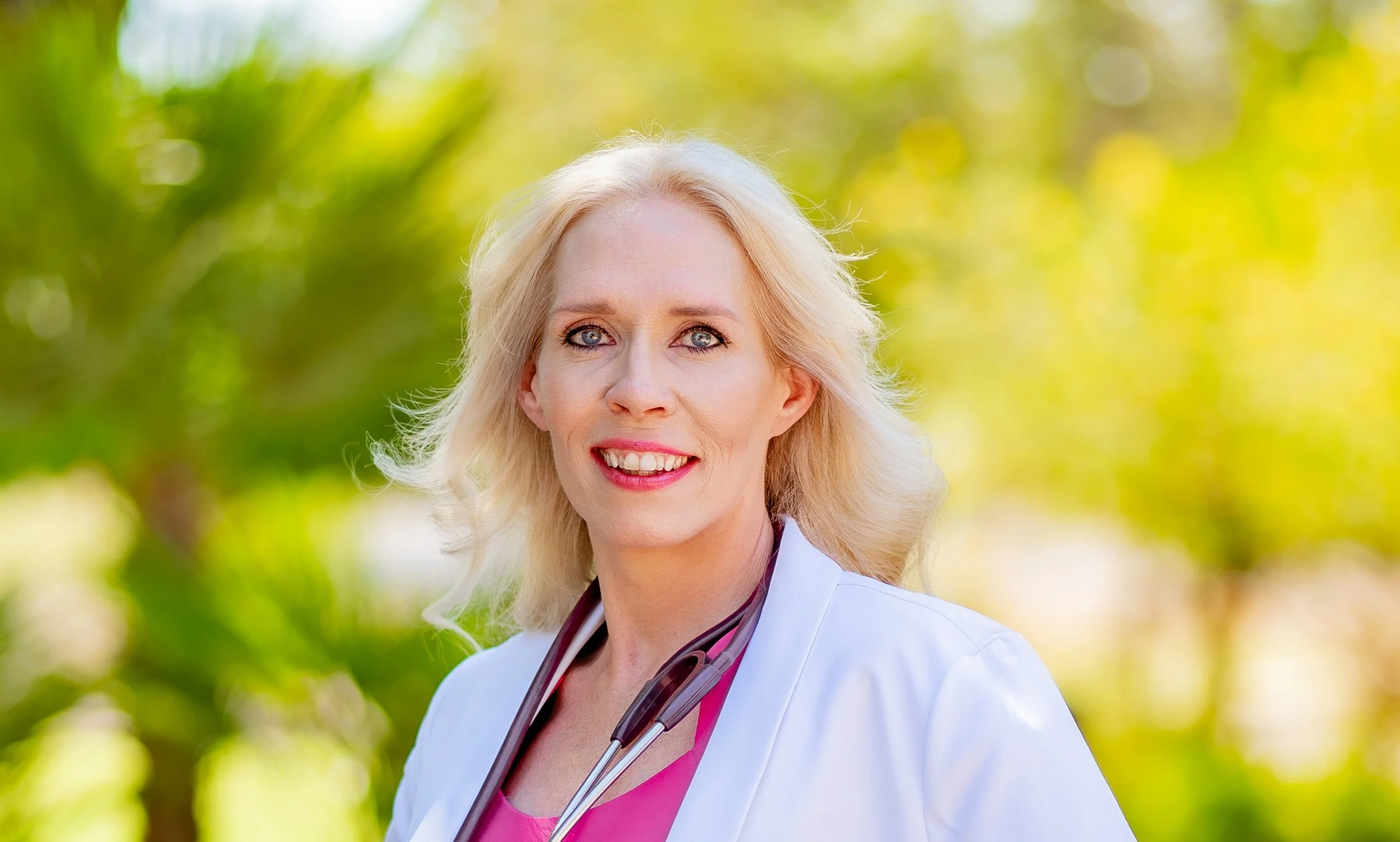
Owner of Grace Primary Care, Tammy Frost, BS, MSPAS, PAC
When Tammy Frost relocated from California to Prescott and decided to open a primary care clinic, she knew she would be meeting a need in the community. Yavapai county is a federally designated, medically underserved area that has been identified as a health professional shortage area.
Data indicates the county has high rates of opioid misuse, and it’s also home to an aging population, which could lead to more people living with chronic disease.
For Frost, the demand for care in rural areas was clear. And, her commitment to working toward meeting that demand was deeply personal — shaped by years of watching her father struggle to access care while living in the rugged, isolated Arizona community of Beaver Dam.
“He truly passed away from not receiving quality healthcare,” she said. “That impacted a lot of the choices I’ve made to work in rural healthcare.”
“CDFIs are mission-driven to provide access to capital to regions and individuals who are typically underbanked, and many times that means working with women and minorities, and in low-income areas. As federal mandates pointedly diminish funding for initiatives that support diversity, equity and inclusion, CDFIs are feeling the pressure.”
When Traditional Banks Fall Short
Making it work became more challenging as the practice grew. Frost had launched Grace Direct Primary Care with her own savings — a common path for entrepreneurs committed to getting their ideas off the ground. But when the time came to expand, that same self-reliance became a barrier.
Without a long credit history or traditional collateral, her corporate bank wasn’t able to offer the financing she needed, despite the business’s clear demand and momentum. It’s a familiar catch-22 for small business owners: invest personally to prove the concept, then struggle to access capital when growth finally becomes possible.
What CDFIs Do — and Why They Matter
While her corporate bank wasn’t willing to finance Grace Direct Primary Care’s expansion, Growth Partners AZ, a Community Development Financial Institution (CDFI) and partner of Local First Arizona, was.
CDFIs are specialty financial institutions that offer affordable loans, credit and investments to underserved populations. They are funded by a mixture of federal grants and credits, philanthropic support, private investments and their own earned income.
In many rural and low-income areas, where access to capital is hard to come by, CDFIs fill a financial gap, acting as a catalyst for economic growth. Eleina Ouaffai, strategic initiatives and operations manager with Growth Partners AZ, said CDFIs offer small business owners a safe financing option with fewer barriers than traditional banks.
“Many people don’t even know CDFIs exist. What really distinguishes a CDFI from a bank is it’s a mission-driven nonprofit that provides financing to communities.”

Celebrating the opening of the expanded Drink Me Tearoom, a Local First/Growth Partners “Green Loan Fund” recipient
Character-Based Lending and Community Trust
One of the most unique aspects of CDFIs is their character-based lending — a holistic approach where lenders assess loan risk by focusing on a borrower's reputation, community ties, business plan and commitment, rather than solely on traditional credit scores.
This practice allows them to serve communities and individuals often overlooked by mainstream banks. It uses qualitative factors like community knowledge and relationship-building to evaluate an applicant's potential for success and repayment, making capital more accessible for small businesses and entrepreneurs.
For lenders such as Growth Partners AZ, evaluating a business like Grace Primary Care goes beyond traditional credit scores. It includes assessing the owner’s commitment, planning discipline, community need and the real-world viability of the business model — factors that often matter more than legacy financial history when funding essential services in underserved areas.
Local First Arizona’s Green Loan Fund, operated in partnership with Growth Partners AZ, utilizes this same “character + community + common sense” calculation for financing. Through Local First’s Green Business Boot Camp and sustainability certification process, local business owners don’t just commit to environmental improvements — they work alongside Local First staff and partners to acquire the knowledge and understanding to implement those improvements, and calculate the projected cost savings those upgrades will generate. Reduced utility bills, lower fuel costs and operational efficiencies are built directly into loan planning, giving lenders more assurance that the capital needed for repayment will be there. It’s a model that reinforces character-based lending with reliable predictors of financial feasibility — and one that has consistently delivered strong outcomes for both borrowers and lenders.
A System Under Threat
These kinds of community relationship-driven funding approaches aren’t experimental — they’re proven. Character-based lending through CDFIs has helped hundreds of underbanked Arizona businesses access capital responsibly, with an exceptionally strong track record of repayment, even through economic disruptions like the pandemic. CDFI funding programs demonstrate that when lenders understand the people behind the business, risk decreases and community impact grows.
However, despite the positive impact they make for business owners, nonprofits and communities at large, in recent months, CDFIs are seeing threats to their federal funding,

Eleina Ouaffai, strategic initiatives and operations manager with Growth Partners AZ
CDFIs are mission-driven to provide regions and individuals who are typically underbanked with access to capital, and many times that means working with women and minorities, and in low-income areas. As federal mandates pointedly diminish funding for initiatives that support diversity, equity and inclusion, CDFIs are feeling the pressure.
“Some CDFIs have a name that has an ethnicity in it. If you think about how disastrous it’s been to CDFIs who are seeking out underserved communities and looking to be a stronghold and stable force and make dreams come true to build generational wealth, now we have a target on our backs because the reason why we exist is to fill that gap,” Ouaffai said. “When inclusion itself comes before a firing squad, CDFIs are definitely in trouble.”
What’s at Stake for Small Businesses and Communities
An absence of available CDFIs would create a financial vacuum for the people and communities they serve. With funding from Growth Partners AZ, Frost was not only able to provide care for the Prescott community, but she was able to expand her staff and invest in marketing.
Without the support, Frost doesn’t know how she would have been able to continue going, much less create jobs for the community.
“I’m not sure we would have made it, to be honest,” she said. “We do stuff very strategically, and that’s why we’ve grown. We do things I don’t think anybody else does.”
Credit and longevity are two key barriers for new businesses when trying to access financing. As CDFIs fill that gap, and help businesses get off the ground, they also allow that business owner to achieve financial milestones that could help unlock additional financing down the road.
Growth Made Possible — and What Comes Next
For Frost, she has her eye on expansion, hoping to eventually own a building that has space for an acupuncturist and chiropractor, in addition to outdoor treatment areas. With more than 277 days a year of sun, Prescott creates opportunities for unique outdoor spaces that Frost hopes to maximize.
In the meantime, she’s seeing her approach to primary care pay off. Her commitment to functional medicine means she spends extended periods of time with each patient to determine the root cause of a condition rather than quickly treating its symptoms. And that type of care, for her patients, has been a long time coming.
“We provide a unique service for people in rural areas. Everybody deserves good healthcare, not just in cities,” Frost said. “We’re seeing a big difference in quality of life for people who probably wouldn’t get that if we weren’t here.”
Related Information:
Learn more about Local First’s micro-loans
Visit the Growth Partners AZ website
Get involved with Local First Arizona