Growing Power: Inside the First Ag Business Boot Camp Cohorts
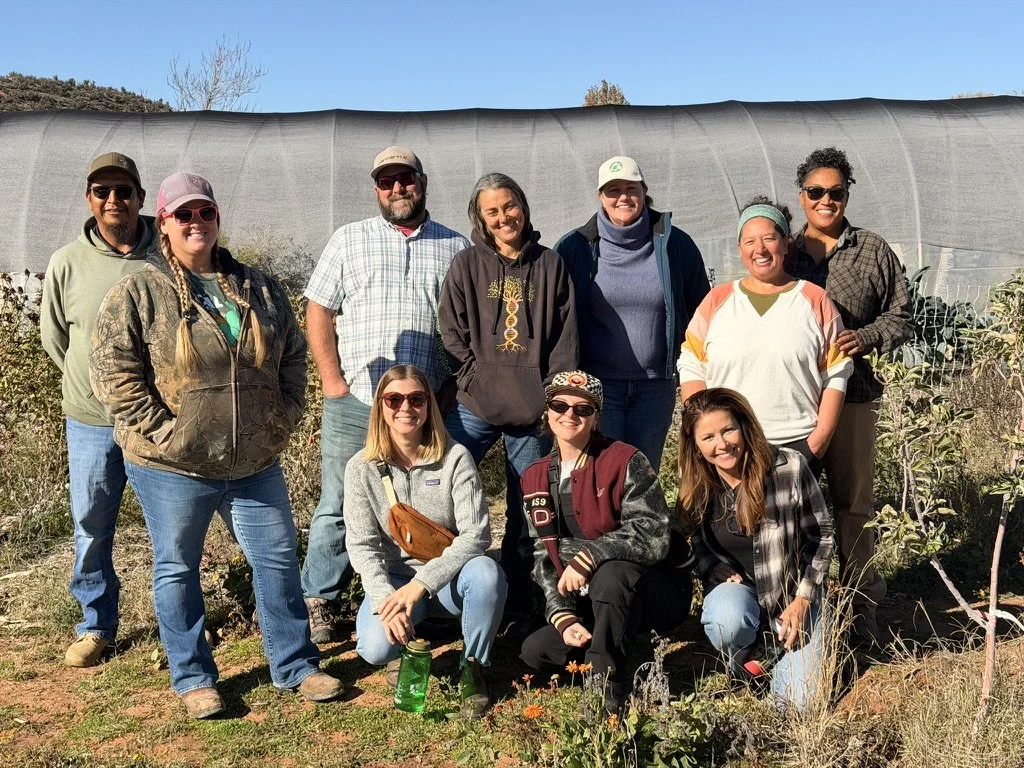
Ag Business Boot Camp participants toured Montapata Farms in Cornville, AZ
Farming may be a profession of hope, but it is also a business defined by risk — high capital needs, thin margins and uncontrollable variables. Arizona producers have long learned to “do more with less.” Now, they’re gaining tools to do more with strategy.
By equipping smaller producers with business tools that haven’t traditionally been tailored to agriculture, a new program from Local First Arizona has been custom-built for that shift.
The Ag Business Boot Camp, a hybrid, eight-week program for small to mid-sized farmers across the state, educates participants on business fundamentals through an agricultural lens.
Taylor La Ravia, Local First Arizona’s Senior Program Manager for Food Resiliency, said the boot camp approaches the business side of agriculture in a way that speaks to the challenges Arizona farmers face.
“Traditional business technical assistance, such as business planning or accessing loans, often doesn’t fully align with the realities of farming, where producers face high risk, significant capital needs, thin margins, uncontrollable variables and delayed revenue,” she said. “This disconnect can make standard business support feel overwhelming or inaccessible.”
With 16 graduates across the program’s first two cohorts in Camp Verde and Tucson, a third cohort begins in mid-March and is open to Phoenix-based applicants. The cost of the boot camp is covered by Local First Arizona.
What Does The Ag Business Boot Camp Cover?
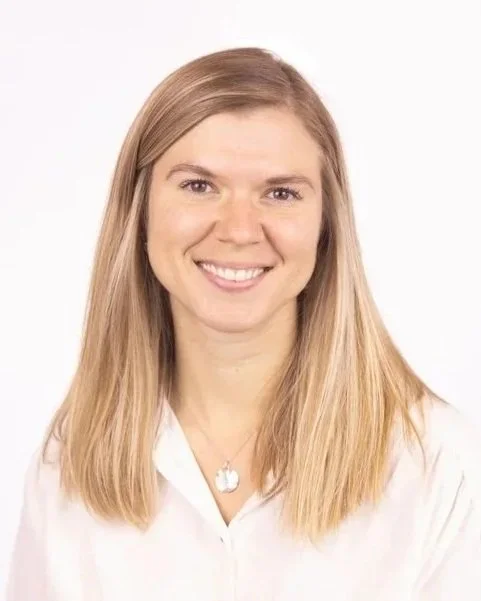
Taylor La Ravia, Local First Arizona’sSenior Program Manager for Food Resiliency
With a goal of being accessible to agricultural entrepreneurs, regardless of where they are on their farming journey, the boot camp prioritizes the development of a formal business plan — even if a farm has been in business for a while. The goal of the program is to make the process manageable by offering step-by-step components and peer feedback, allowing agricultural entrepreneurs to answer and consider questions about their business that they may have never thought to ask.
The boot camp also includes two in-person farm tours where participants can expand their networks, get ideas, seek advice and learn from their peers in the industry.
“Strengthening these networks is a key part of helping beginning farmers succeed and a central goal of the boot camp,” La Ravia said, noting that farming is inherently community-oriented.
Inspiring Female Growing Power
The first two cohorts welcomed a number of female farmers and producers from across the state. In this, the UN Year of the Woman Farmer, Local First Arizona checked in on four graduates to highlight their journeys and learn what they took away from the Ag Business Boot Camp they attended. With the support of the Ag Business Boot Camp, each of these women is growing power on the land and with their hands, strengthening the local food system with an informed view of their operation through a business lens.
Charissa Winston | 8 Law Organics: Before the pandemic hit, Charissa Winston would give tours of her garden at her home, teaching those who came how to grow their own food by following eight principles for healthy living. The shutdown shifted her focus a bit, if only to think bigger, and has set her on a mission to find farmland in Avondale where she can grow and provide healthy food to her immediate community. She said she felt like the Ag Business Boot Camp spoke directly to the questions she had.
“What I loved is that it was sensitive to the needs of beginning farmers like myself who need guidance and someone to mentor me to show me the right direction. What agency should I link to for funding or even just being in an environment where people understand that being a farmer is an actual business,” Winston said. “If I’m running a restaurant, there’s all sorts of resources for people in that arena. But there needs to be a collective of people who understand the needs of a small-scale, beginning farmer. I really believe Local First revolutionized that for me.”
As she finishes school to become a master gardener, she said she now feels equipped to pursue her vision, knowing she has resources available whenever she needs them.
“For me, it’s go time,” she said. “Farming is hard work but it doesn’t mean women can’t do it. We can absolutely do it. But there are practical ways to be able to accomplish what your vision is.”
Carmen Nugent | Refractory Farm: In response to the pandemic, Nugent decided to leave a 10-year career in healthcare administration and receive butcher training at a locally-owned meat processing facility known as Heartquist Hollow. That experience gave her the confidence to purchase a home on four acres near Tucson that she and her wife are turning into a farm, where she will raise and process rabbits and goats for meat. Her ultimate goal is to offer processing for other small producers. She heard about the boot camp and enrolled, even though she doesn’t plan to launch her business for a few months.
She said she didn’t want to go in blind and appreciated getting guidance while creating a business plan.
“I feel more empowered having created a business plan and I still feel pretty tied to what that plan was,” Nugent explained. “It challenged me to ask questions and evaluate where my strengths are and weaknesses are. I think it’s easy to go into it and think ‘I’m good at all of this so it should just work’ and being able to be more honest with myself with the areas I need to improve and consider before I jump all in.”
Tabitha Helton | Garden Hoes: When she lived in Oregon, Helton and a few friends dubbed themselves the Garden Hoes for the work they did on neighbors’ gardens. When she moved home to Arizona, she kept the name and started fresh with her gardening knowledge as she dealt with different soil, irrigation needs and seemingly endless sunlight. Now that she’s equipped with that know-how, she offers garden consultations, including plans and labor at a rate that is accessible, because it’s important to her that growing food be available for all income levels.
The Ag Business Boot Camp allowed her to shape those offerings into a business. For her, the information and guidance offered at the camp was a long time coming, offering actionable support that she could put into practice.
“I was really excited to join because I had been to so many focus groups about farmers’ needs and this answered that. This Ag Boot Camp training course was the culmination of all of those focus groups that I had attended,” she said.
Learning to collect data was also valuable. It wasn’t something she had considered before the camp, but it’s something she plans to do moving forward.
“You have to get started to get started,” added Helton. “You have to do it for free, with no money and often while working a second job for years before you even have data to show anybody what you can make or grow. If you don’t start grabbing data, you’re never going to get to the next level.”
Amanda Ruboyianes | 1,000 Good Days Farm: Before selling her insurance and risk management business, Ruboyianes felt an “unexplainable drive” to enter the agricultural sector. When her agency sold and a nine-acre farm came on the market, it felt like serendipity. She’s in the process of converting horse pasture into growing fields, but has managed to grow enough on a third-of-an-acre to be a regular at farmers markets and sell greens and veggies to a local restaurant. But, she’s experienced a learning curve.
With a background in business, she had to learn the work side of things, from harvesting pecans to taking care of Trixie and Sprinkles, the mini herefords that she swears will only be harvested in the event of a zombie apocalypse.
“I live on a nut farm, so most of what we do all day is tell nut jokes,” she said. “It’s a requirement.”
Even with a business background though, Ruboyianes found value in the boot camp. She liked being able to connect with other local farmers, to think about scale and sustainable practices, and she appreciated the time the camp afforded her to translate her business acumen to farming.
“A lot of things are different but a lot of things are the same,” Ruboyianes noted. “Having that dedicated space to work on the business plan and hearing from other people and what they’re doing. That was great.”
Stories like these illustrate what the Ag Business Boot Camp is designed to do: help agricultural entrepreneurs translate passion and production into sustainable, scalable businesses.
The next cohort for the Ag Business Boot Camp will be based in Phoenix and runs March 16 - May 4. To learn more or apply for the Ag Business Boot Camp, click here.