
Our Work
Community Development

Creek Valley Health Clinic is meeting urgent health care needs in an overlooked community with help from Local First Arizona and the American Rescue Plan Act.

Telemedicine, made possible through funding from the American Rescue Plan Act and help from Local First Arizona, is helping Pinal County residents receive better health care.
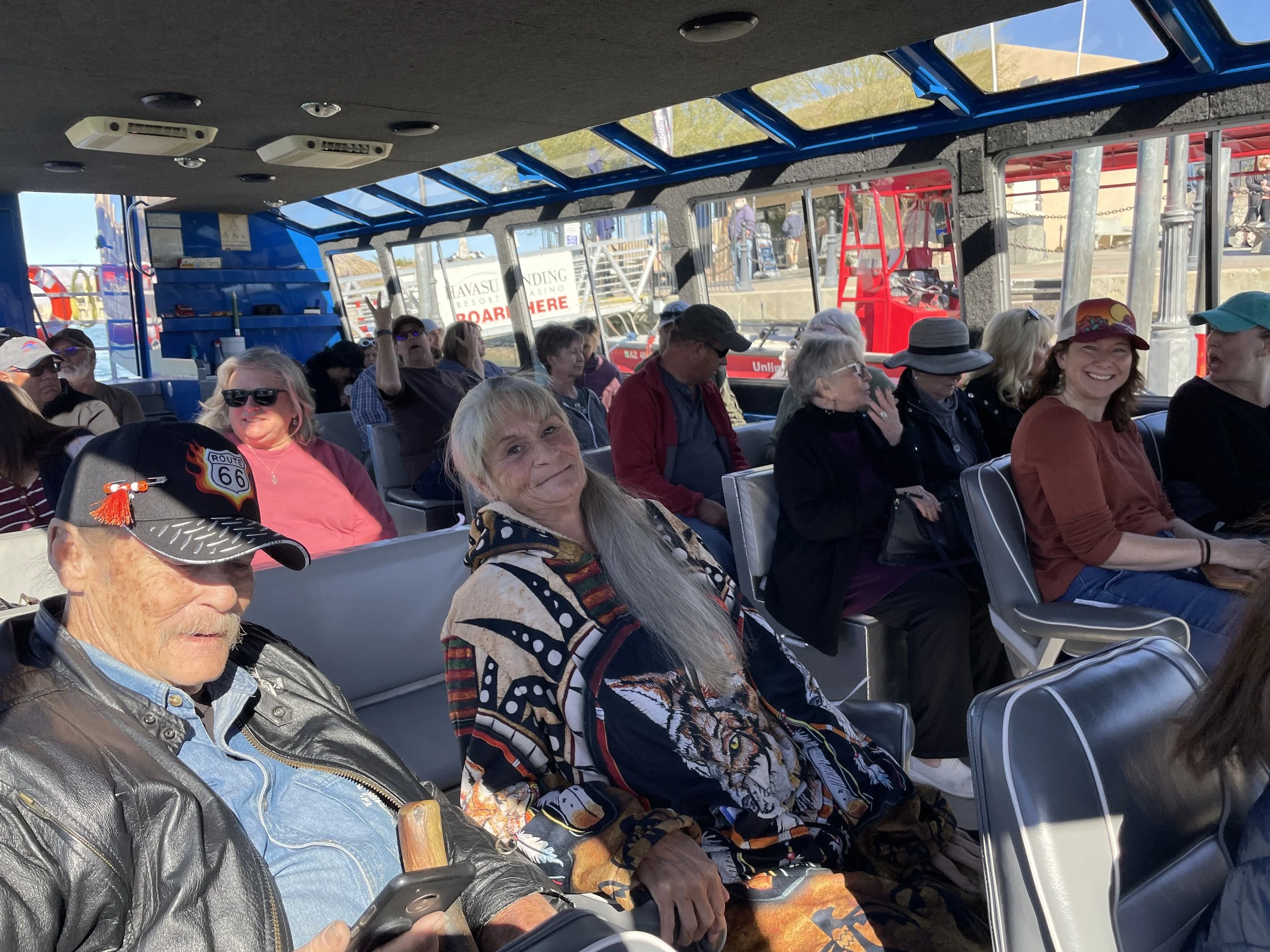
This February, Local First Arizona partnered with the Arizona Office of Tourism to organize a planned itinerary to showcase Lake Havasu’s greatest tourist attractions. WeekendZona attendees only needed to show up, mingle with their fellow travelers and be ready for adventure.

In partnership with the Arizona Office of Tourism, LFA organized a weekend full of unique experiences to showcase Wickenburg. From Friday, October 21 through Sunday, October 23 2022, two hosts from LFA led 10 guests through a weekend of local food, drinks, and activities unique to the area.

As the heart of Arizona wine country, the Cottonwood area boasts local wineries as well as tasting rooms for vineyards throughout the state like Pillsbury Wine Company. Weekendzona guests enjoyed two wine tastings and a tour of the Southwest Wine Center in Clarkdale, where they learned how students run the process from growing the grapes to bottling, naming and labeling the wines each season. For a unique dinner experience, guests were invited to Blazin’ M Ranch, a Western-themed frontier town where activities include bull riding, axe-throwing and a tractor pull before a live-music stage show over a barbecue dinner served chuck wagon style.

In late July 2021, Local First Arizona’s Rural Development team held a meeting with the US Forest Service to discuss potential volunteer opportunities to address the devastation of the Telegraph fire in Superior. With the recent merger of Local First Arizona and Keep Arizona Beautiful, this was the perfect opportunity to engage in rural Arizona.

This month, we began hosting capacity-building workshops for Gila Valley producers starting with a ‘Funding for Farmers’ workshop. Hosted at the Eastern Arizona College Discovery Park Campus with a beautiful backdrop of Mt. Graham, community members gathered in the early morning to learn about funding opportunities to start an agriculture business or improve their existing business. Speakers from the USDA, Small Business Development Center, Arizona Economic Recovery Center, Graham & Greenlee Microloan program, University of Arizona Cooperative Extension, Prestamos CDFI, Graham County Government, and Farm Credit West delivered short rapid-fire presentations to the crowd before transitioning to individual tables as community members walked around to network and find out more about different organizations.

The Florence Chamber of Commerce, in partnership with Local First Arizona and the Arizona Office of Tourism, gathered local residents and business owners to collectively create a community brand. This brand will represent the Florence business community and be utilized to promote events and other local activities. Community members who were a part of the meetings were there to be the most authentic voice for Florence. The group provided invaluable information about the history of the region, what makes Florence so special, colors that best represent their town, and more. This input helped to ensure that the final brand outcome would be representative of the community, its residents, and its businesses.

Due to their dedication to support the San Carlos Apache community, NDC has been a close partner with United Food Bank, distributing hundreds of food boxes to San Carlos families in need during the pandemic. Local First Arizona’s Good Food Film Series captured this partnership in the ‘Farm to Food Bank’ film released in May. The film is accessible through February 2022, so don’t miss your chance to watch it!
We are also gearing up for a second volunteer engagement for our LFA staff - NDC’s first fall fair this October. This will be a family-friendly event and will feature a film screening, farmers & artisans market, Apache food cooking demonstrations, live art, and a fashion show. There will also be plenty of youth activities, including a pumpkin patch and carving station, beading, and archery. We will celebrate NDC’s hard work this year and honor the food traditions and resilience of the San Carlos Apache community.

Last month, LFA held the first of a series of three workshops designed exclusively for Verde Grown vendors. These are capacity-building events free to those registered as a Verde Grown member. We now have 39 local businesses in Verde Grown and the list keeps growing! This first workshop provided information on how to best take advantage of Verde Grown as a regional marketing initiative and get more exposure for their businesses. We also reviewed the success of the digital campaign in engaging local and statewide audiences online. Lastly, we ended the event with a speed networking activity to help facilitate new connections and encourage Verde Grown vendors to leverage each other for new business opportunities. This was a wildly popular activity and well-attended event.

In the Summer of 2020, the Sky Islands Tourism Alliance reached out to Local First Arizona for assistance in creating better collaboration amongst the hospitality and tourism businesses in the region. To address these challenges, five potential solutions were presented to the group with interest arising in the creation of a Local First Arizona Small Wonders Map.

The Town of Camp Verde has a sustained partnership with its energy provider, Arizona Public Service (APS), to assist with community and economic development efforts. The next step of this program - Focused on Success - is a more targeted strategic planning effort focused on driving responsible and sustainable growth, utilizing both traditional and non-traditional development initiatives.

Local First Arizona hosted a third and final roundtable discussion on April 8th in Lake Havasu to introduce the Lake Havasu Food Alliance brand concept to community members, share about Lake Havasu Food Alliance’s upcoming projects and events, and spark interest in attendees to become more involved.
Conversations from this and the last two roundtable discussions helped the group to identify some exciting LHFA projects to tackle in the future such as a ‘Homemade in Havasu’ cottage (home-based) business market, a ‘Restaurant Row’ event hosted on the main downtown street featuring local restaurants, and partnering with Mohave Community College and Arizona @ Work to provide free restaurant staff training to local businesses.

Coming out of the COVID-19 pandemic, the Cottonwood Chamber of Commerce was experiencing pressure from a variety of angles. Members were struggling to stay afloat and a Chamber membership did not rank as a high priority when facing workforce challenges, added costs safety and wellness precautions, past due utilities and rents, and lost revenue for almost a year.

In January 2020, the San Manuel Revitalization Coalition was formed as a solution for this unincorporated community to have one centralized resource and provide a unified voice to Pinal County for concerns and needs. With a volunteer board of fifteen community members, the group finalized its status as a recognized 501(c)3 nonprofit organization and was able to raise over $10,000 in start-up funding for community programming.
Economic Development

Shifting economic priorities means changing the policies, market conditions and systems that determine who has access to opportunity, resources and economic power. For Local First Arizona, that means helping locally owned businesses build collective leverage, removing structural barriers and creating more ways for Arizona communities to benefit from the wealth generated here.
People often think being local means shopping local, eating local or attending local events.
Those things matter.
But being local is bigger than that.
It's creating opportunities for entrepreneurs. It's investing in locally owned businesses. It's strengthening food systems, supporting workforce development and helping communities access the resources they need to thrive.
At its heart, being local means building an economy where opportunity stays closer to home and more people have the chance to participate in it.
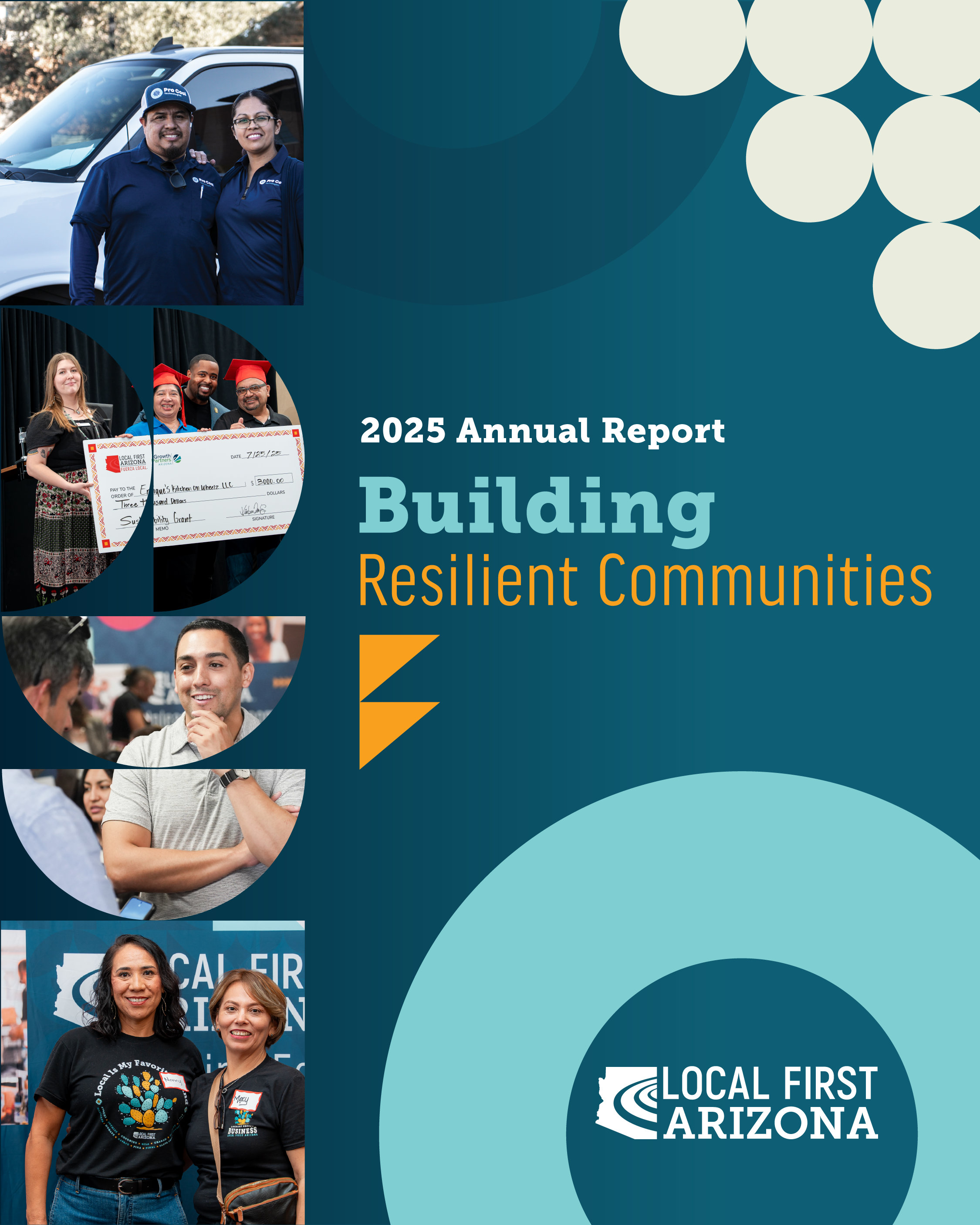
That's the story behind Local First Arizona's 2025 Annual Report.

Creative events that showcase the character of small communities across Arizona allow towns to celebrate what makes them unique. At the same time, these events are welcoming out-of-town visitors who then patronize restaurants, gas stations and hotels, pumping money directly into the local economy. While festivals and events do act as introductions for small towns to non-locals, they also provide seasonal stability for the small businesses that support those towns year round.
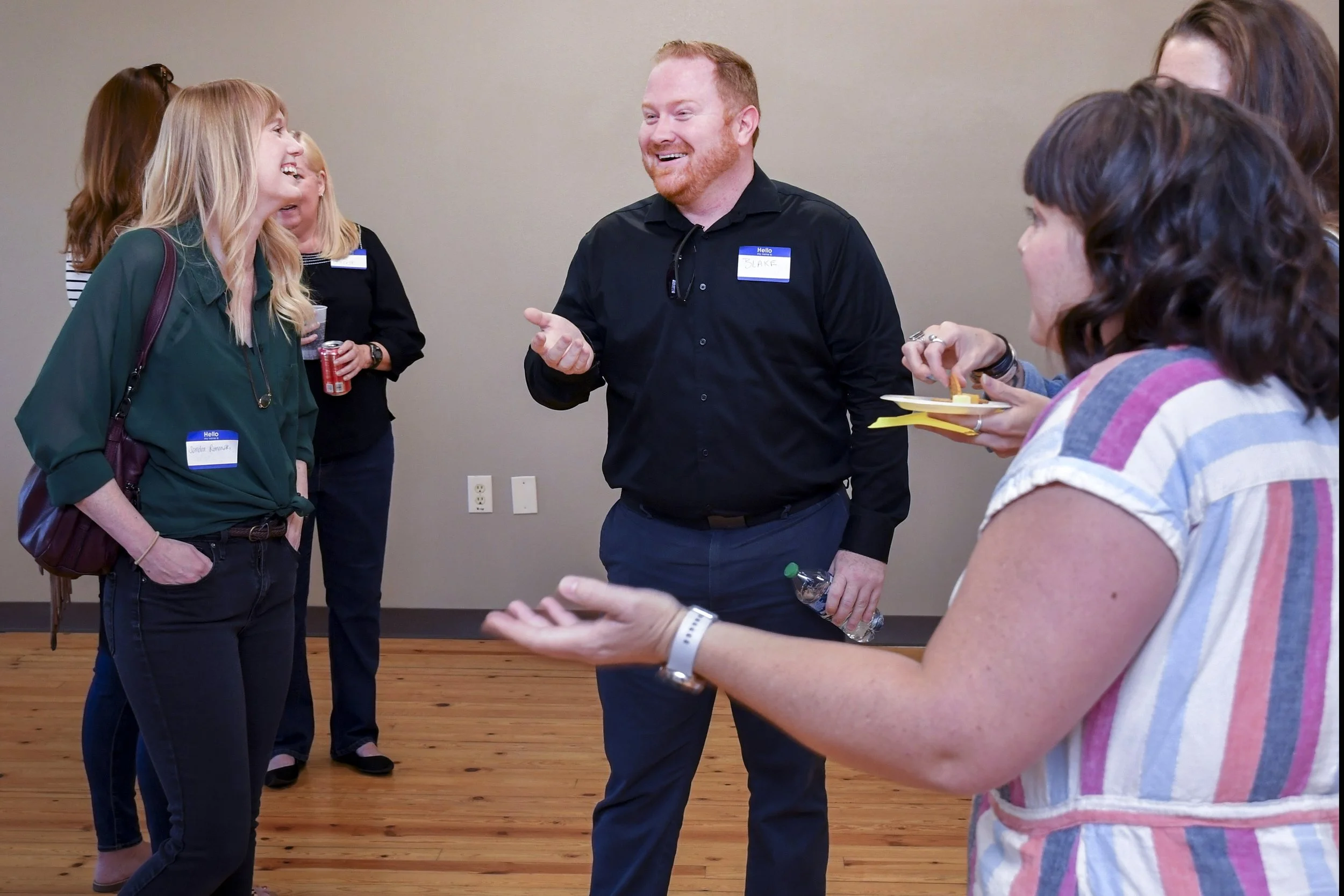
Small towns across Arizona are facing a similar challenge: Young people are moving to larger cities, causing local jobs to remain vacant and the economic health of communities to struggle.

Although it’s good news that more Arizonans are employed than ever before, the demand for workers has been challenging for small businesses to keep up with, particularly in rural areas.
Local First is working with rural employers to understand their staffing needs, opportunities and challenges to find solutions.

A higher percentage of Arizonans quit their jobs in March 2022 than almost anywhere in the nation. Whether this is due to employees making big personal decisions about life changes or the fact they have an abundance of available positions in our state to choose from, it’s clear that this is a job seeker’s market.
Unfilled job openings, onboarding and training, career advancement and retention – these are just a few examples of the many workforce challenges faced by businesses in northeastern Arizona. Local First Arizona (LFA) is working in partnership with ARIZONA@WORK Northeastern Arizona to convene employers in Gila, Navajo, and Apache Counties to understand their biggest shared workforce challenges and what they think the root causes are.
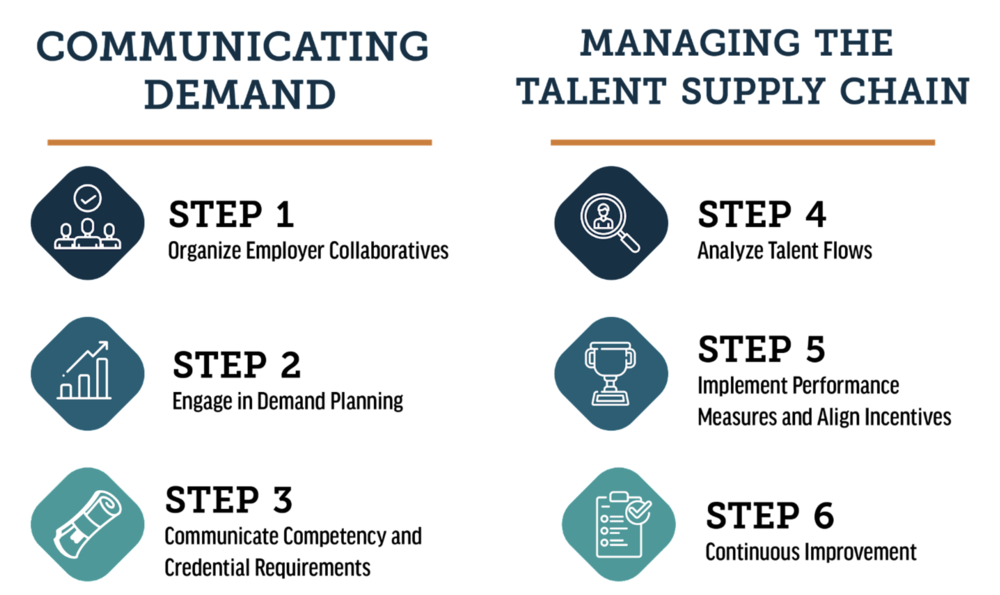
Talent Pipeline Management (TPM) is an employer-led, demand-driven process that brings together employers from the same industries in a specific region to collectively address shared workforce challenges.

There are 160 manufacturing employers in Kingman, LHC, and Bullhead City that account for 3215 jobs in the region. Manufacturers in Mohave County reached out to Local First Arizona to engage in collaborative conversation utilizing the TPM Model for workforce development to answer the question: “What can Mohave County manufacturers do to communicate a better understanding of the younger workforce and create packages that appeal to the true environment they're looking to work within?”

The Little Colorado Foundation is rolling out a new soft skills training program that will be open to those seeking to start or enhance their career in any industry in Apache County. The program - called “UP (Unleash Your Potential)” - utilizes the National Retail Industry Fundamentals curriculum, providing students with an understanding of the retail industry, job readiness skills, and building basic customer service skills. UP is a 5-week hybrid training program that incorporates self-guided, online training and onsite community engagement activities to enhance customer service and soft skills in the Apache County workforce.

Local First Arizona is working closely with employers to gather labor market data to understand the workforce needs of the region as it relates to mental health. There are only three organizations currently providing mental health services locally. Two out of three of those organizations agreed that there isn’t an issue of lack of applicants, it is a lack of qualified applicants for mental health positions in the Gila Valley. Outside of the three organizations providing mental health services, a few related organizations stated that they would like to be able to offer mental health services to clients but they do not have the resources or know how to find the resources to expand their services.

In partnership with the Mohave County Workforce Board, Local First Arizona connected Creative Care with the Arizona@Work Eligible Training Provider List (ETPL) program that now funds them not only to conduct training for their own new hires but also to provide CNA training to anyone in Mohave County who would like to attain their CNA license. This has created a workforce pipeline for all of Mohave County and is providing Creative Care with diversified income that they can utilize for their staff and facilities.
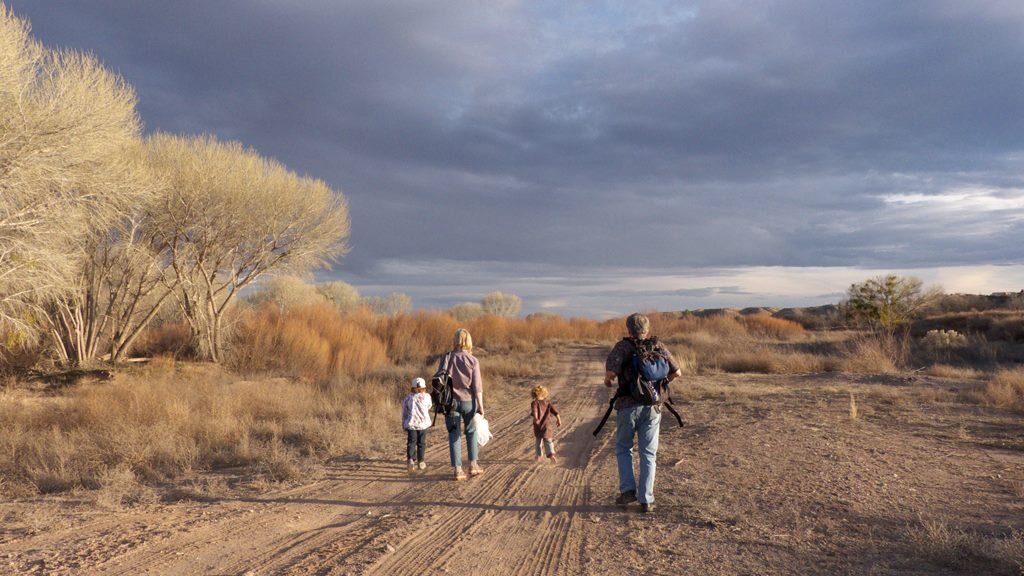
In November 2020, Local First Arizona interviewed Duncan residents, business owners, elected officials, working professionals, volunteers, and parents to gain an understanding of spending patterns resulting in either dollars recirculating in the local economy or leaking out of the local economy.

Pipeline AZ is a multi-sided platform bringing job seekers, companies, educational institutions and workforce organizations together to match talent to market needs and prepare job seekers for future opportunities - online. Unlike other career services or workforce development platforms, Pipeline AZ serves the entire workforce ecosystem simultaneously: companies, job seekers, educators and workforce organizations. Pipeline AZ is free for users, and will include case management for job seekers to help best connect their skills to job opportunities. Employers can list jobs, internships and/or apprenticeships.