
Healthcare heroes reach rural Arizona patients with virtual visits
Telemedicine, made possible through funding from the American Rescue Plan Act, is helping Pinal County residents receive better health care
A federal grant transformed the way psychiatric nurse Dr. Betsy Yurgel is able to care for her rural Arizona patients (by David Wallace/Resource Rural)

Pinal County doctor Betsy Yurgel (by David Wallace/Resource Rural)
It’s not uncommon for Dr. Betsy Yurgel to spend several hours a day on the road, driving from one rural Arizona town to another.
As a longtime psychiatric nurse practitioner and naturopathic doctor working for the Pinal Hispanic Council, driving long distances to meet with patients in small, farming and borderland communities has historically been the only way she was able to deliver the mental health care residents needed.
Two-thirds of communities across the country with shortages of mental health professionals are rural, in part because of the difficulty attracting and retaining employees in remote places, which can lead to a disparity in access to care when compared to urban areas, according to the National Rural Health Association.
For years, Yurgel believed distance was simply an ever-present symptom of rural medicine and the drive was worth it to provide care to her neighbors.
‘Immediate positive impact’
But the COVID-19 pandemic drastically changed things.
It not only prompted a need for physical isolation on a global scale, but it also introduced an opportunity for the Pinal Hispanic Council to evolve its longstanding model for delivering behavioral health care.

Driving long distances used to be one of the only ways to deliver rural health care. (Photo by Talal Hakim)
Federal funding and a willingness by providers to try something new allowed the nonprofit health center to implement telemedicine, allowing people to virtually meet with their provider instead of an in-person visit.
The transition to online medical visits was funded by a $40,000 Rural Emergency Health Care grant made available through the American Rescue Plan Act passed by Congress in 2021.
Local First Arizona helped the Pinal Hispanic Council apply for the grant through its Economic Resource Center. Since 2021, the center has helped rural towns, tribes and nonprofits win more than $46 million by providing free grant writing, budgeting, project management and strategic planning.
Ralph Varela, who serves as the Pinal Hispanic Council’s CEO, said Local First was a critical partner throughout the grant process.
“We couldn’t have been successful with this grant without the technical services Local First provided,” Varela said. “When we improved our tech for telehealth, it helped with connectivity in rural areas, so there aren’t disruptions during appointments. That was a big one. You could almost tell immediately the positive impact it had.”
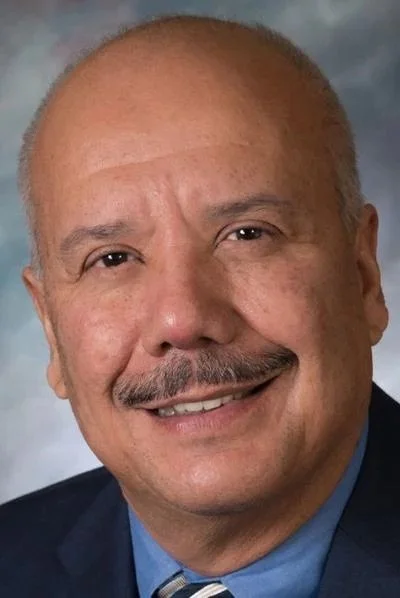
Pinal Hispanic Council CEO Ralph Varela
Virtual visits save patients money and prevent interruptions to care
Not only did the grant allow the Pinal Hispanic Council to improve its technological capacity, but it also allowed patients and providers to remain connected during a period of forced isolation.
After seeing progress over the years toward telemedicine, Yurgel was on board.
“I knew most of the patients already, so telemedicine helped a lot. It’s been very, very useful,” she said.
The Pinal Hispanic Council has been delivering behavioral health care with medical integration since 1990. The nonprofit serves a largely rural patient population in the Arizona-Mexico borderlands of Nogales and Douglas and more agriculturally-anchored communities like Eloy, Coolidge, and Casa Grande.
Varela said the biggest demand for care comes from patients living with severe mental illness, adults navigating substance use disorder and children.
When the pandemic hit, those patients weren’t able to come into an office to continue their care without risk from the virus, so there was a need to pivot.
Yurgel could see the difference.
Many of the patients she treats aren’t able to miss work for an appointment. For some, traveling to an appointment is a cumbersome and exhausting physical challenge due to other ailments. And for others living on tight budgets, the cost of gas impacts how highly they prioritize their ongoing mental health care.
But the cost of interruptions to care can be dire.

Telemedicine in rural Arizona has led to more consistent and affordable care. (By David Wallace/Resource Rural)
The National Institutes of Health reports that non-adherence or interruption to mental health care regimens increases the risk of suicide or a relapse of symptoms. That can impact a patient’s overall stability and create a bigger financial burden on the health care, social services, and judicial system as patients may end up homeless, in the hospital or in jail.
“People end up out on the streets sometimes, disoriented,” Yurgel said, explaining the implications of lapsed prescriptions. “Telemedicine helps with consistency of care. It allows them to save time in their day, save gas money, save stress and it saves them from being bounced around because they’re out of medicine.”
Financial support allows renovations to medical center
In addition to technology upgrades, the organization utilized the grant funds to create safer and more secure environments in their offices.
They replaced carpeting with hard surfaces, upgraded access points with new key cards and updated training rooms, which are used both by staff and the greater community.
“We would probably be looking at pushing all of this four or five years down the road without the financial support,” Varela said.
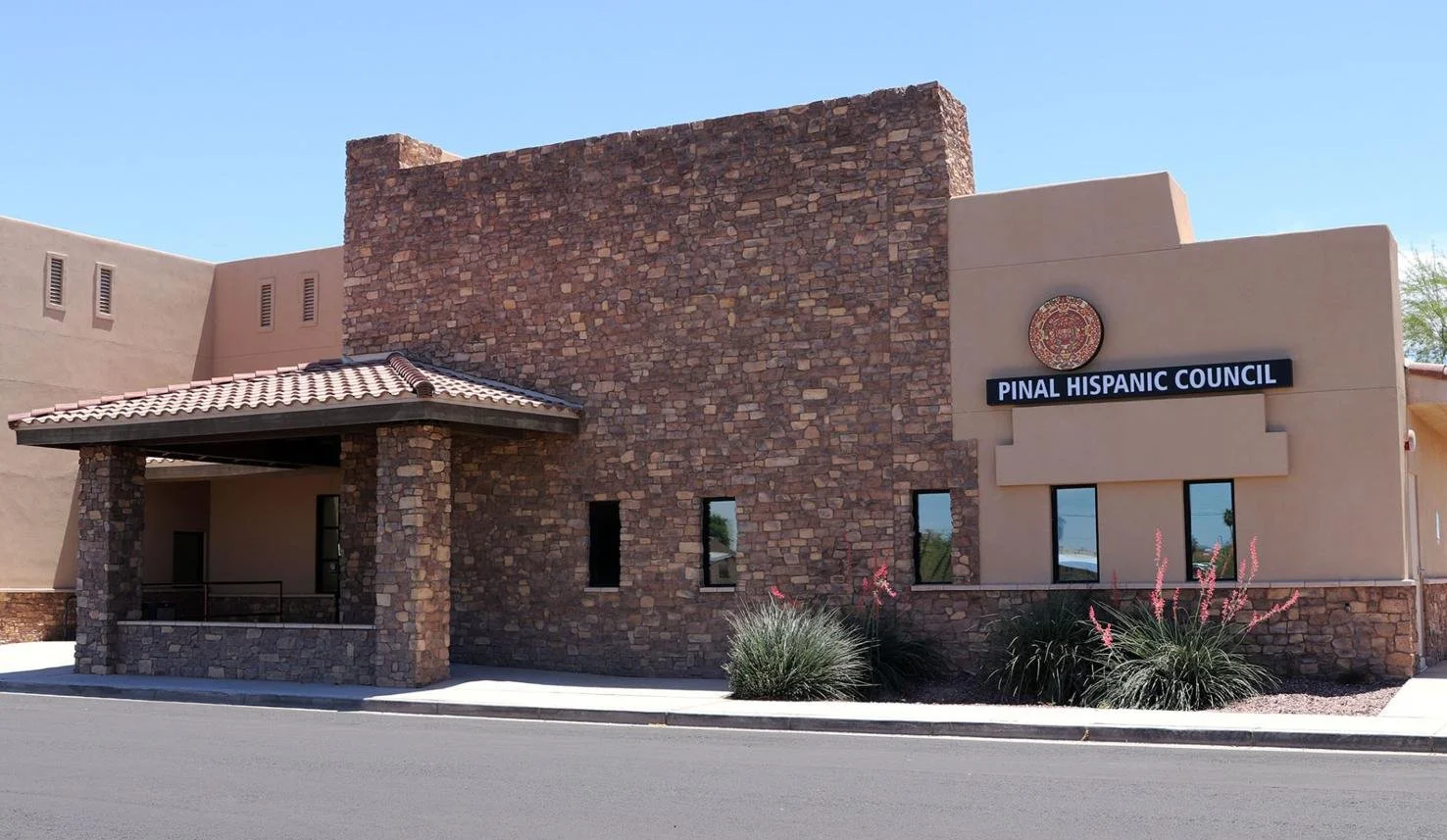
(Photo via Pinal Hispanic Council)
A closer connection with patients miles away
For Yurgel, the introduction of telemedicine has not only reduced the mileage she’s putting on her vehicle, it’s facilitated a more intimate experience between her and the patients she is treating — thanks to appointments shifting from an office to a video call against the backdrop of a patient’s home.
With telemedicine, patients receive the care they need when they need it and can introduce Yurgel to their pets, show her the artwork they created and give her a better sense of where and how they live.
“It adds a little bit more to the relationship,” she said. “I think there’s a lot of positives.”
Of course, when patients who need care receive it consistently, the benefits reach beyond that one person, Yurgel said. The stability of individual community members, multiplied across the patient population, benefits the overall health of an entire community.
For Yurgel and the Pinal Hispanic Council, the resources they needed to make important updates became available at just the right time.
“There are many, many people who would not have gotten care without telehealth,” Yurgel said.
Learn more about Pinal Hispanic Council at pinalhispaniccouncil.org.
Request free grant assistance from Local First Arizona’s Economic Resource Center at localfirstaz.com/economic-resource-center.
The American Rescue Plan Act was a stimulus package passed by Congress in response to the COVID-19 pandemic. It was signed into law in March of 2021 by President Joe Biden to aid in the country’s economic recovery.
