
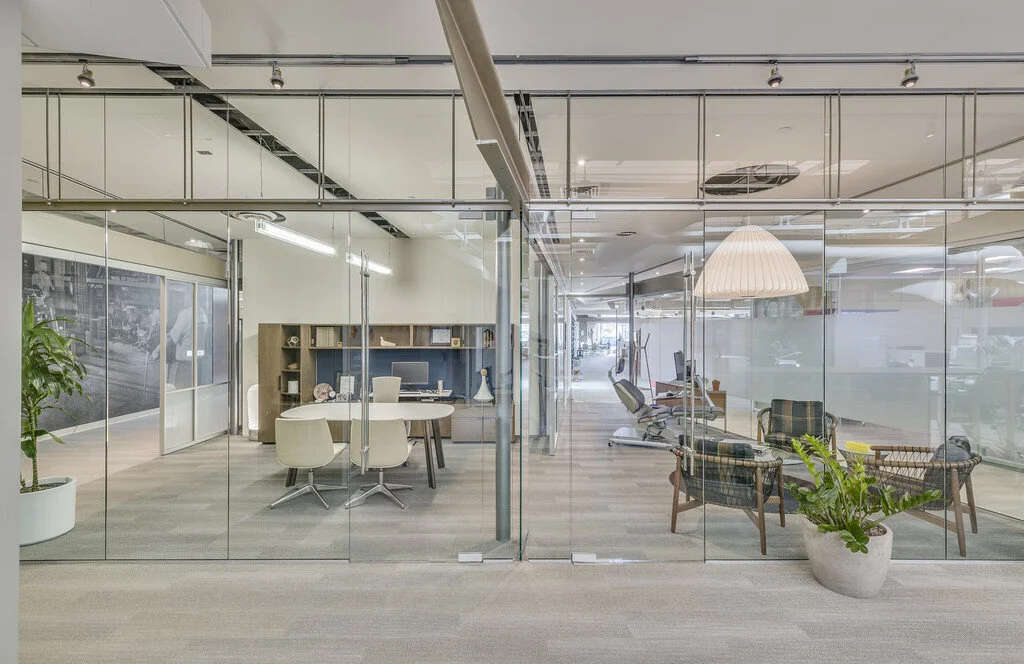
Photo of Goodmans Interior Structures, by photographer Kevin Korczyk.
Business owners that are looking to lease space have a lot of components to consider - location, lease terms, square footage, and more. Items that tend to get overlooked are things like the efficiency of the space, from energy use to water use, and how easy or hard it will be to implement practices like recycling. However, things like low energy use equipment, water-efficient appliances, and others can save your business hundreds of dollars and lower your environmental impact. Recently, a salon in Phoenix moved to a new space that was double the size of its last location. However, they’re actually paying less to be there because their energy bill is lower thanks to energy-saving strategies. A restaurant installed low-flow toilets and they are now saving $400 a month on their water bill.
You have the most leverage in getting efficiency upgrades when looking for a new space. During this time, you can request tenant improvements, including those that can save you money. If you’re looking to move to a new space, the Local First Arizona sustainability team, in connection with the Sustainability Alliance, has created a resource full of questions that you can ask your landlord and property managers to help you find a sustainable space. This list will help you know the right things to ask and will send a strong message to building owners that sustainability matters. If you are a landlord or property owner, being aware of these questions can help you make your space sustainable before they are even asked. Sustainability is becoming increasingly important in commercial spaces.
The question resource is extensive and covers a variety of topics including energy and climate, pollution and toxins, ecosystems and waste, and human needs. You’ll find questions about the age of the HVAC system and lighting and if they ensure healthy indoor air quality, whether or not the landlord offers on-site recycling services and if they monitor contamination, if the landscaping is comprised of mostly low-water plants and trees, and about their safety measures and if the building has plans for emergencies and recovery. There are many more questions that get to the heart of different issues as well.