Two Tucson entrepreneurs share experiences as Black business owners

As Black Business Month winds down, it’s important to remember that entrepreneurs — especially those from diverse backgrounds — need support from the local community throughout the year in order to thrive.
While Black-owned businesses are growing in number in Tucson and across the U.S., they still only account for 3% of all businesses nationwide. And, Black business owners, on average, start their businesses with far less access to capital than their White counterparts — by almost a third, according to industry measurements.
At Local First Arizona, we thought it might be fun and insightful to connect with two Tucson entrepreneurs who are part of the Black business community and discuss the challenges of business ownership, how the community can support their endeavor and what inspired them to set out on their own in the first place.
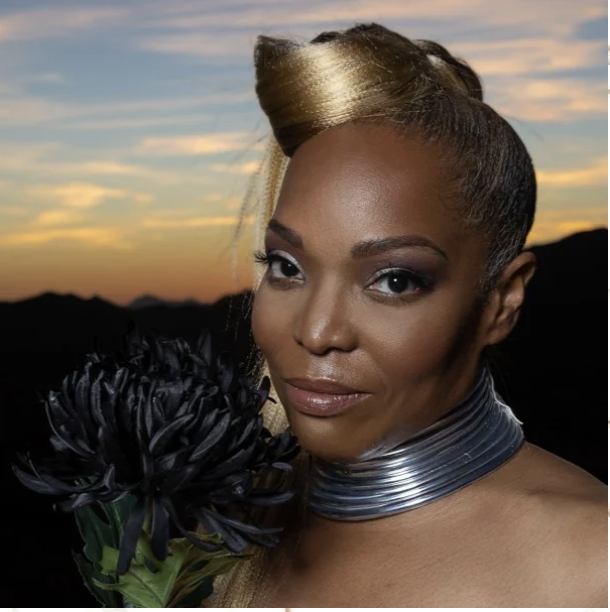
Jennifer O’Neill, owner of Beautiful Little Things, recently opened in Proper Shops and Michael Tucker, founder of Tucker Coaching & Consulting, will serve in September as a panelist at the Local First Arizona educational series known as Hustle Hour at the University of Arizona. Both are new members of Local First Arizona.

Q: Tell us the story behind your business. What inspired you to start it?
JO: Over a year ago in Scottsdale, AZ I met a Ghanaian woman who owns a boutique. I admired her bracelets and she offered to sell them to me for wholesale price to see if I could sell them. After selling most of them in the first week, I filed the paperwork to form an LLC and within one month, I was the owner of Beautiful Little Things. I always wanted to own a boutique over the years but the timing was never right. I knew it would take start-up capital that I did not have to be successful. The dream to have a boutique was only a dream until the chain of events that set it in motion.
MT: Prior to Tucker Coaching and Consulting I owned a social media marketing company for eight years. In 2014, when my mother passed I lost all interest in marketing. I began seeking a profession that I believed might honor my mother and allow me to make a bigger impact on people's lives directly. After enrolling in a Masters in Counseling program and leaving after the first semester, at the urging of my wife and a few friends, I decided to explore coaching. I fell in love with the co-creative nature of the profession and I never looked back. Unlike counseling that addresses pains and traumas after the fact, coaching is preventative and aspirational. It allows for the co-creation of a future with a client and supports them in seeing and selecting opportunities that serve their highest good so they avoid or successfully navigate potential pitfalls.
Q: What challenges have you faced as a Black business owner, and how have you overcome them?
JO: One challenge was the lack of access to funding. I started my business like many Black business owners with my own money and a high-interest credit card. This meant that I had to take away money from essentials for my family to invest in my business. As a single mother, this was a major challenge. I've also been in graduate school for several years finishing my doctorate and student loans are astronomical. Having been turned down for business loans in the past, I decided that I would need to fund it myself. This is common among Black businesses, especially Black women-owned businesses. The criteria for a business loan seemed difficult to meet in my circumstance. I grew up in New York City and I remember going into the bank where the employees were mostly Black and there being a relationship between the customers and bankers. They usually lived in the communities they served and were rooting for the customer's success. As time has progressed and online banking has made it convenient for transactions, the opportunity for relationships is lost. This is why it is even more important that banking practices be challenged to make systemic changes and offer alternative funding opportunities so BIPOC businesses have equal access to funding. I am still paying off the high-interest credit card so I wouldn't say that I've overcome this challenge yet.
MT: Like most Black business owners, I have faced many challenges because of my appearance. However, the biggest challenge of all didn't come externally entirely. This challenge came from within. It was learning to love and value myself after being treated harshly. It was overcoming the mindset that I was somehow doomed to always be "challenged" because of my skin color, that I needed the approval of "White folk" to succeed. And, if systems of oppression were not dismantled in my lifetime, the quality of my life would always be lesser or at the effect of these systems. It took a great deal of therapy, integrating past harms and traumas, reconnecting with my African culture, ancestors and spiritual principles to release me of this thinking. This does not mean everything in my world is as I would like it to be and it doesn't mean that there isn't still work to do in America as it relates to healing and reconciling the harms of power, privilege and race. However, I have stopped giving external views and opinions permission to define me or the life I create.
Q: How does your business contribute to the local community and empower other Black entrepreneurs?
JO: Beautiful Little Things has participated in local business events and markets. It is my hope that this business will expand to provide jobs and opportunity for mentorship for new owners.
MT: All of my work in the community directly benefits Black entrepreneurs as well as others. I serve on the board of advisors for the Unified Progress International (UPI) Loan Fund, Arizona’s only Black-led loan fund and economic development organization focused on providing affordable personal loans to historically marginalized communities in Arizona. I am a founding member and Director of Strategic Partnerships for the national non-profit, Coaching for Everyone, an organization that provides affordable coach training to aspiring BIPOC coaches and no/low-cost coaching to underrepresented educators, non-profit leaders and communities. Lastly, I am a board member of Social Venture Partners Tucson, a non-profit that is focused on funding and supporting non-profits that are committed to a "2 Generation" mission of serving both children and their parents equally to strengthen Arizona families
Q: What changes or improvements do you hope to see in the business landscape for Black entrepreneurs?
JO: I hope to see more Black business owners be informed about the various alternative programs that exist to help them succeed. Unfortunately, if there is a lack of exposure to great resources then it goes untouched. Businesses offering assistance to our communities have to be more intentional about getting the information into the Black entrepreneur's hands. They cannot solely rely on social media or website announcements. Sometimes going back to the basics is necessary. Establishing relationships with collectivist communities is an important key. Making a meal, leaving it on the stove and saying it's available is not enough especially when historically there is a reason for mistrust. Making the meal, going to share and eating with them is intentional and builds trust. Also changing criteria to meet the needs of new entrepreneurs helps them to get on their feet.
Many years ago I worked for a major corporation that had its own commercial real estate department. I listened and asked the attorneys questions about negotiating real estate contracts. I had no awareness of the different incentives companies can receive for sustainability of their company. The small business owner may not know this is even possible. My hope is that the knowledge needed for Black businesses to not only startup but to grow and last over time is no longer hidden in plain sight.
MT: According to Pew Research, less than 3% of all Black businesses hire 50 or more employees. My hope for Black entrepreneurship is that this number doubles in the next decade and that we capitalize on the ever growing demand for federal government and international business opportunities.
Q: How can the wider community better support and uplift Black-owned businesses?
JO: As consumers, we choose who to spend our dollars with. While it is easy to go to a big box store, choose a Black-owned business. Purchase gift cards from them to reward your employees. Invite the Black-owned businesses to the table. If you are offering a training to other businesses and there are typically no Black entrepreneurs in attendance, be intentional to include them. New entrepreneurs may not be able to afford expensive trainings, offer a scholarship or challenge companies to sponsor a small business owner. Share resources or barter when possible.
Some Black-owned businesses may need meeting space or advertising. This is not charity but good business. It is good for our economy when businesses collectively succeed. As an individual supporter this may mean not receiving your item in Amazon Prime shipping time. If a Black-owned business fails in delivering to your expectations, instead of tearing them down, make an attempt to resolve before posting a negative review. No business is perfect but all businesses should have the opportunity to make a wrong right. No one grows alone but in community. Support also includes interaction and promotion on social media. Social media plays such a big part in e-commerce and connects buyers globally. If the business has met or exceeded your expectations, be assertive in spreading the word.
It is my opinion that as a society we are responsible for challenging anything that threatens our growth and this includes drawing the line in the sand when we recognize discriminatory practices. Using our voices and our resources to make a clear statement that we will no longer tolerate exclusionary practices makes us a loving and just community. Supporting Beautiful Little Things connects you to a global community and affords you the chance to receive my "award-winning" smile. While it's not tax deductible, it has been said to make a difference.
MT: The wider community can best support Black entrepreneurs by being a champion for policies and legislations that support their long-term growth, purchasing their goods and services, sharing high-quality experiences with their peers and by staying out of their way as they reach new heights in business growth.