
Meet Two Organizations Making Arizona School Lunches More Local
Written by Courtney Kentch
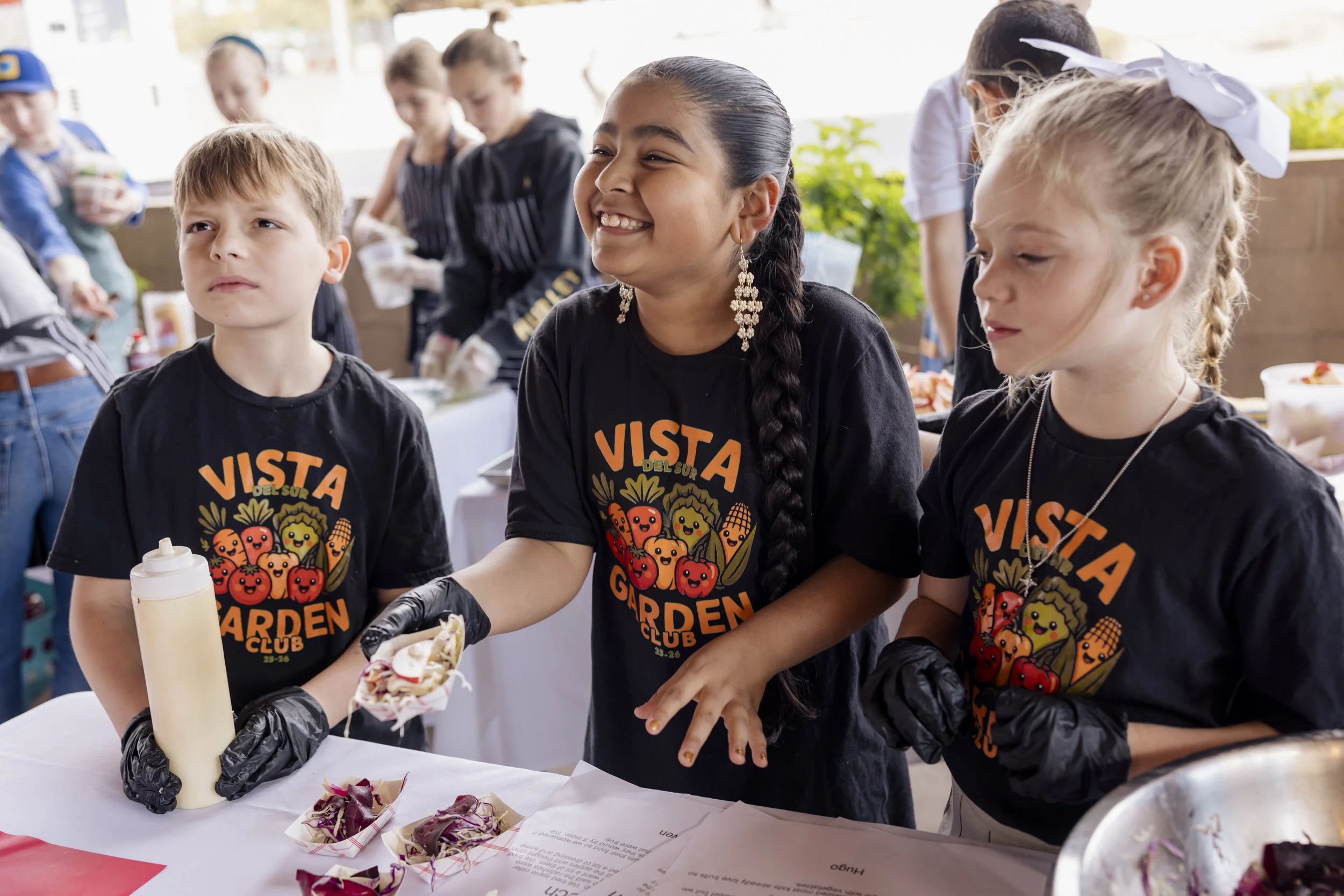
Arizona’s school cafeterias are often described in terms of what they lack — time, money and help — but across the state, there are people quietly rebuilding that idea from the ground up. In this blog, we highlight two of them: Blue Watermelon Project and the Arizona Farm to School Network, organizations that are showing how chefs, educators, farmers and students can work together to make school lunches more local, delicious and more connected to the community.
Programs that reimagine what school lunch can be
Arizona already has great examples of people rethinking school meals, including Blue Watermelon Project. Founded in 2016 by award-winning chef Charleen Badman of FnB in Scottsdale, Blue Watermelon started with a simple idea: chefs, farmers and community food advocates could partner directly with schools to help kids build a healthier, more curious relationship with food.
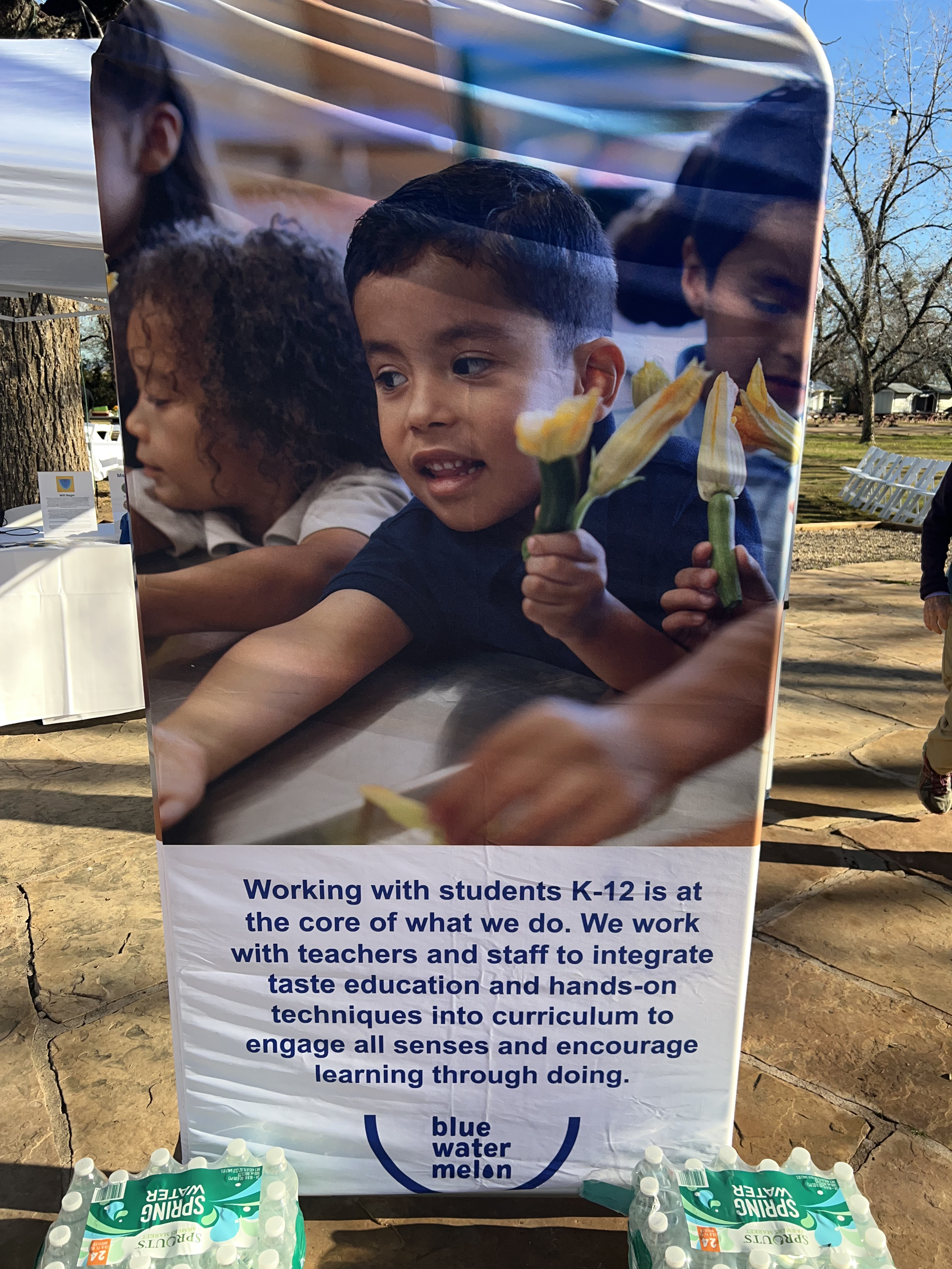
Today, Blue Watermelon partners with dozens of schools across Arizona, working everywhere from small garden classrooms to busy urban cafeterias. Their programs bring together teachers, school nutrition staff and volunteer chefs who co-teach lessons, run demos and help kids connect learning to what they see on their lunch trays. Blue Watermelon is also working directly with school food professionals through chef-led workshops and menu creation sessions, helping nutrition teams build culinary skills, test recipes with local ingredients and determine how those dishes can accommodate real-world budgets, labor constraints and USDA requirements. Instead of treating school food as something separate from the school day, Blue Watermelon tries to integrate it into everyday learning so that tasting a new vegetable or helping prep a recipe feels just as normal as any other part of class.
When students get to interact with food in the garden and help turn them into delicious dishes, they start to recognize and choose them in the cafeteria. School staff have seen the correlation between students becoming more adventurous about trying new items on the lunch line when they've already gotten to know the food in the garden and the kitchen. When Blue Watermelon goes into schools across the state, chefs and teachers highlight desert-adapted, Arizona-grown ingredients like squash, chilies and other seasonal produce that not only taste better when they’re fresh from the garden, but also help students learn which crops thrive in their own climate and why those foods can be a regular part of a healthy school lunch.
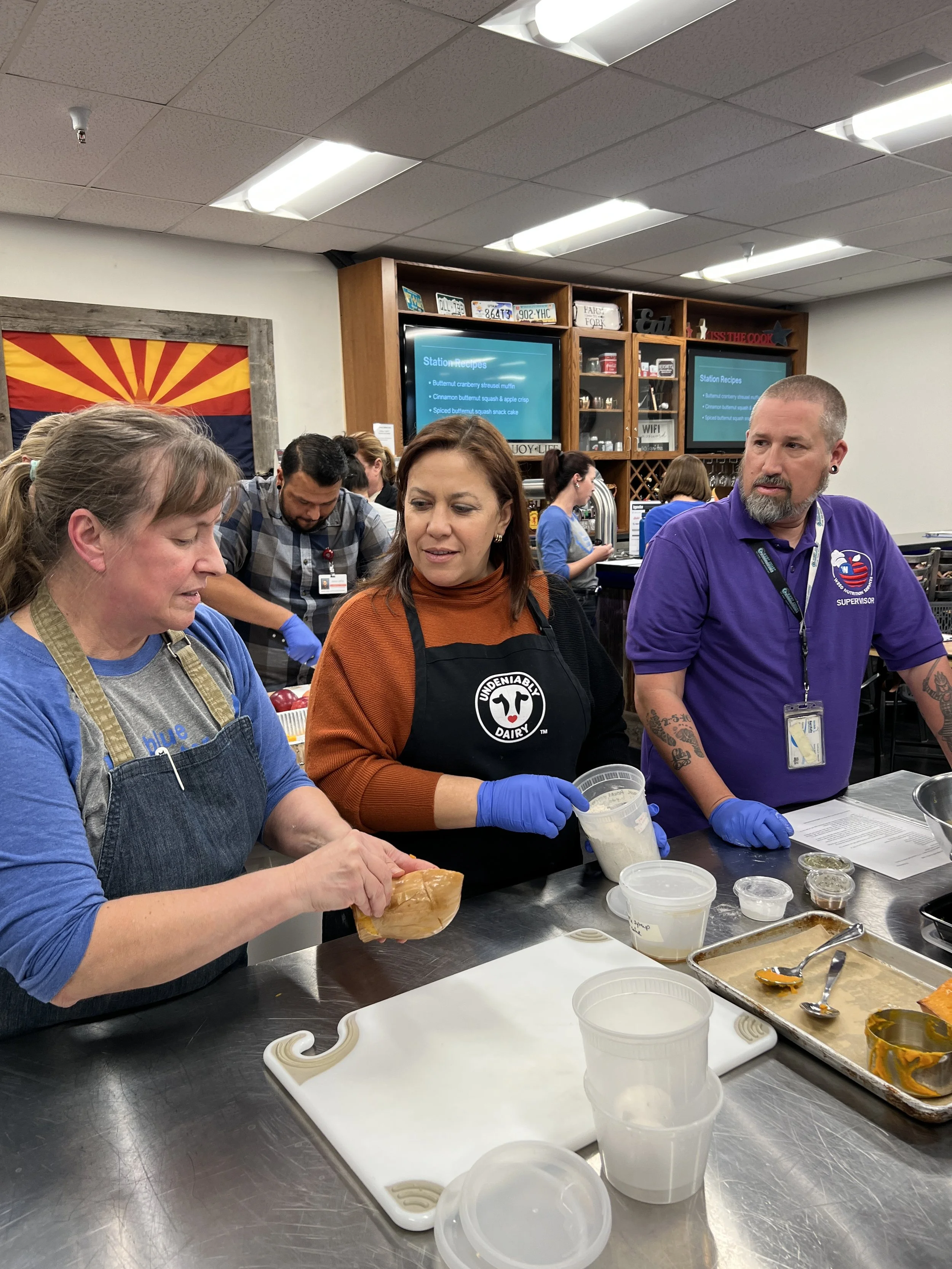
Blue Watermelon Project runs several programs that show different ways to connect students and school food. Their Feeding the Future contest invites teams of K-12 students to work with teachers, school food staff, and local chefs to create a school lunch that meets all the National School Lunch Program nutrition requirements and works within the same tight budgets that real cafeterias face, while still including at least one local ingredient. For most districts, that means building a full reimbursable meal including milk, fruit, vegetable, grain and protein on roughly $4.30-$4.70 in federal reimbursement for each free lunch, an amount that has to cover both ingredients and labor. In the contest itself, high school teams are given just $1.50 per tray to reflect the portion of the reimbursement that would be realistically left for food after paying for employees, training, equipment and other costs. With the challenge to manage such a small budget students quickly learn how hard it is to build a balanced, appealing meal when you only have a few dollars to spend on each tray, and when that meal has to be scaled up to feed hundreds of classmates.
Past Feeding the Future teams have created dishes like fish tacos with purple cabbage slaw, taco seasoned tater tots and paprika spiced pineapple bits, or a Banh Mi Torta with tender pulled pork on a whole-grain roll with crisp romaine, cilantro, jalapenos and baked jicama fries on the side. These kinds of menus help demonstrate that even with strict National School Lunch Program guidelines and a very low budget per-meal, school lunch can be full of color, flavor and still rooted in fresh ingredients. At this stage, Feeding the Future is impactful by fostering student creativity, engagement and real-world problem solving. Many students leave the contest feeling proud and more confident in having built skills and problem-solving, teamwork, knife skills, flavor pairing and even public speaking. With this they also gain a better understanding of why school food looks the way it is and how hard staff work to feed hundreds of kids on a tight schedule.
While Blue Watermelon focuses on hands-on experiences in specific schools, the Arizona Farm to School Network works at the statewide level to make those kinds of programs easier to start and sustain. By bringing together school nutrition directors, teachers, gardeners, farmers, non-profit partners and state agencies who all care about getting more Arizona-grown food into schools and into classroom lessons. Through these resources, training and Communities of Practice, Arizona Farm to School supports schools in starting and expanding gardens, connecting with local producers and navigating the policies and procurement rules that otherwise can make farm to school feel overwhelming.
People like Paige Mollen, who helps lead the network, spend a lot of time listening to what schools and farmers need, whether that's recipes that work in real-world cafeterias, guidance on how to safely use garden produce or introductions to nearby growers. By building these relationships and sharing what's working across districts the Arizona Farm to School Network makes it more likely that a “great idea” in one school can turn into a sustainable practice spanning over many districts in Arizona.
What gets in the way: barriers that schools and farmers face
While ideally it would be easy to implement local food in the school systems, it's important to be honest about the barriers that make farm-to-school work challenging in Arizona. Those barriers show up in everyday ways: tight budgets that have to cover far more than just ingredients, short lunch periods that limit what can realistically be cooked and served, along with complicated procurement rules that make it hard for farmers and school nutrition teams to work together.
One of the biggest themes I heard in my conversations with Paige Mollen from the Arizona Farm to School Network and my discussion with Kayla LaLone and Sarah Martinelli from the Blue Watermelon Project is that school food departments are essentially self-sustaining businesses living on reimbursements. The funding they receive has to cover everything: food, staff wages, equipment, supplies and indirect costs. As several people I spoke with for this blog pointed out, including Paige Mollen from the Arizona Farm to School Network and nutrition researchers like Sarah Martinelli at Arizona State University, food is just one piece of the school meal budget. The same money also has to cover staff wages, training, kitchen equipment, repairs and basic supplies, which is why even a reimbursable lunch that brings a little over $4 in federal funding per meal can still feel nearly impossible once all those costs are factored in.
Local ingredients often cost more than standard commodities or distributor options. Programs like the former Try It Local program helped by offering extra reimbursement for local purchases, and school districts jumped on that opportunity. Nationally, this funding came through USDA’s “Local Food in Schools” (LFS) cooperative agreement program Arizona’s state-level implementation was called Try It Local. Funding for Try It Local ended as of June 2026, which means schools and farm-to-school partners are working to make sure that local purchasing continues even after the loss of the program.
Another significant barrier is the short time period in which school kitchens are expected to feed hundreds or even thousands of students. Serving more scratch-cooked meals and fresh, unprocessed foods sounds simple until you imagine scooping or plating those foods 200 to 300 times in 15 minutes, for multiple lunch periods. Short mealtimes shape what can realistically be prepared, served, and eaten. Even when students love the food, they might not have enough time to finish it, which can look like waste and get blamed on the menu instead of the schedule.
There are also staffing and logistical challenges. Many districts struggle to hire enough people for part-time, physically demanding kitchen jobs, especially after the pandemic. School food departments don't usually control lunch schedules; as Sarah Martinelli stated, those decisions are typically set at the school and district level by principals and administrators who are also juggling bell times, class blocks, recess and limited cafeteria space.
When lunch times are set this way, nutrition teams often have to design menus around what they can prepare, serve and clean up within those fixed windows, not necessarily what would be ideal from a nutritional or local sourcing standpoint. It might be easier to rely on heat and serve items than to wash, chop and cook fresh vegetables at scale, or to offer fewer choices so the line keeps moving. Even when staff are eager to serve more scratch-cooked meals or local ingredients, the actuality of short lunch blocks and tightly packed schedules can make those goals hard to implement.
School food departments also don't receive bond money for wages and equipment in the same way other parts of the district do, so they're expected to meet high expectations without matching support. When working to get more local food into schools, limited processing equipment, storage space and delivery capacity make it hard for farmers to provide products in a format that works for schools.
Mollen highlighted another important gap: communication and coordination. Farmers and nutrition directors often want the same thing — more local food in schools — but they don't have regular, structured opportunities to talk through their needs and constraints. Without support to walk farmers through procurement requirements, food safety standards and the volumes needed, and without time for school staff to sit down with farmers and co-ops, it's easy for everyone to feel stuck. Paige Mollen and the Arizona Farm to School Network are trying to change this by holding regular Community of Practice meetings and procurement work groups, where school nutrition staff and farmers can plan menus together, understand each other's constraints, and troubleshoot issues before the start of local purchasing.
Building teams and values-aligned purchasing
Despite these barriers, there are promising efforts underway in Arizona to push farm-to-school forward. Mollen emphasized how important it is to have whole school teams working on local food such as district leaders, child nutrition directors, teachers, support staff, parents, and the students. When everyone shares the responsibility and creates an action plan together, local purchasing and scratch cooking become more sustainable than when one person is trying to push changes alone. To support that, Paige and her partners work through the Arizona Farm to School Network and the Arizona Farm to School Collaborative work to help build dedicated farm to school teams, so gardens, local procurement and food education are shared responsibilities rather than falling on a single staff member.
Arizona’s state agency is also playing an important role. Through the Arizona Department of Education’s Farm to School initiative, USDA Farm to School and Local Food for Schools funding is being directed toward partner organizations that work alongside school food professionals - groups like Blue Watermelon Project, Pinnacle Prevention and the Arizona Farm to School Network. Rather than using the funding only on internal staffing and state-led training, ADE’s Health and Nutrition Services team has chosen to invest in on-the-ground partners who help schools connect with local farmers, build farm-to-school teams and work through the practical challenges of bringing more Arizona grown food into cafeterias.
Meanwhile at Blue Watermelon, LaLone and Martinelli shared that Arizona districts are also working on values-aligned purchasing efforts with support from the Chef Ann Foundation. Chef Ann and Kitchen Sync Strategies are also helping districts form a Values Aligned Purchasing Collective (VAPC) Which is a formal group of school food authorities that agree on shared procurement rules such as membership agreements and bid language so they can buy more locally grown, organically grown and regeneratively grown food together rather than each district trying to do it alone. Members get access to ready-made small purchase templates and RFP language, a vetted network of values aligned suppliers and regular check-in meetings to plan Cooperative purchases which makes it easier for farms and vendors to meet school needs and for schools to afford local ingredients.
The fact that this initiative is starting in Arizona and that organizations like Blue Watermelon Project and Pinnacle Prevention are involved in shaping it says a lot about the momentum among local organizations to invest in better school food and local producers. If values-aligned purchasing efforts like VAPC really take off here, they could start to shift what “normal” looks like on a school lunch tray. Instead of mostly relying on the cheapest produced items available, districts would have the opportunity to regularly buy Arizona-grown fruits and vegetables, beans, grains and proteins from farmers and food businesses that share the same values. Over time that could introduce more kids to eating fresh, culturally relevant foods at school, more stable markets for local producers and a school food system that keeps more of Arizona's public food dollar circulating in Arizona communities rather than flowing out of the state.
A future Arizona with better school lunches in Arizona doesn't just mean no more headlines arguing over whether french fries or pizza count as a vegetable; it also means having students show up more nourished and ready to learn with fewer families having to worry about whether their kids will get a decent meal that day, more public food dollars flowing to small and mid-size farms and food businesses thriving across the state instead of leaving Arizona all together.
In day to day life, that might be shown as a calmer, less rushed lunch period, a salad bar and hot entrees built around Arizona-grown ingredients and school kitchens that feel like the heart of the school rather than an afterthought. It would also mean more of the school community- teachers, parents and students bridging how the cafeteria supports the school in learning, health and the local economy.
Over time, Values-Aligned Purchasing could help build a school food system where healthy local meals are the norm and kitchens have the support needed to cook from scratch while farmers can count on schools as reliable long-term customers.
Why student involvement matters
One of the most encouraging parts of my conversations was how much changes when students are involved. Mollen talked about how having kids plant, harvest and prepare food can transform their willingness to try new ingredients and keep trying them until they genuinely like them. Giving students small choices such as how something is seasoned helps them feel ownership and curiosity instead of resistance.
Blue Watermelon Project sees this every day. Through Feeding the Future and Chef in the Garden, students learn to chop vegetables, measure ingredients, read recipes and practice food safety; they see kale, carrots, cucumbers and herbs as things they can grow and cook rather than just mysterious items on a salad bar. Later, when those same foods appear in the lunch line, students are more likely to grab them, talk about them and encourage friends to try them. They also leave these programs with skills that go far beyond the cafeteria, from budgeting and teamwork to public speaking and leadership.
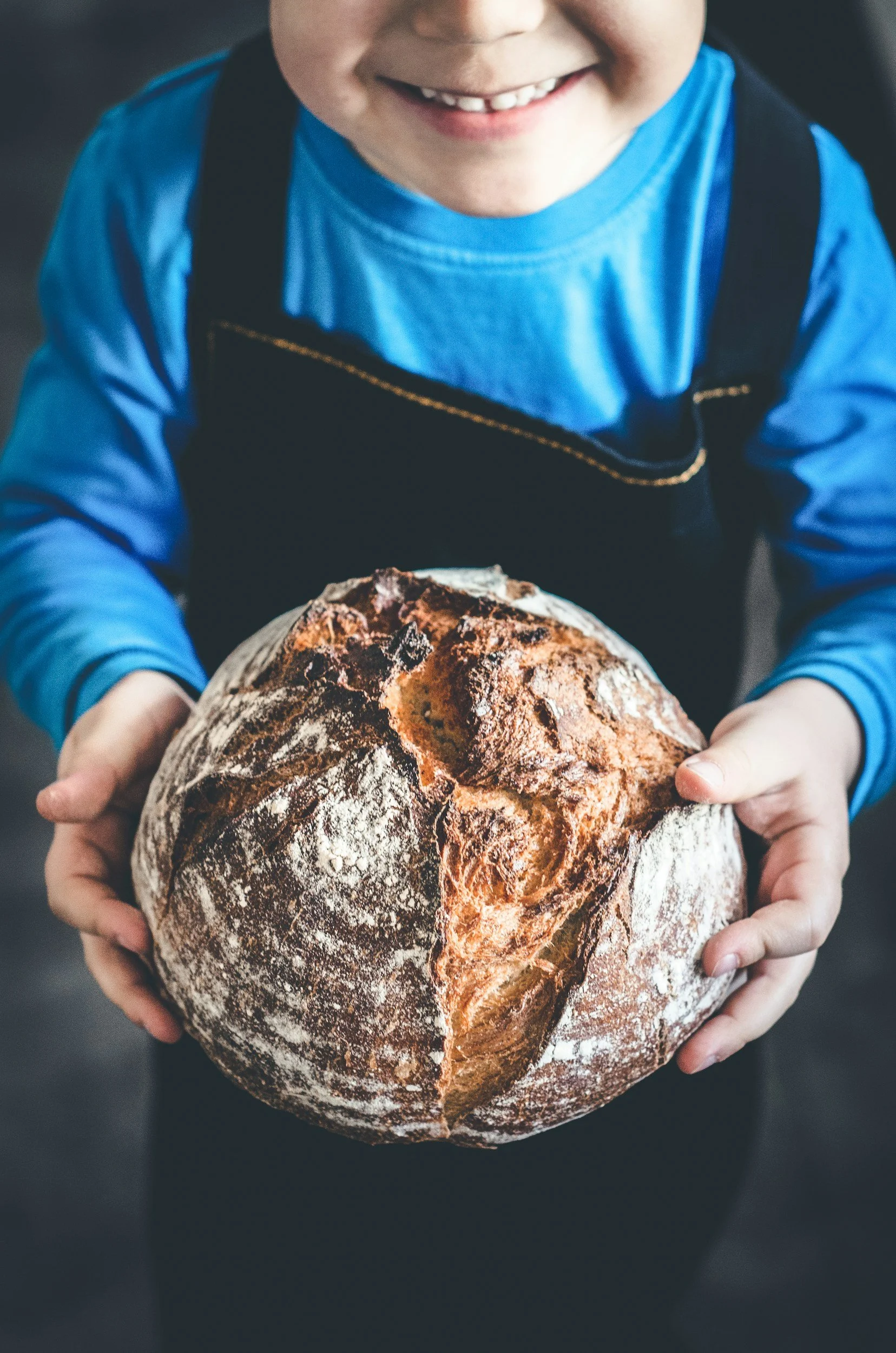
In the end, school lunch is one of the most important systems we have for shaping kids’ health in our food future. In Arizona schools meals quietly act as a safety net for hungry kids and a potential lifeline for local farms. These meals are especially important now, as Arizona has seen the largest drop in SNAP participation in the country, leaving hundreds of thousands of Arizonans without food assistance which puts more pressure on school meals to fill that gap. For a deeper look into how recent SNAP cuts are affecting Arizona families and children’s nutrition, check out our blog on SNAP policy and food access.
Yet, whether the potential becomes reality depends on how we fund these programs, how we support school staff and farmers and how willing we are to bring more voices, especially those of students, to the table. That won't happen on its own. It will take sustained funding for healthy school meals, time and training for school staff to cook from scratch and work with local ingredients and real support for farmers and food hubs so they can reliably sell to schools. It also means inviting students, families and school communities into the conversation about what good food looks like.
As someone studying sustainable food systems, I believe that when we invest in farm-to-school partnerships and listen to the people doing the work, our school lunches can do far more than just get kids through the day. They could nourish them, connect them to their communities and help grow a more resilient food system for all of us.
If you’re inspired by the Blue Watermelon Project’s work, here are a few ways to get involved:
Schools can participate in the Feeding the Future school food culinary contest. Learn more about the annual contest or register to compete here.
Attend the Feeding the Future competition as a guest. Follow Blue Watermelon Project on Instagram for early bird registration opportunities. Tickets will be released in September.
Volunteer - Look for opportunities to help serve on the lunch line at a local school or support the Feeding the Future event.
This blog was written by Courtney Kentch, our Resilient Food Summer Intern who came to Local First Arizona through the USDA NextGen Program at Arizona State University.