At Reid Park Zoo, protecting wildlife isn't something that happens only inside an animal habitat.
It influences how buildings are constructed. How landscapes are planted. What gets composted. How products are purchased. And even how much water flows through a sink, toilet or pool.
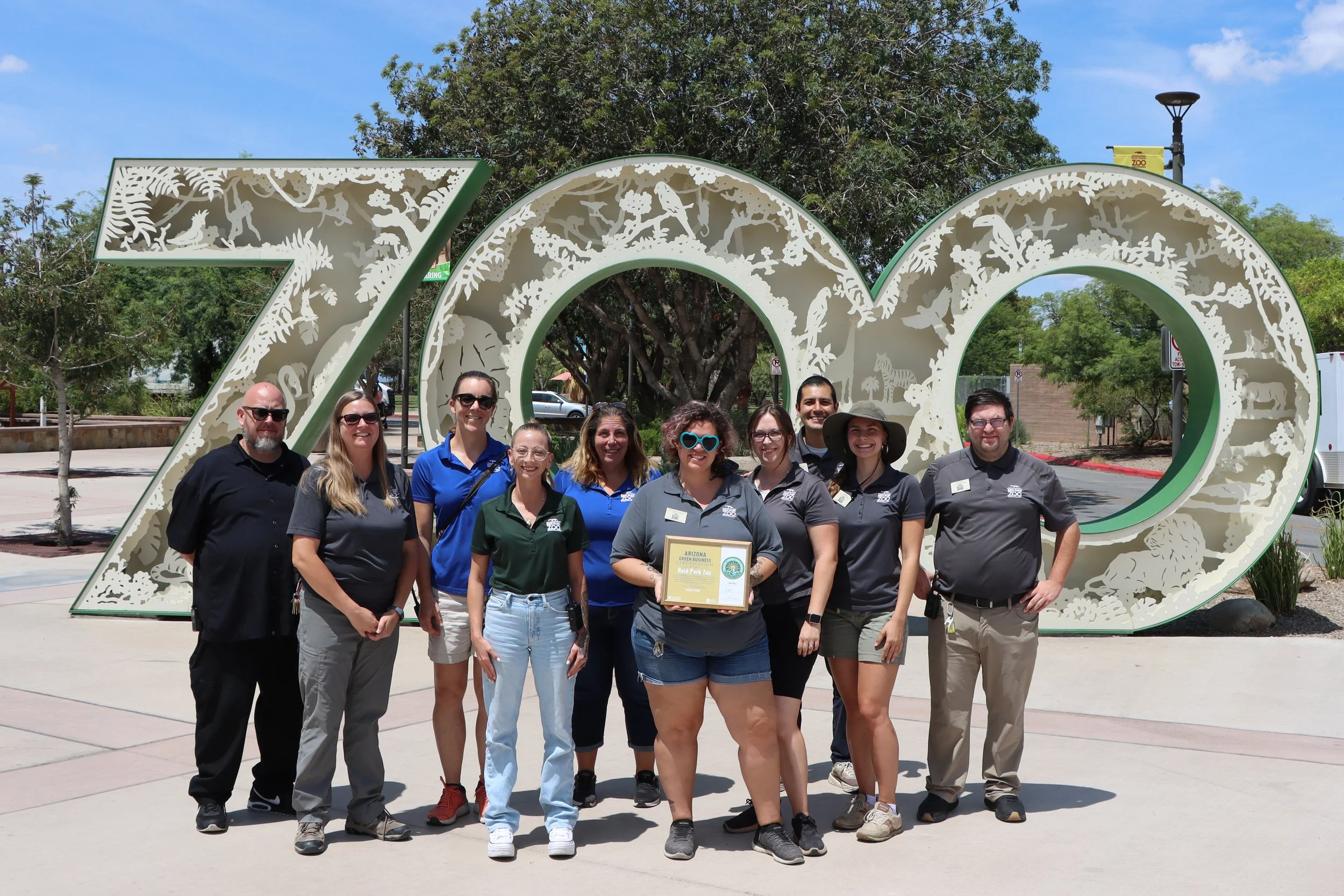
Reid Park Zoo’s sustainability work is a team effort. An active staff committee helps identify opportunities for improvement across departments and keeps sustainability part of the zoo’s ongoing operations.
That connection between mission and operations is one reason Reid Park Zoo has earned a renewed Green Business Certification from Local First Arizona.
Certified since 2023, the Reid Park Zoo has continued building on the sustainability policy it developed during its initial certification — improving facilities, training employees and looking for new opportunities to conserve resources across its operations.
One project alone is saving more than 600,000 gallons of water each year.
“Sustainability is integrated into our daily operations because protecting wildlife, whether our native wildlife or the wildlife represented by animals at the Zoo, begins with protecting the natural resources we all depend on.”
And here's what makes that investment particularly noteworthy: Reid Park Zoo doesn't pay a conventional water bill.
Without the direct financial incentive that drives many water-efficiency projects, zoo leadership still chose to invest in major water-saving improvements because conserving the resource itself matters.
When conservation is the mission, operations matter too
A majority of the animals at Reid Park Zoo represent species that are threatened or endangered, with habitat loss and other human-caused environmental pressures contributing to the challenges many face in the wild.
For an organization dedicated to wildlife conservation, that creates a direct connection between the message visitors hear and the way the organization itself operates.
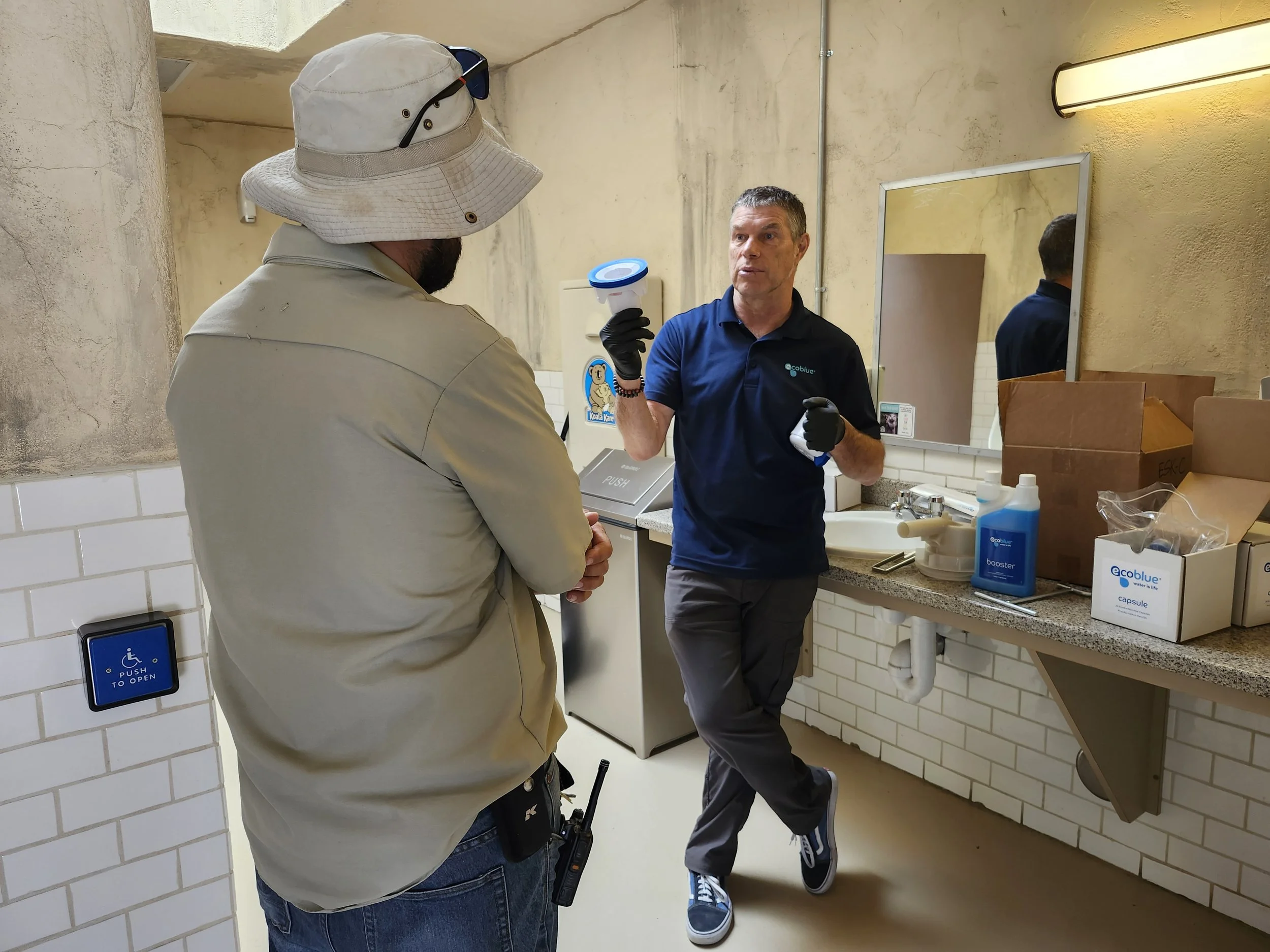
Sustainability becomes meaningful when goals turn into changes on the ground. Low-water-use fixtures are one of the practical improvements Reid Park Zoo has made to reduce resource use across its operations.
“Healthy ecosystems are essential for wildlife, and the choices we make — from conserving water and energy to reducing waste and making thoughtful purchasing decisions — help lessen our environmental impact while demonstrating practical conservation solutions that our guests can apply in their own lives,” said the Zoo’s Director of Conservation & Education, Erin Gleeson.
“Sustainability is integrated into our daily operations because protecting wildlife, whether our native wildlife or the wildlife represented by animals at the Zoo, begins with protecting the natural resources we all depend on.”
That philosophy shows up throughout the zoo.
Water-efficiency improvements, including recirculating pools and upgrades to plumbing fixtures, are conserving hundreds of thousands of gallons annually. New construction and facility retrofits prioritize energy and water efficiency. Native and climate-appropriate landscaping reduces water demand while providing habitat for local wildlife.
Even the zoo's waste has somewhere better to go.
Food scraps are diverted through the City of Tucson's FoodCycle program, while manure from herbivores is sent to the City's composting facility rather than becoming waste.
Designing sustainability into the organization
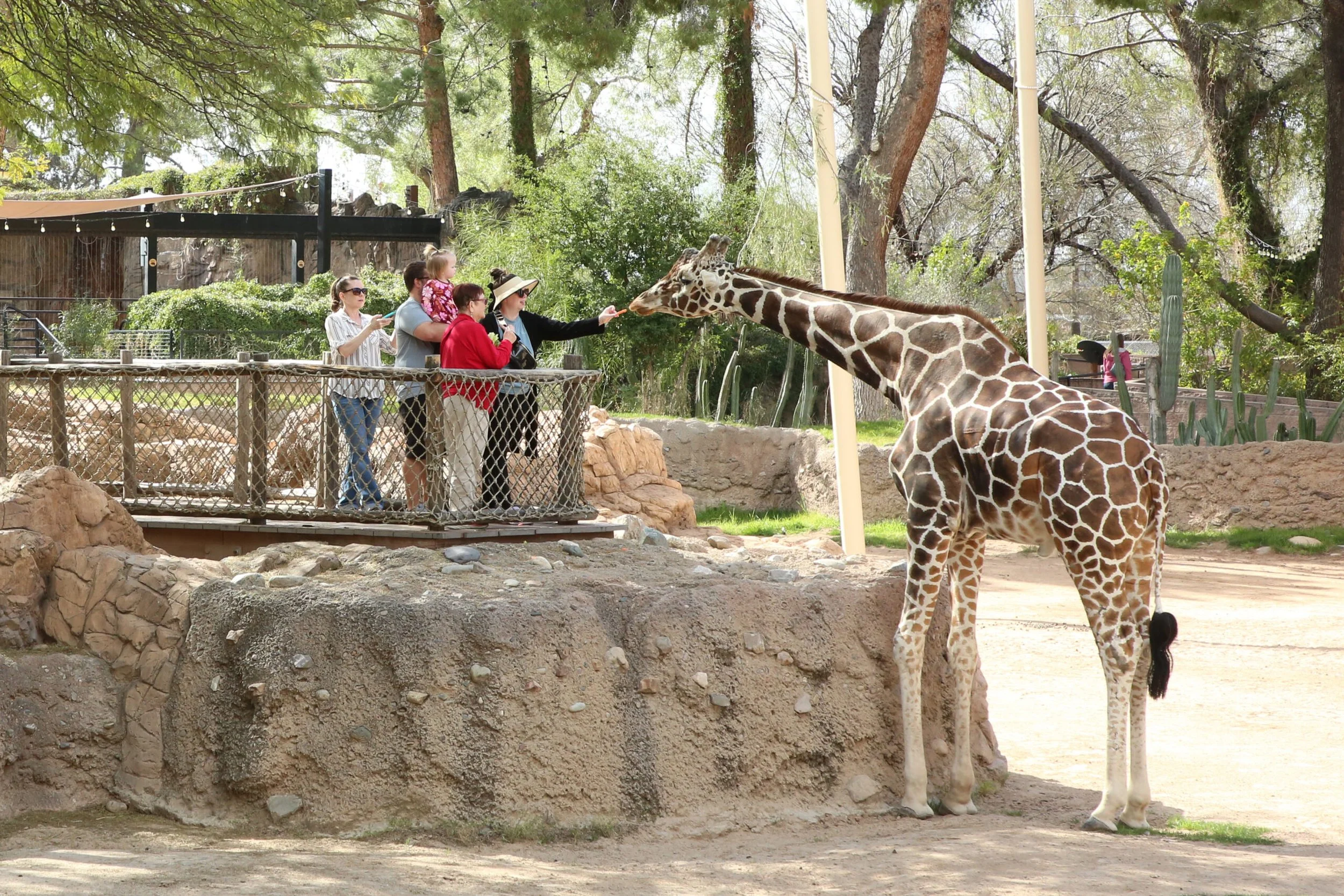
At a zoo, sustainability sometimes requires balancing resource conservation with an overriding responsibility: animal health and welfare. Reid Park Zoo’s approach recognizes that meaningful sustainability has to work within the realities of the organization.
Some of Reid Park Zoo's biggest sustainability decisions are literally built into the place.
Its Conservation Learning Center and Health Center have earned LEED certification, and its new Pathway to Asia pavilion is also being designed to meet LEED standards. The zoo's pollinator garden, filled with native and drought-tolerant plants, is recognized as a Certified Wildlife Habitat by the National Wildlife Federation.
But certification isn't simply about accumulating plaques.
One of the things Local First Arizona's Green Business Certification evaluates is whether sustainability has become part of how an organization operates — rather than remaining a collection of isolated projects.
At Reid Park Zoo, an active staff sustainability committee meets regularly, employees receive sustainability training, and leadership continues to look for improvements across departments.
That's important because no organization operates without environmental impacts.
A zoo presents particularly interesting challenges. In some parts of the operation — veterinary care, for example — preserving animal health and life has to take precedence over reducing resource use or materials.
The goal isn't environmental perfection.
It's having a system for asking, again and again: Where can we do better?
What Green Business Certification actually means
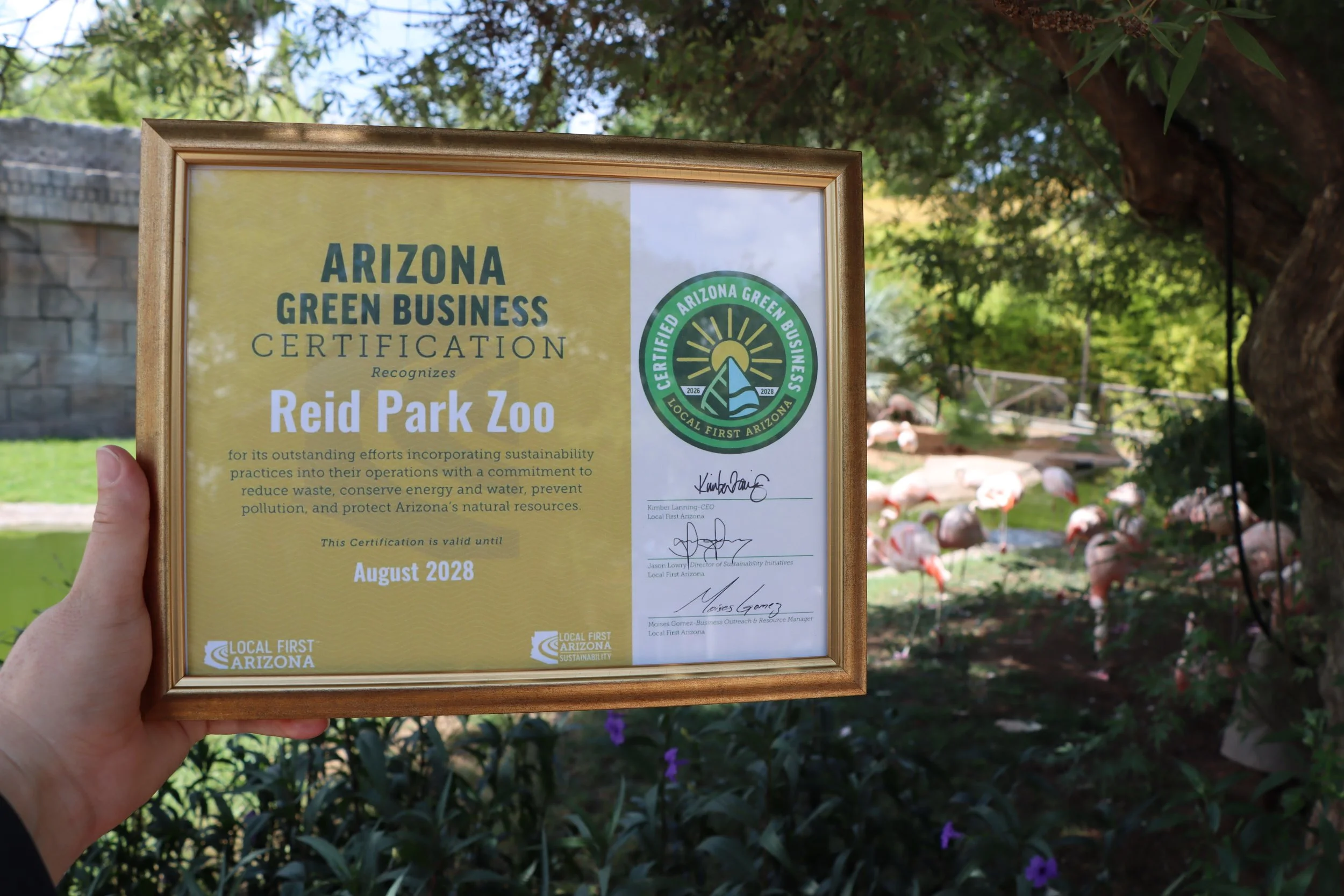
Reid Park Zoo first earned Local First Arizona Green Business Certification in 2023. Recertification recognizes the progress made since then — and the zoo’s continued commitment to finding new ways to reduce its environmental impact.
Local First Arizona's Green Business Certification helps Arizona businesses and organizations evaluate their operations across areas including energy, water, waste, transportation and purchasing, then identify practical opportunities to reduce their environmental impact.
Recertification matters because sustainability isn't a one-time achievement.
Buildings change. Technology improves. New opportunities emerge. Organizations grow.
Reid Park Zoo's original certification in 2023 established a baseline and formalized its sustainability commitments. Its recertification recognizes the work that has continued since then.
“Green Business certification recognizes our organization's ongoing commitment to environmental stewardship and continuous improvement,” Erin said. “It validates the work of staff across every department who have embraced sustainable practices and encourages us to continue finding new ways to reduce our environmental footprint.”
The impact doesn't stop at the zoo gates
YOU DON’T HAVE TO RUN A ZOO TO:
Use less water.
Waste less.
Choose materials thoughtfully.
Design efficient buildings.
Keep looking for the next improvement.
Ready to make sustainability part of how your organization operates?
Learn more about Local First Arizona's Green Business Certification and Sustainability Initiatives.
There's another reason sustainability at Reid Park Zoo has an unusually large potential reach: hundreds of thousands of people visit each year.
Through exhibits, interpretive signage, educational programming and community events, the zoo can connect operational choices visitors see around them with conservation challenges affecting wildlife around the world.
A drought-tolerant landscape isn't only landscaping.
Composting isn't only waste management.
A water-saving retrofit isn't only infrastructure.
Each offers another opportunity to demonstrate that conservation is made up of everyday decisions — including decisions businesses, organizations and individuals can make themselves.
And that's part of what makes Reid Park Zoo's Green Business recertification worth celebrating.
The zoo's mission may be extraordinary, but many of the tools it uses to reduce its footprint aren't.