Keeping It Local: How ESOPs Can Help Businesses Navigate Succession
Spinato's Pizzeria & Family Kitchen chose employee ownership as a way to plan for succession, reward the people who helped build the business and keep a longtime Arizona company rooted in its community.
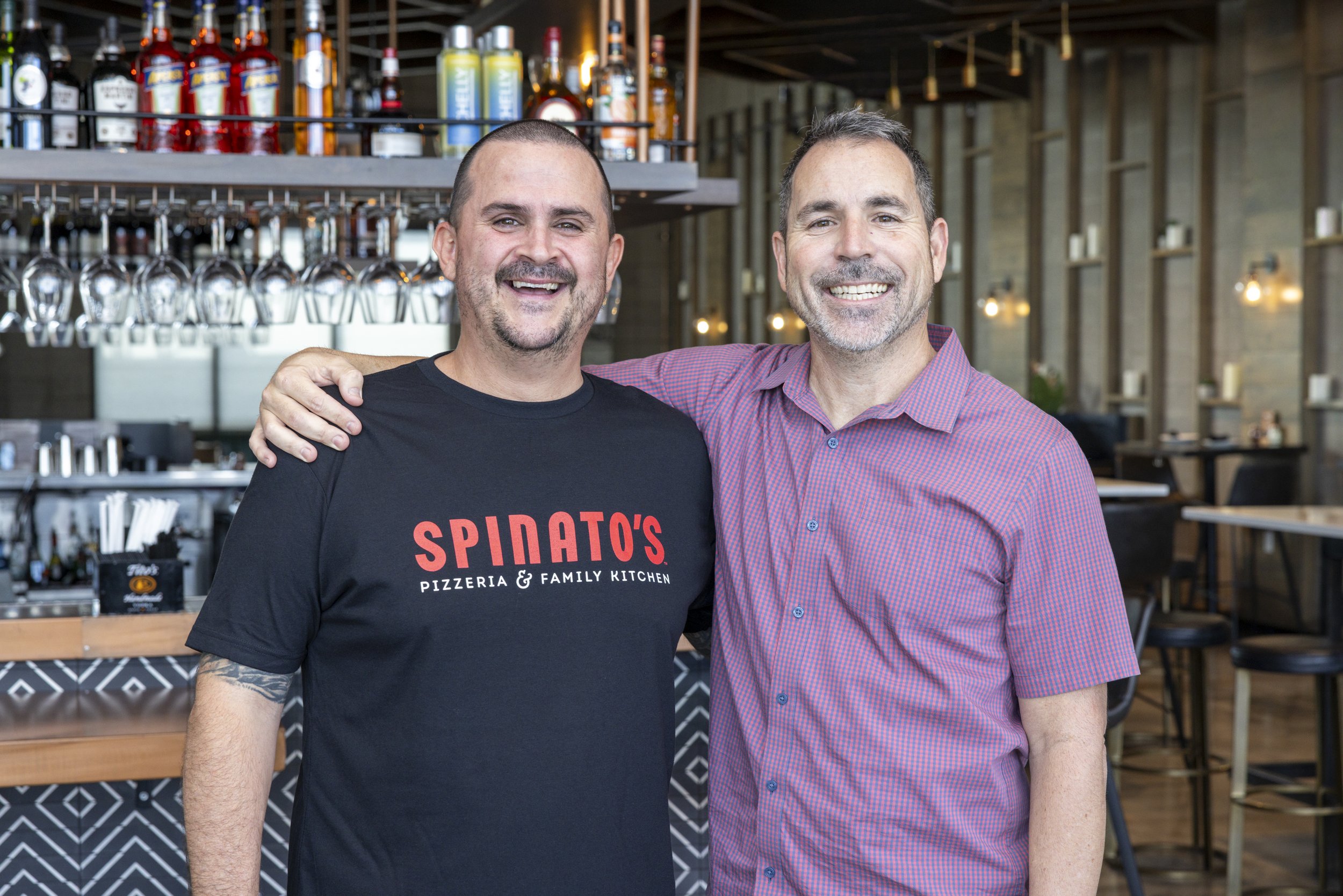
Terry Wiberg, Spinato’s Food and Beverage Director, and Anthony Spinato, Spinato’s CEO. Terry started with Spinato’s 25 years ago as a dishwasher and now is a co-owner of the company through the recent ESOP. (Photo credit: Angela Moneyhon)
For many local business owners, starting a business takes years of work, sacrifice and persistence. But eventually, another question arrives:
What happens to everything you've built when you're ready to step away?
Selling to another company may provide an exit. Passing the business to the next generation may work for some families. Closing is another possibility.
But those aren't the only options.
For the Spinato family, owners of Spinato's Pizzeria & Family Kitchen, succession planning became an opportunity to think much bigger than who would own the restaurants next. They wanted to consider what would happen to the employees who had built careers there, the communities that had supported the business for decades and the culture the family had spent more than 50 years creating.
Their answer was an Employee Stock Ownership Plan, or ESOP.
Thinking Beyond the Next Generation

The Spinato family cherishes time together making an authentic Italian meal. (Photo courtesy of Spinato's Pizzeria & Family Kitchen)
The Spinato family began seriously discussing succession during a family retreat in 2022.
Ken and Elaine Spinato had opened their first restaurant in Scottsdale in 1974. More than five decades later, the company had become far more than one family's livelihood.
"Years ago, when we had one location, it really was just us, our future or livelihood," said CEO Anthony Spinato. "But over the years, more and more people joined our team. This became more than just a job to them, it became their career."
That changed the family's thinking about succession.
"As they joined us to make our dreams as restaurant owners come true, we saw an opportunity to make their dreams come true as well," Spinato said.
ESOP 101: What Is an Employee Stock Ownership Plan?
An Employee Stock Ownership Plan (ESOP) is a federally regulated retirement benefit that gives employees an ownership stake in the company where they work.
For business owners, an ESOP can provide a succession option that allows them to sell all or part of the company while helping preserve its jobs, culture and legacy. For employees, it creates an opportunity to build wealth as the value of the company grows.
ESOPs aren't right for every business, and creating one requires careful financial, legal and operational planning. That's why understanding the options — and starting succession planning early — matters.
Learn more about ESOPs:
In-Person Workshop: Join Local First Arizona on September 17 at Goodman’s Interior Structures in Phoenix for an in-person workshop, Business Strategies: The Power of Employee Ownership. Presented in partnership with Bayntree Wealth Advisors, the event will explore employee ownership models work, what businesses should consider before pursuing an ESOP and whether employee ownership could fit your succession, growth and legacy goals.
On-Demand Webinar: Watch Preparing Your Business Transition: The Employee Ownership Opportunity, available on-demand from the Local First Arizona Local Learning Lab.
The family spent more than two years exploring succession and legacy options before choosing an ESOP — a structure that allows eligible employees to earn shares in the company over time.
For Spinato's, employee ownership offered a way to accomplish several goals at once: preserve the company's legacy, keep the business locally rooted, reward longtime employees and create another reason for talented people to build careers with the company.
Today, one in three Spinato's employees is an owner.
What Changes When Employees Become Owners?

Anthony Spinato celebrates with employees after announcing the transition to an ESOP {Employee Stock Ownership Plan} in October 2025. (Photo credit: Morgan Bradley)
Employee ownership doesn't automatically create an ownership culture.
That's one of the lessons Spinato says the company learned quickly.
Spinato's announced its ESOP to employees in October 2025, telling 150 team members that they already had a "slice of the pie" in company ownership. But because many employees weren't familiar with ESOPs, the announcement was only the beginning.
"An ESOP is also a big investment up front and you won't get the return you are hoping for if you don't continually educate and engage your team members," Spinato said.
That means helping employees understand not only what their ownership means financially, but how the everyday decisions they make can affect the company's performance.
The company got an unexpected opportunity to see that mindset at work soon after announcing the ESOP.
Facing an economic downturn and a sales decline of roughly 7% to 10%, Spinato's moved quickly to reduce spending and adjust labor scheduling. Spinato said employees understood the need for the changes and rallied around them. Over the following six reporting periods, the company saw EBITDA (Earnings Before Interest, Taxes, Depreciation, and Amortization) increase 28% and continues to operate more efficiently today.
For Spinato, the experience reinforced an important distinction.
"An ESOP provides ownership, but more importantly it's about entrusting that team members will care for the company."
And those owners aren't limited to executives.
Some of the people already demonstrating an ownership mindset, Spinato said, may be line cooks, servers or other employees making thoughtful decisions every day about how they serve guests and contribute to the business.
Keeping Local Businesses Local
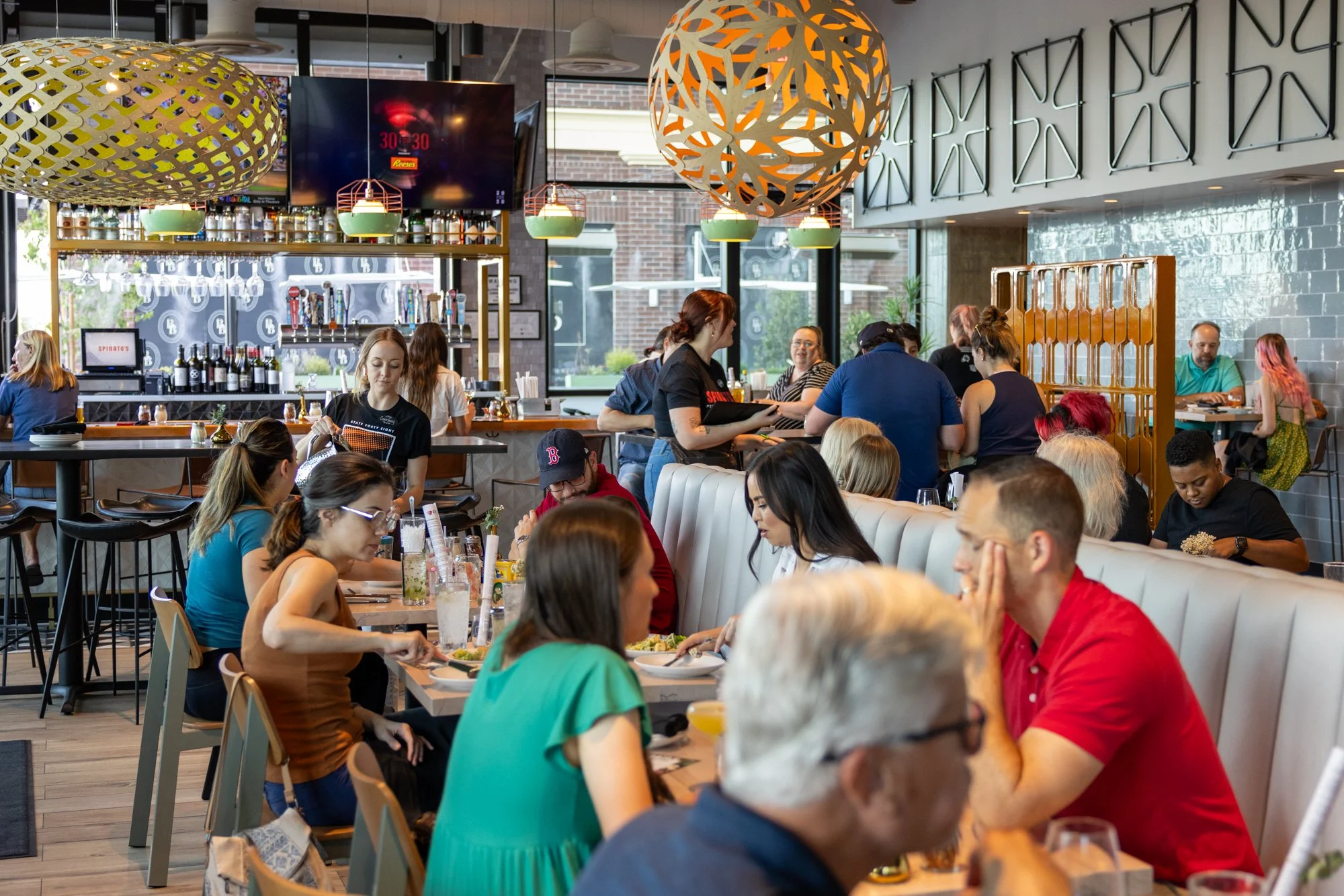
A busy evening inside Spinato's Pizzeria's Gilbert restaurant at Epicenter at Agritopia. {Photo credit: Angela Moneyhon}
Succession decisions don't affect only owners and employees.
When a longtime local business is sold, closes or changes hands, a community can lose something that isn't easily measured on a balance sheet: relationships.
For Spinato, that became an increasingly important part of the family's decision.
"Keeping our business locally rooted has really become the most important goal, even before our growth," he said.
He remembers growing up in communities where families knew the same hardware store owner, barber and grocery store manager for years. As metro Phoenix has grown, he sees both enormous opportunity and a loss of some of those longstanding connections.
A local business that remains rooted for decades can help preserve them.
Spinato’s employees currently have an average tenure of 3.5 years, with 36% of the company’s staff having worked there for at least two years — notable longevity in an industry known for high employee turnover. That longevity allows employees to develop relationships not only with one another but with generations of customers.

Siblings Nicole Spinato-Kienlen and Anthony Spinato of Spinato’s Pizzeria & Family Kitchen grew up in the family business. (Photo credit: Angela Moneyhon)
"Our guests are our community, and we simply would not be here without them," he said.
The company's local connections also extend through its supply chain. Spinato's switched to Hayden Flour Mills flour for its pizzas and currently works with 10 Arizona breweries, five local distilleries and three local wineries.
Those relationships illustrate why local business succession can matter beyond a single company's ownership structure.
When locally owned businesses remain locally rooted, the economic activity surrounding them — jobs, purchasing, supplier relationships and community investment — has a better chance of remaining rooted, too.
An ESOP Isn't an Easy Button

Anthony Spinato is CEO of Spinato's Pizzeria & Family Kitchen. (Photo credit: Matt Young)
For business owners intrigued by employee ownership, Spinato has one piece of advice before anything else: Know why you're doing it.
"It's important for you as owners to reflect on whether an ESOP will benefit your organization," he said.
Spinato is equally clear that creating one requires significant preparation.
Every ESOP is different, and federal regulations make experienced professional guidance essential. Spinato compares the process to building a custom house: the structure has to fit the particular business.
That means finding experienced advisers, getting financial records in order, establishing appropriate governance and preparing for ongoing requirements such as annual reporting and independent valuations.
And the work doesn't end when the transaction is complete.
Spinato wishes the company had begun educating employees about employee ownership sooner. His advice to other businesses is to communicate consistently, help employees understand how their work influences company performance and identify people throughout the organization who can champion the ownership culture.
In other words, transferring shares is one transaction.
Building a company of owners is an ongoing process.
What Do You Want to Outlive You?
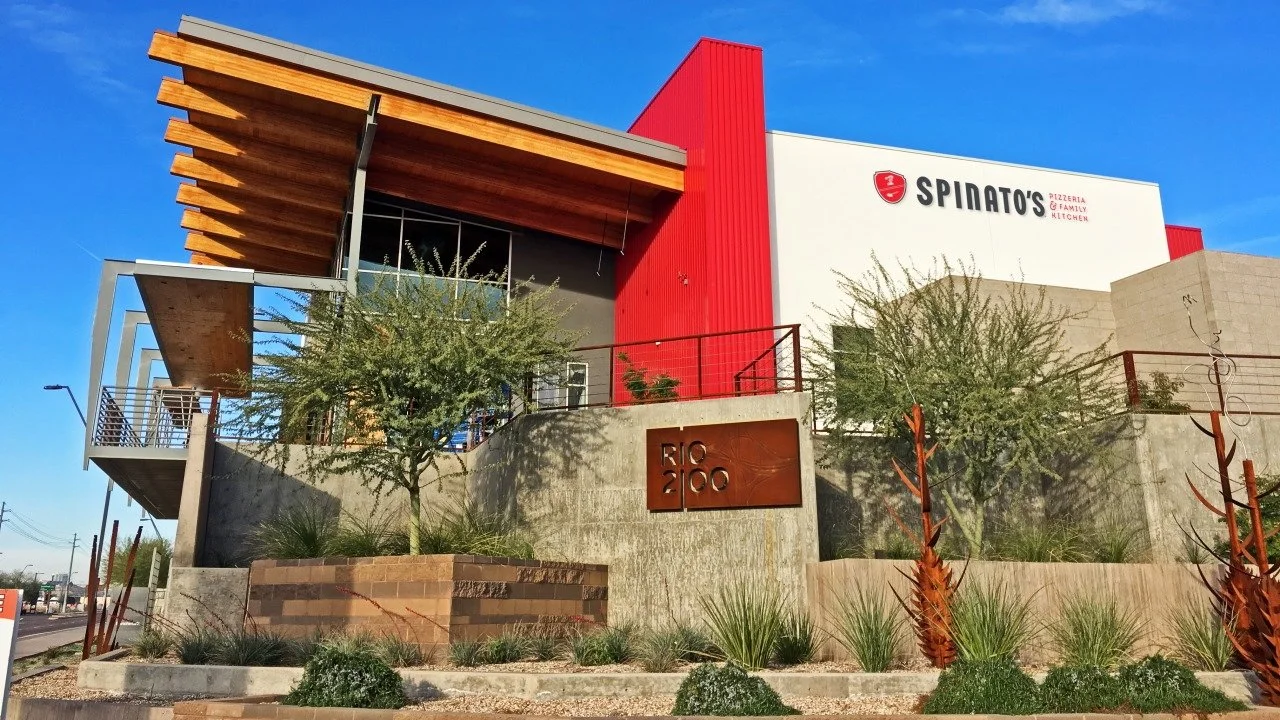
Spinato's Pizzeria's Tempe restaurant is one of six current restaurants. Spinato's is also planning to expand to Glendale in October 2026 and Goodyear in 2027. (Photo courtesy of Spinato's Pizzeria & Family Kitchen)
Spinato's is still growing.
The company currently operates six Valley locations, with additional restaurants planned in Glendale and Goodyear. But Anthony Spinato says growth isn't the family's ultimate measure of success.
What matters is whether the business can grow without losing what made it worth preserving in the first place.
"If we take care of our people today, show them what it means to genuinely care for others, and give them something they are proud to be part of, those values can live far beyond their time at Spinato's," he said.
That's ultimately what succession planning asks business owners to consider.
Not simply: Who will own my business after me?
But: What have we built here that's worth carrying forward — and who should have the opportunity to carry it?