
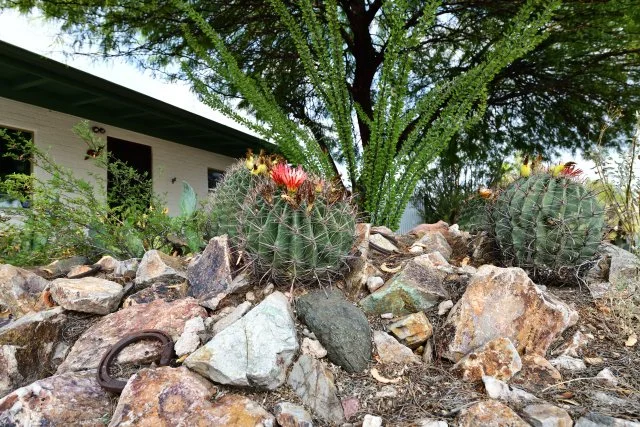
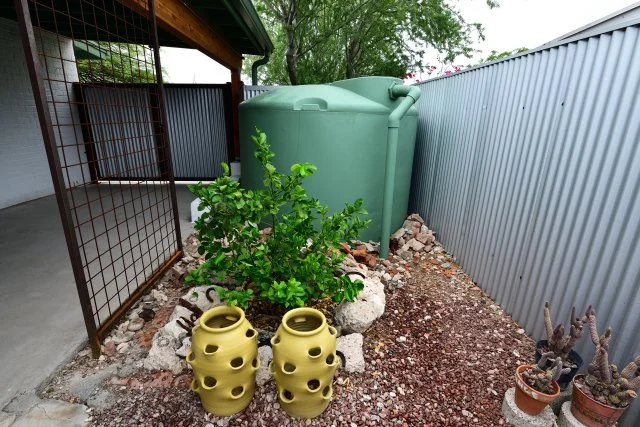
(Left) Blooming barrel cacti. (Right) A 1,500-gallon cistern keeps plants alive during dry months. Photos by Martha Retallick

Retallick in her yard. Portrait by Julius Schlosburg
Arizona’s climate is dry, but not too dry for homeowners to enjoy a lush, desert oasis in their front or back yards.
Martha Retallick, a professional photographer and Local First Arizona member, has created a thriving example at her home in Tucson.
And what’s even more impressive is that she’s done it exclusively by using the water that falls from the sky, an effort she has documented in her locally sourced and locally published book “City Nature.”
“This is localism on steroids,” she said.
Goodbye to sprinklers, but not greenery
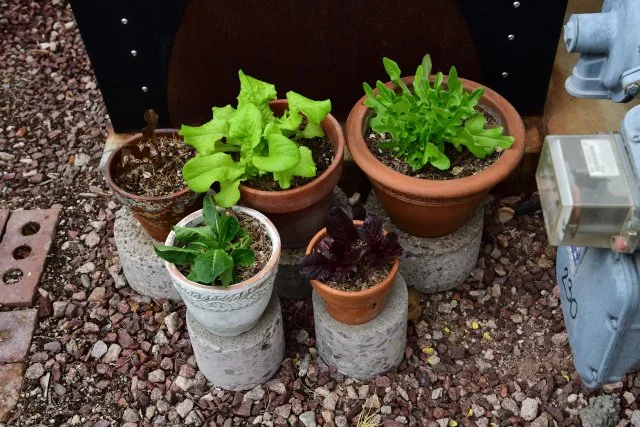
“Since I live on a small lot, I have to use every bit of space that is available. Hence, a tiny lettuce garden next to the gas meter,” Retallick writes.
Retallick has utilized passive and active water harvesting techniques since purchasing her home in 2004.
Given growing concerns related to water scarcity, these intentional, sustainable practices have taken on an even more timely tone. Tucson Water estimates 40% of the city’s water use is outdoors.
Using basins, berms, drainage swales, greywater diversion and a 1,500-gallon rainwater cistern, Retallick has effectively built an irrigation-free landscape — one that has no need for a connection to a municipal water supply.
She waters a trio of fruit trees with greywater from her laundry and collects rainwater to keep her vegetable garden moist.
“Even in the best of times, water is scarce in the desert. But when it rains, oh, does it pour! This is especially true in the summer, when several inches can fall in just a few hours,” Retallick writes in her book.
A locally made book from start to finish
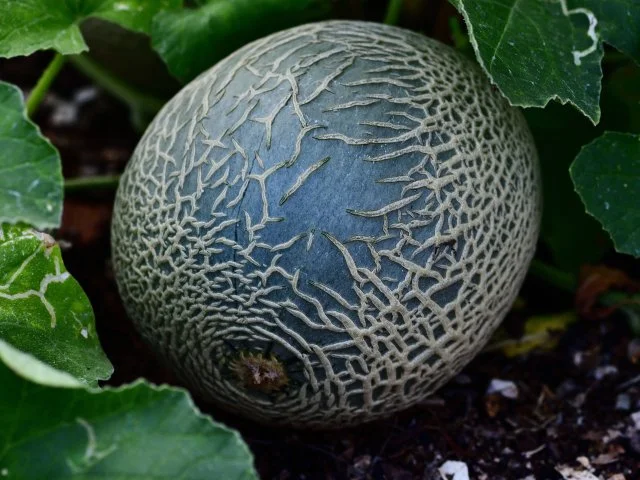
“This cantaloupe will be ripe shortly. In the meantime, its netting pattern catches my eye.”
“City Nature” not only details the bounty of her commitment, which saves rainwater that would otherwise evaporate or be wasted running into the sewer, but it is an achievement in localism.
Retallick purchased her camera equipment locally and incubated the idea as a participant in the Startup Tucson business accelerator, which is a partner of Local First.
She captured about 60 photos in her own backyard and utilized local indexing and editing professionals. The book was printed in Tucson, bound in Phoenix and online orders are fulfilled through a Tucson company.
“That’s really hard to do. (Books) are usually printed in countries that shall not be named and retailed online by corporations that shall not be named,” Retallick said.
“How beautiful desert-adapted landscaping can be”
Nick Shivka, Local First’s senior manager of sustainability initiatives, said he is hopeful that others borrow practices outlined in “City Nature” to find creative ways to reduce water usage.

Local First Senior Manager of Sustainability Initiatives Nick Shivka
If they need additional guidance, he says, Local First’s Green Business Certification and Green Business Boot Camp can help business owners and nonprofits develop environmentally-friendly practices to save money and conserve our most precious resources. Retallick’s photography business is Green Business Certified.
“Oftentimes there are ways for businesses to use the resources they have in a different way, like redirecting greywater towards landscaping instead of losing it down the drain or turning ‘waste’ into something that can be used over and over again,” Shivka said.
“Martha's book shows how beautiful the landscaping around our homes and businesses can be with no additional cost for water and nominal investments in desert-adapted plants and rainwater storage,” Shivka added.
To learn more about Local First Arizona sustainability programs, visit localfirstaz.com/environmental-action.
To purchase a copy of Retallick’s book “City Nature,” visit www.CityNatureBook.com.
