Across Arizona, Indigenous communities are strengthening their food systems on their own terms. Meaningful partnerships begin by recognizing who should lead that work.
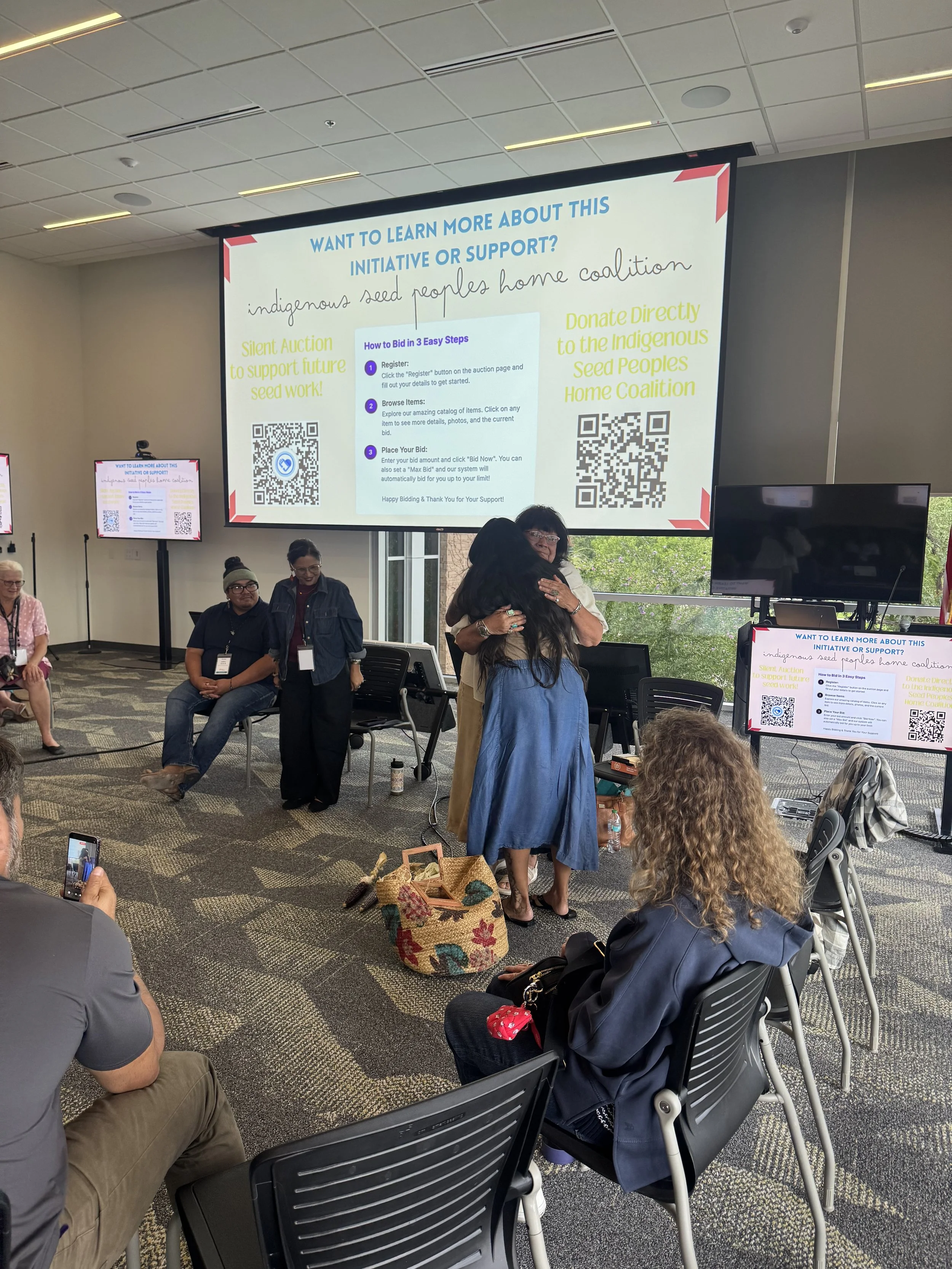
Indigenous Seed Peoples Home Coalition members Lisa Lopez and Marcie Craynon greet one another at the 2026 Good Food Forum in Prescott. The Coalition is revitalizing an Indigenous tradition of sharing seeds, foods and knowledge across communities that stretches back generations.
Who decides what food gets grown, how it's produced and where it goes? Who determines which agricultural traditions are preserved, how knowledge is passed to the next generation and what resources a community needs to build a more resilient food system?
For Indigenous Nations, these questions are at the heart of food sovereignty.
Tribal food sovereignty is about far more than access to healthy or culturally significant foods. It's about the authority to make decisions that shape a community's food system, from the seeds planted in the ground to the ways food is harvested, distributed, prepared and shared.
As Tristan Kitch, Resilient Foodways Program Manager at Local First Arizona, explains, tribal food sovereignty is “the ability for a tribal nation to have control and complete say over how its food system operates.”
That includes the freedom to maintain ancestral foodways and cultural practices, develop local food production and decide when and how to participate in outside food systems.
It's a distinction that matters. Improving access to food is important, but sovereignty means communities have the power to determine what a healthy, resilient and culturally connected food system looks like for themselves.
Food Systems Rooted in Community Knowledge
For generations, Indigenous Peoples throughout Arizona have cultivated crops adapted to the state's diverse landscapes, developed agricultural practices suited to local conditions and maintained relationships between food, land, language and culture.
Colonization and the disruption of traditional food systems have weakened many of those connections. Today, Indigenous communities are working to restore and strengthen them, often by building on knowledge and practices that have endured for generations.
That work takes many forms.
It can mean increasing access to traditional foods, creating opportunities for Indigenous growers, restoring culturally significant seeds or helping young people learn agricultural practices from elders.
It can also mean ensuring that Indigenous languages and histories remain visible in the places where food is grown.
Through the Indigenous Plant Names Project, Tonatierra is collaborating with the Salt River Pima-Maricopa Indian Community's Cultural Resources Department, the Maricopa County Seed Library and Scottsdale Community College to incorporate Indigenous plant names into signage, seed packets and educational materials in community gardens and public spaces around Phoenix.
The initiative connects something as familiar as a garden sign to a much larger effort to preserve and revitalize Indigenous languages and knowledge.
“Through this process of reviving Indigenous languages we are creating once again a path towards Indigenous representation. Through these plants we can make sure that not only are Indigenous languages represented, but so are their histories.”
“Through this process of reviving Indigenous Languages we are creating once again a path towards Indigenous representation,” says Xochitl Enrique, youth project coordinator for Tonatierra. “Through these plants we can make sure that not only are Indigenous languages represented, but so are their histories.”
It's one example of how food sovereignty extends beyond agriculture alone. The plants growing in a garden carry names, stories and relationships that connect communities to their past and help shape their future.
Meaningful Partnerships Begin With Indigenous Leadership
As interest in more resilient and locally driven food systems grows, so does the need for partnerships that respect the priorities and sovereignty of Indigenous Nations.
That means recognizing an important distinction between providing resources to a community and determining what a community should do with those resources.
For organizations working alongside Indigenous communities, the most valuable contribution isn't necessarily a new program or a proposed solution. It may be helping remove barriers to work that communities have already identified as important.
Kitch describes Local First Arizona's role as “not to direct what food systems needs are or tell tribes what their community needs but to support them in accomplishing things they’ve already identified and are working towards.”
In practice, that can mean helping secure funding, connecting people with relevant resources or providing coordination and logistical assistance so community-led projects can move forward.
The Indigenous Seed Peoples Home Coalition offers one example.
Established in March 2025, the coalition brings together Indigenous seedkeepers working to strengthen seed sovereignty in their communities. Its members are developing relationships, sharing knowledge and creating opportunities to protect and grow culturally significant seeds.
Local First Arizona helped convene the initial network and secure funding for its early activities, but the coalition's direction and priorities are shaped by the Indigenous participants themselves.
The distinction is central to the work.

Tristan Kitch, Resilient Foodways Program Manager at Local First Arizona
Kitch describes Local First's position as “not in the driver seat but working alongside the folks who are and helping them accomplish what they're trying to accomplish within their food system based on what their community has identified as its needs.”
Since its formation, the coalition has brought seedkeepers together through gatherings that strengthen relationships and create opportunities to exchange seeds and knowledge. Members have also continued pursuing the work beyond the initial grant funding.
The coalition's work illustrates what becomes possible when relationships, resources and community leadership come together around shared goals.
Why Food Sovereignty Matters for Arizona's Future
Food sovereignty also has implications for the long-term resilience of Arizona's communities and agricultural economy.
As growers face rising temperatures, water pressures and changing environmental conditions, knowledge of locally adapted crops and traditional agricultural practices becomes increasingly valuable.
For Indigenous communities, strengthening those practices can help preserve cultural knowledge while creating opportunities to grow and share foods that are meaningful to community health and identity.
There are economic dimensions, too.
According to a University of Arizona analysis, tribal agriculture generates more than $750 million in total economic output in Arizona and supports thousands of jobs. Indigenous producers and agricultural enterprises are already significant contributors to the state's food economy.
Strengthening tribal food systems can create opportunities for growers and producers while helping communities retain greater control over how agricultural resources are developed and used.
But those opportunities must be defined by the communities themselves.
A food system that produces more food or generates more revenue isn't necessarily a sovereign food system if the people it is meant to serve lack meaningful authority over its direction.
Building a More Locally Driven Food System
For people and organizations working to strengthen Arizona's food economy, tribal food sovereignty offers an important reminder: Locally driven solutions depend on local decision-making power.
That principle requires more than recognizing the importance of Indigenous foods and agricultural traditions. It means respecting the authority of Indigenous Nations, recognizing the knowledge already present within communities and approaching partnerships with a willingness to listen.
It also means understanding that meaningful contributions may happen behind the scenes, through relationships, resources and practical assistance that help community priorities move forward.
Across Arizona, Indigenous growers, seedkeepers, educators and community leaders are carrying this work forward in ways that reflect their own histories, cultures and aspirations.
Their efforts are helping strengthen food systems that connect people to the land, preserve knowledge across generations and create opportunities for the future.
And they demonstrate a principle that extends well beyond agriculture: A resilient local economy isn't simply built for communities. It's built by communities with the power to shape their own future.