Green Business Boot Camp Helps a Flagstaff Farm Cut Costs and Build Resiliency
For Flagstaff-based Forestdale Farm, sustainability has always been part of the work. But turning sustainable practices into long-term cost savings — and real financial resiliency — required the right tools, guidance and access to capital.
That’s where Local First Arizona’s Green Business Boot Camp came in.
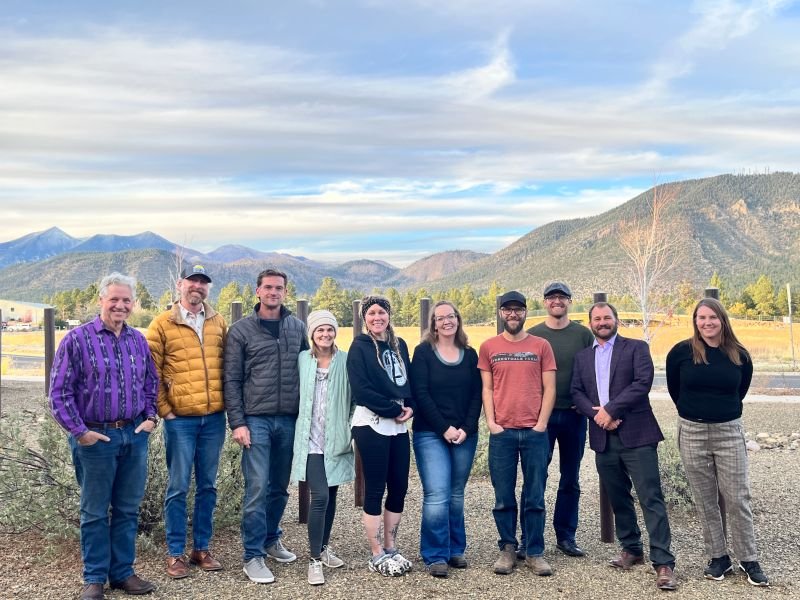
Participants in a recent Flagstaff cohort of Local First Arizona’s Green Business Boot Camp
Rylan Morton-Starner farms two properties: a seven-acre, off-grid parcel outside Flagstaff and a smaller in-town site. For years, the off-grid farm relied on a diesel and propane generator to power pumps and fans for leafy greens and cool-weather crops. The system worked, but fuel costs were high and emissions were unavoidable.
Morton-Starner applied for a Rural Energy for America Program (REAP) grant on his own and used the funding to install a solar array, eliminating fuel costs and emissions at the off-grid site. When federal updates increased REAP reimbursements to 50% for new projects, he began exploring a second, more complex installation at the in-town farm — one that could significantly reduce ongoing utility expenses.

Solar panels doing double duty — generating clean energy while shading crops and making the land work smarter.
To prepare, Morton-Starner enrolled in Local First Arizona’s Green Business Boot Camp, where he deepened his understanding of the REAP process and explored how solar could support both environmental and operational goals. As a regenerative farm already using rainwater catchment and soil health practices, the boot camp helped him evaluate pole-mounted and ground-mounted solar arrays that could also provide crop shade and improve land use.
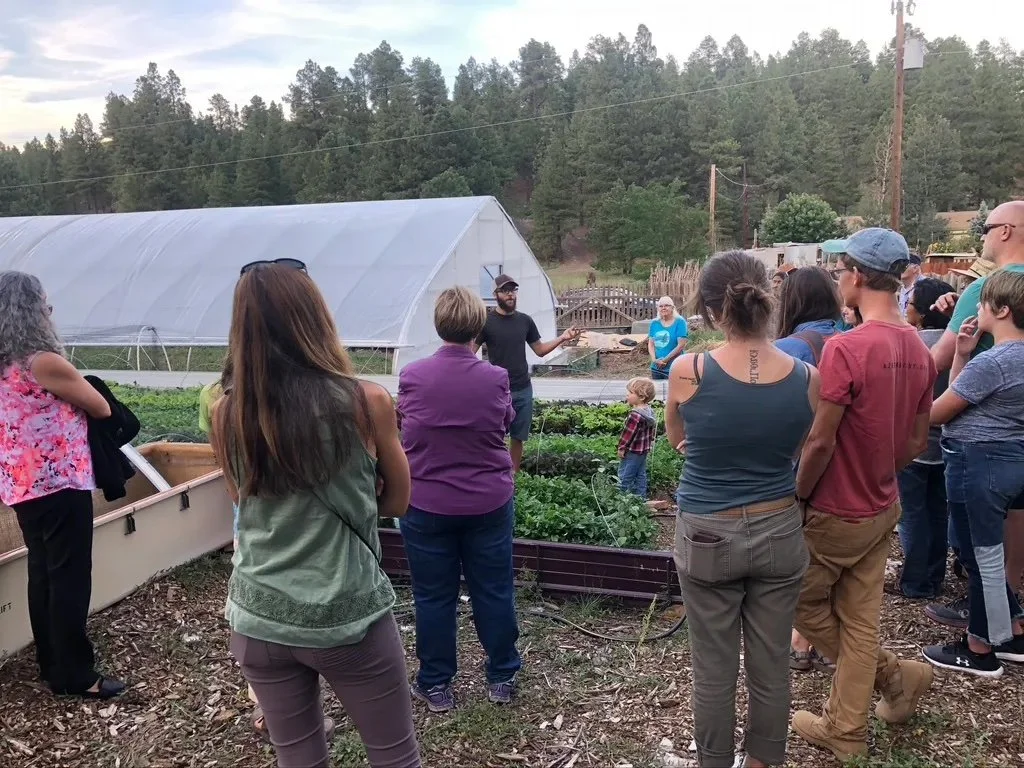
Visitors to Forestdale Farm learn about sustainable agriculture
Compared with his first REAP application, the second project required more detailed planning and documentation. Through the boot camp, Local First Arizona provided hands-on guidance, including grant-writing support at no cost.
“Local First really helped with writing the grant,” Morton-Starner said. “They provided a lot of support.”
Just as critical was access to financing. Because REAP grants operate on a reimbursement basis, businesses must cover upfront project costs. Local First Arizona helped facilitate a low-interest bridge loan through its Green Business Fund, making the project financially viable without adding long-term strain.
“There is traditional financing available, but the terms often don’t work for small businesses,” Morton-Starner said. “With a reimbursement project, high-interest loans just add to the cost. This made it easier and more manageable.”
With financing in place, Forestdale Farm is moving forward on the new array in partnership with Rooftop Solar, with construction expected once winter conditions pass. The system is projected to significantly reduce electricity costs while giving Morton-Starner greater control over operating expenses.
That flexibility matters. In 2025, the cancellation of the federally funded Local Food Purchase Assistance program removed key markets for Forestdale Farm, forcing adjustments to staffing and sales projections. Lower energy costs and improved cash flow now provide a buffer against that volatility.
“It gives me more working capital,” Morton-Starner said. “Not as much will go to utilities, and it opens up more money. The biggest thing is that we’ll be more sustainable in the long run.”
By pairing technical assistance with access to affordable capital, Local First Arizona’s Green Business Boot Camp helps farms like Forestdale translate sustainability into savings — strengthening small agricultural businesses and building long-term economic resilience.
If your rural business wants to lower energy costs or explore federal funding, Local First Arizona can help — at no cost. Reach out to learn more today.
Additional Resources:
Learn more about — and apply for — Local First Arizona’s Green Business Boot Camp
Learn about Local First’s Green Loan Fund
Ready to take your Arizona farm to the next level? Check out the Local First Ag Business Boot Camp