
Commercial Kitchens in Arizona: Where to Find One or Create Your Own
Ever wondered where your favorite farmers market jam is actually made? Or how food trucks and pop-ups get their start?
Across Arizona, food businesses operate in commissary kitchens, shared-use facilities and even home kitchens. But some of the most dynamic food entrepreneurship is happening in community-based kitchens operated by Local First Arizona.
In 2019, Local First launched its Community Kitchen Incubator Program, reducing financial barriers and providing valuable resources to newly established food-based businesses. Designed to support culinary startups — from caterers to beverage makers and everything in between — this two-year program equips food entrepreneurs with the tools and guidance they need to launch and thrive, including guidance on permitting and licensing.
Why Community Kitchens Matter for Food Entrepreneurs
“Many home-based food businesses eventually reach a point where they can’t grow without access to a licensed, commercial kitchen,” said Kimber Lanning, founder and CEO of Local First Arizona. “Storage, industrial equipment, and food safety compliance all become barriers in a home kitchen. Community Kitchens remove those barriers and make it possible for entrepreneurs to grow safely, legally and sustainably.”
Commercial kitchens are expensive to build from scratch, and renting space in an existing one can also be out of reach for many food entrepreneurs. To break down those barriers, Local First Arizona and partner organizations are expanding access to affordable commercial kitchen space so food producers can launch and grow successful businesses.
Local First Arizona’s Community Kitchens: Fostering Growth and Connection
Meeting Entrepreneurs Where They Are
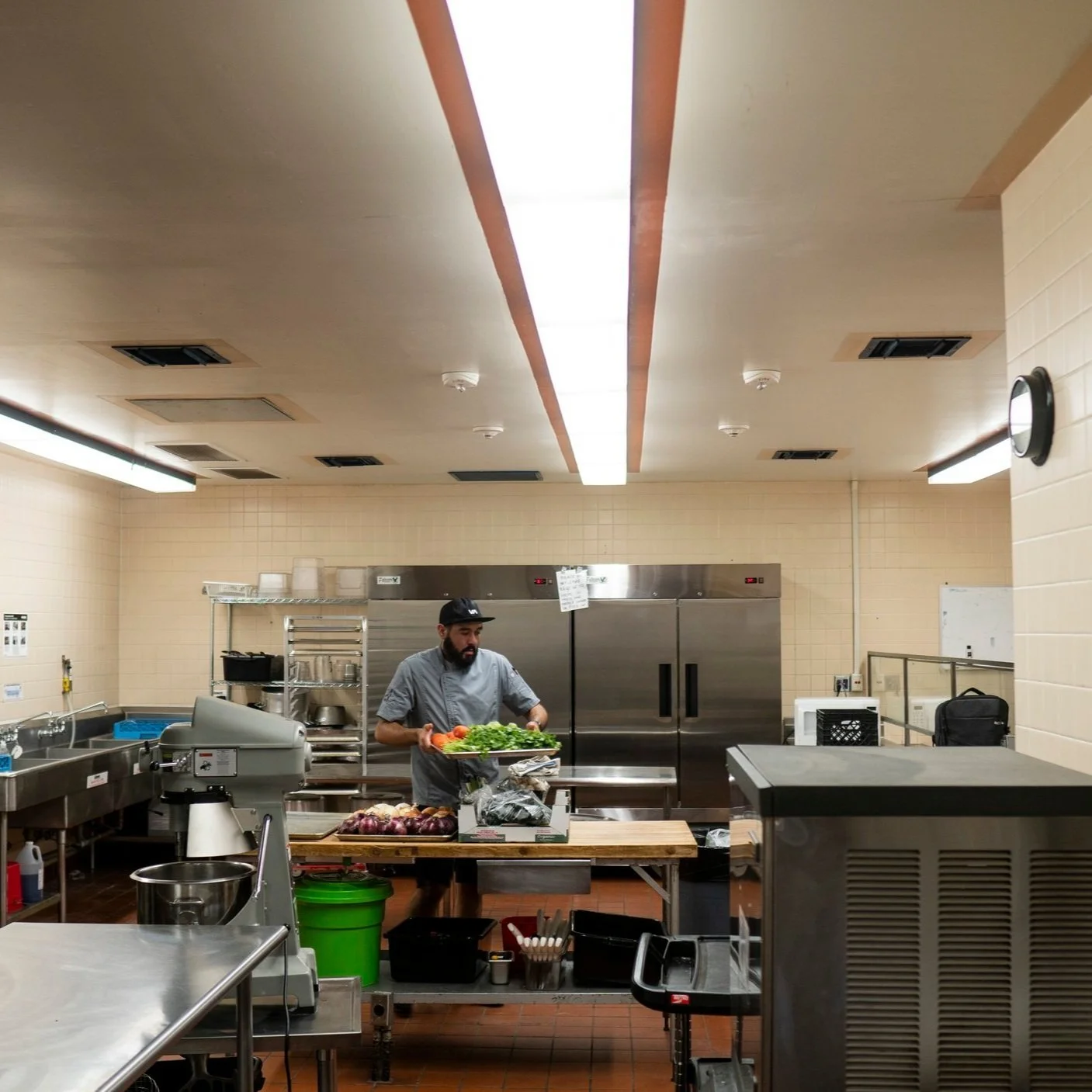
Local First Arizona operates a growing network of shared-use commercial kitchens in Arizona, including locations in Mesa, Maryvale, Eastlake, Glendale and Garfield.The kitchens are available to food entrepreneurs within their first five years of operations who need a low-cost, fully equipped and licensed facility from which to grow their operations.
From Farm to Market: How Local First’s Community Kitchens Help Unlock New Revenue
Local First is ideally positioned to support local growers in bringing value-added, ready-to-eat products to market — products that are often a business’ most profitable.
Just ask the owners of Al Hamka Farm. They enrolled in the Local First Community Kitchen Incubator Program with the aim of turning their farm-grown eggplants and vegetables into products like hummus, dips and baba ganoush to sell at the Downtown Phoenix Farmers Market. Not only did the program allow them to increase production and expand sales to additional farmers markets, it helped connect them with regional food banks, wholesalers and distributors, widening their product reach throughout the Valley.
Local First’s Community Kitchens make production far more accessible for emerging food businesses — just $10 per hour with a 12-hour monthly minimum, compared to $40 or more per hour at most commercial kitchens. They’re also open 24 hours a day, giving entrepreneurs the freedom to produce when it works for them.
More Than a Kitchen: Building Community Around Food
Local First’s Community Kitchens are more than a springboard for regionally-rooted food businesses. The kitchens offer trauma-informed nutrition and cooking classes to local residents, helping to transform the relationship between families and food. Community gardens and food pantry programs operated from the kitchen sites serve as critical lifelines for food security and social connection. Together, these food-centered programs, events and activities promote resilient, self-reliant and sustainable communities.
What’s Included in a Local First Community Kitchen
In addition to affordable hourly rates and extended hours, the Community Kitchens offer:
Large walk-in refrigerators
Food storage areas
Dedicated wash stations
Convection ovens
Gas stoves and grills
Prep rooms, utensils and pots/pans
Wi-Fi
Commercial equipment
A hub of support for burgeoning food businesses
Ready to Launch Your Arizona Food Business?
Consider Applying to the Local First Community Kitchen Incubator Program
Each year, food entrepreneurs from across Arizona apply to join the program and begin building their businesses in Local First’s Community Kitchens. Here’s how to get started:
Apply to the Community Kitchen Incubator Program. Use of Local First’s Community Kitchens is available through the Community Kitchen Incubator Program. Applications are accepted quarterly, with interviews held four times each year.
Complete Good Food Boot Camp. Participants must complete the six-week Good Food Boot Camp before — or while — participating in the incubator. The program is offered in both Spanish and English (English-language classes are delivered virtually, Spanish-language classes are in-person) and covers essential topics such as permitting, purchasing, financing, taxes and day-to-day operations.
Grow Your Business in the Incubator. The two-year Community Kitchen Incubator provides licensed commercial kitchen access along with mentorship, industry connections and operational guidance to help food entrepreneurs build sustainable businesses.
Ready to get started? Submit an application today!
Expanding Access Statewide: Community Kitchen-in-a-Box

In addition to operating its Community Kitchens, Local First Arizona helps communities create their own shared-use kitchens through the Community Kitchen-in-a-Box program. This customized, “train-the-trainer” consultancy equips organizations with the tools, policies and guidance needed to launch a licensed, permitted kitchen to support food entrepreneurs. By adapting Local First’s proven Community Kitchen model to existing facilities, Kitchen-in-a-Box helps communities activate underutilized assets and build stronger, more equitable local food economies.
Other Commercial Kitchen Options in Arizona
In South Tucson, the Pima County Cooperative Extension offers a program called The Garden Kitchen features an onsite commercial kitchen that is free and open to eligible farmers and community members in need of a commercial kitchen to create value-added products.
To be eligible, a percentage of the items made in the kitchen must be sold in Pima County and be available to participants in Supplemental Nutrition Assistance Program (SNAP) or other government nutrition assistance programs. Additionally, kitchen users must have a limited food manufacturers license and food protection management certification, both of which can be obtained through Pima County.
A simple internet search for “commercial kitchen rental” or “shared-use kitchen” will often reveal listings for facilities available in your area (like here and here). Beyond formal listings, creative networking can also uncover opportunities. Restaurants, community centers, churches or culinary spaces may be open to renting their kitchens during off-hours. In some cases, vacant restaurant properties with existing kitchen infrastructure may also be available for lease or temporary use.
Creative Paths to Value-Added Production
Yavapai County cattle rancher Tim Petersen wanted to create value-added products from beef processing byproducts. A repurposed, former restaurant kitchen in Camp Verde served as the perfect location from which to launch his small-batch bone broth operation. Petersen later purchased and upgraded the facility to meet USDA standards, enabling national distribution — a reminder that nontraditional kitchen spaces can become powerful business assets with the right vision and investment.
Need Nutrition Labels? Some Kitchens Can Help
The Garden Kitchen commercial kitchen partners with the University of Arizona Nutritional Sciences Department for food analysis and is able to make nutrition labels for the products created in the kitchen. Those interested can contact Merdith Glaubach at mglaubach@arizona.edu.
Prescott Farmers Market opened their own Community Kitchen by working with Local First Arizona to establish a space built and designed after their successful model. The NoCo Community Kitchen is located in downtown Prescott and is a hub for all the activities and processing needed for growers, producers and food entrepreneurs in the Verde Valley.
Many communities already have underutilized commercial kitchen assets — including kitchens in schools, community colleges, churches, veterans halls and former restaurants — that can be repurposed to support food entrepreneurship. Local First Arizona’s own Community Kitchens have emerged from spaces that were previously sitting unused, demonstrating how existing infrastructure can be activated to strengthen local food economies.
Owning and Operating a Commercial Kitchen
For some businesses, shared kitchens aren’t the right fit — especially when specialized equipment or rural access is required. For a business that may need stone overs for baking bread or large conveyors for cooling tortillas, a shared-use commercial kitchen may not be practical. In rural areas, commercial kitchen options might also be limited or nonexistent. In these cases, owning and operating a commercial kitchen may be a better route.
Commercial kitchens have specific requirements to ensure they meet health and safety standards and to optimize their functionality for efficient food preparation and service. The requirements may vary depending on the location and specific regulations. A commercial kitchen resource guide, such as this one, is a great place to learn about which ones apply to you.
Refurbishing a Commercial Kitchen
Local First Arizona has helped refurbish four of its five available Community Kitchens.
Refurbishing an existing kitchen is often more affordable and practical than building a new facility from scratch. Key considerations include plumbing, fire suppression, and ventilation systems, all of which should be evaluated early by licensed professionals. County environmental services departments can also conduct informal facility reviews before formal permitting, helping identify needed upgrades and avoid costly delays.
When commercial kitchens have the proper capacity and equipment, shared-use models can help offset operating costs while expanding access for other food businesses. Co-packing and shared kitchen models allow more entrepreneurs to enter the market while maximizing community benefit.
Funding Opportunity: Value-Added Producer Grant (VAPG)
The Value-Added Producer Grant Program (VAPG), administered by the Rural Business-Cooperative Service of the U.S. Department of Agriculture, assists agricultural producers to create new value-added products, expand marketing opportunities, and increase producer income. Through a competitive grant process, individual or groups of producers, producer-controlled entities, and farmer or rancher cooperatives can apply for the funding to create or develop value-added, producer-owned businesses.
The VAPG includes planning grants and working capital grants, which can help pay for eligible expenses related to the processing and/or marketing of value-added products. The grant cycle typically opens at the beginning of each year, and applicants have 60 to 90 days to complete and submit their application.
Learn More:
Apply for the Local First Community Kitchen Incubator
Read: Why Invest in the Commercial Kitchen Space
Read: Federal Grant Programs for Shared Use Commercial Kitchens Supporting Local Food Systems