Tucson Zoo Saves 600,000 Gallons of Water Through Green Business Certification Program

The Reid Park Zoo in Tucson doesn’t have a typical water bill, in that the city covers that expense for the nonprofit organization. But, as a conservation-focused organization, zoo leadership still wanted to draw down its water usage even if most of the water it uses is reclaimed.
The elephants alone splash around in a 100,000-gallon pool!
After responding to an invitation by Local First Arizona to pursue Arizona Green Business certification, the zoo invested in water efficiency upgrades that will allow it to save 600,000 gallons of water every year. Jennifer Stoddard, director of education and conservation at the zoo, said being proactive about saving water falls in line with its overall mission.
And, it complements its other sustainability efforts, including becoming the first zoo in the U.S. to introduce a platinum LEED-certified building with its new conservation learning center.

“One of our missions is to inspire guests to protect wild animals and wild places and the way to do that is to be a role model in our community,” Stoddard said. “Through this Green Business Certification, it allowed us to identify additional opportunities to be more sustainable with practices at the zoo. It’s little changes that are really going to amount to a huge water savings difference.”
Local First Arizona's Green Business certification is a self-directed program supported by their sustainability team. Through the certification process, businesses learn and implement the environmental best practices to achieve their organization’s green business goals and help position them as sustainability leaders in their communities.
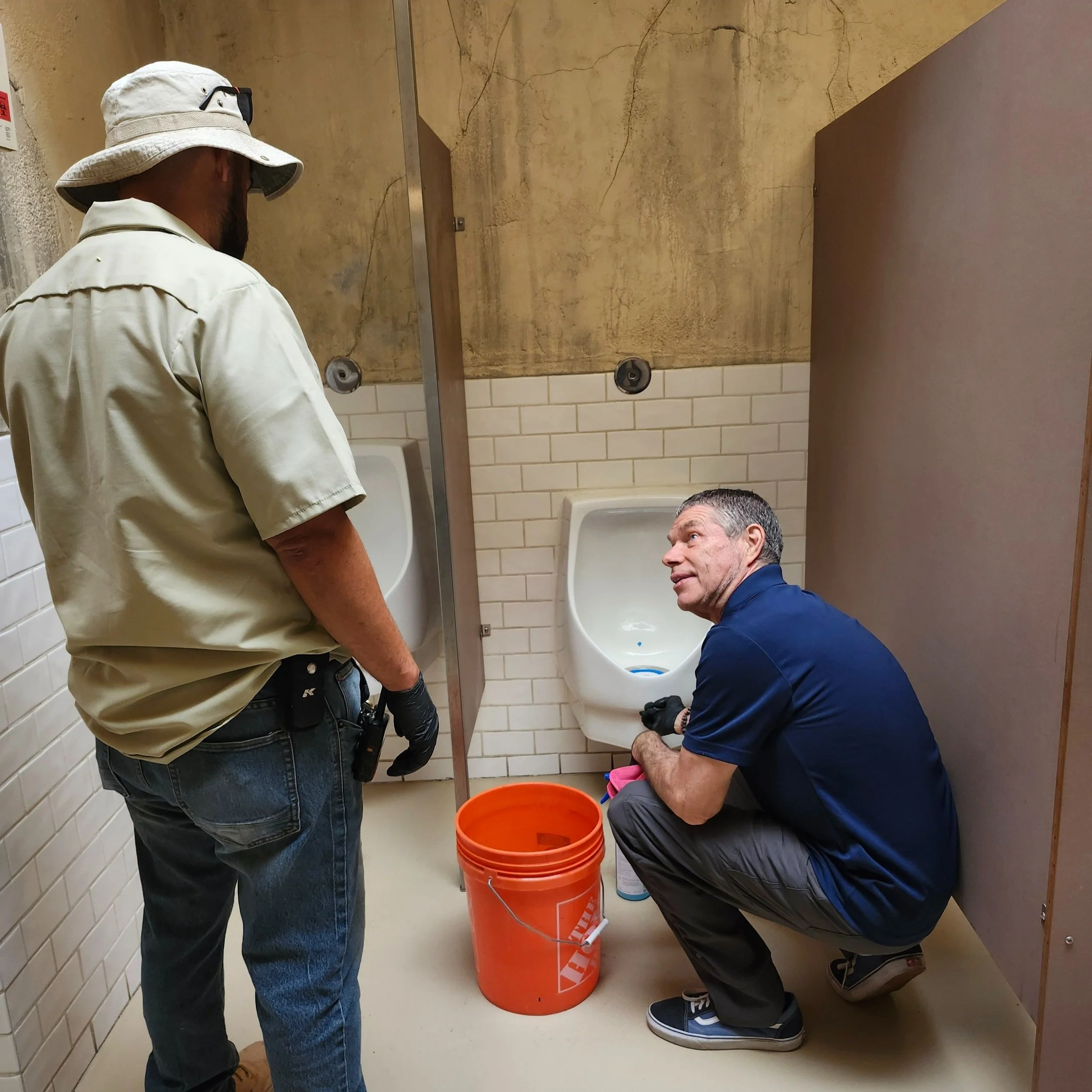
The bulk of the updates for Reid Park Zoo were focused on its public-facing restroom facilities. After undergoing a water audit with Tucson-based Ecoblue, the zoo invested about $40,000 to replace 80 fixtures, from faucets to toilets and urinals. Flow controllers installed on the zoo’s taps have reduced the faucet water usage by 70%. The new high-efficiency toilets use considerably less water than those they replaced. And, the new urinals use no water at all.
Damian Cox, Ecoblue’s owner, said the zoo recouped some of its investment costs thanks to rebates offered by Tucson Water — a utility he labeled as “progressive” in its water efficiency efforts. And as the cost of water has risen over the years, while its availability has diminished, Cox said it has become even more important to maximize efficiencies wherever possible.
“It’s great for Tucson that the zoo is being a good steward of water,” Cox said. “And the Green Business certification is a fantastic program through Local First. It’s been great to make meaningful changes.”
One valuable, and unexpected, benefit of the efficiency updates involves the zoo’s maintenance department, which played a vital role in the changes. Before the faucet and toilet retrofit, zoo restroom fixtures lacked uniformity, meaning repairing a leaking faucet or sourcing parts for a broken toilet often presented a challenge. Now, fixtures and toilets are consistent across the facility, making maintenance relatively seamless.
In addition, the work on the restrooms inspired conservation-minded thinking across other departments at the zoo, including the habitats and pools used by the animals.
“We came up with a system to ensure those pools are clean and meet the animals’ needs but we’re looking at how we might clean and refill them in new ways that save water,” Stoddard said.
Stoddard said those other efforts could net water savings of an additional 600,000 gallons per year.
“We use large amounts of water in some of our exhibits to give the animals the best habitat possible, so it makes these water conservation efforts even more important,” Stoddard said.
Related:
To learn more about Local First Arizona’s Green Business Certification, click here.
Want to support sustainably-minded Arizona businesses and nonprofits? Check out our Green Business Directory!
If your business or nonprofit is interested in identifying funding support for your own sustainability initiatives, download our “How to Fund a Green Project Guide.”