
Tempe Micro Estates are Making Dreams Come True

With home prices soaring and the housing supply shrinking throughout the Phoenix Metro area, the dream of home ownership has become an elusive reality for many potential homebuyers. Home ownership has become especially difficult for those making less than the area median income, which is $79,900 for a family of four according to HUD.
Affordable housing continues to be a persistent issue both locally and nationally for lower wage earners. As highlighted by Harvard University’s State of the Nation’s Housing Report, the level of households who are “housing cost burdened,” or spending 30% to 50% of their income on housing, continues to rise. Similar to the low inventory of real property, tangible solutions to the affordable housing crisis are also in limited supply. Fortunately, sometimes the best ideas are born within the communities that need them the most.
In the fall of 2015, a small group of Arizona State University students were ahead of the curve and started crafting a vision for an Engineering Projects in Community Service Program. After over a year of meetings with the Tempe city staff and city council members, the possibility of this creative blueprint to support the community started to take flight. Soon after, Newtown Community Development Corporation (CDC), a Tempe-based non-profit organization, got involved in helping transform this mission from concept to materiality.
Newtown CDC and 180 Degrees Design + Build submitted a Request For Proposal to develop a vacant lot owned by the City of Tempe. After being awarded the project, coLAb studio joined the team as the architect of record to design an inspirational development project of 13 small, for-sale homes - each 600 sq.ft. - called the Tempe Micro Estates.
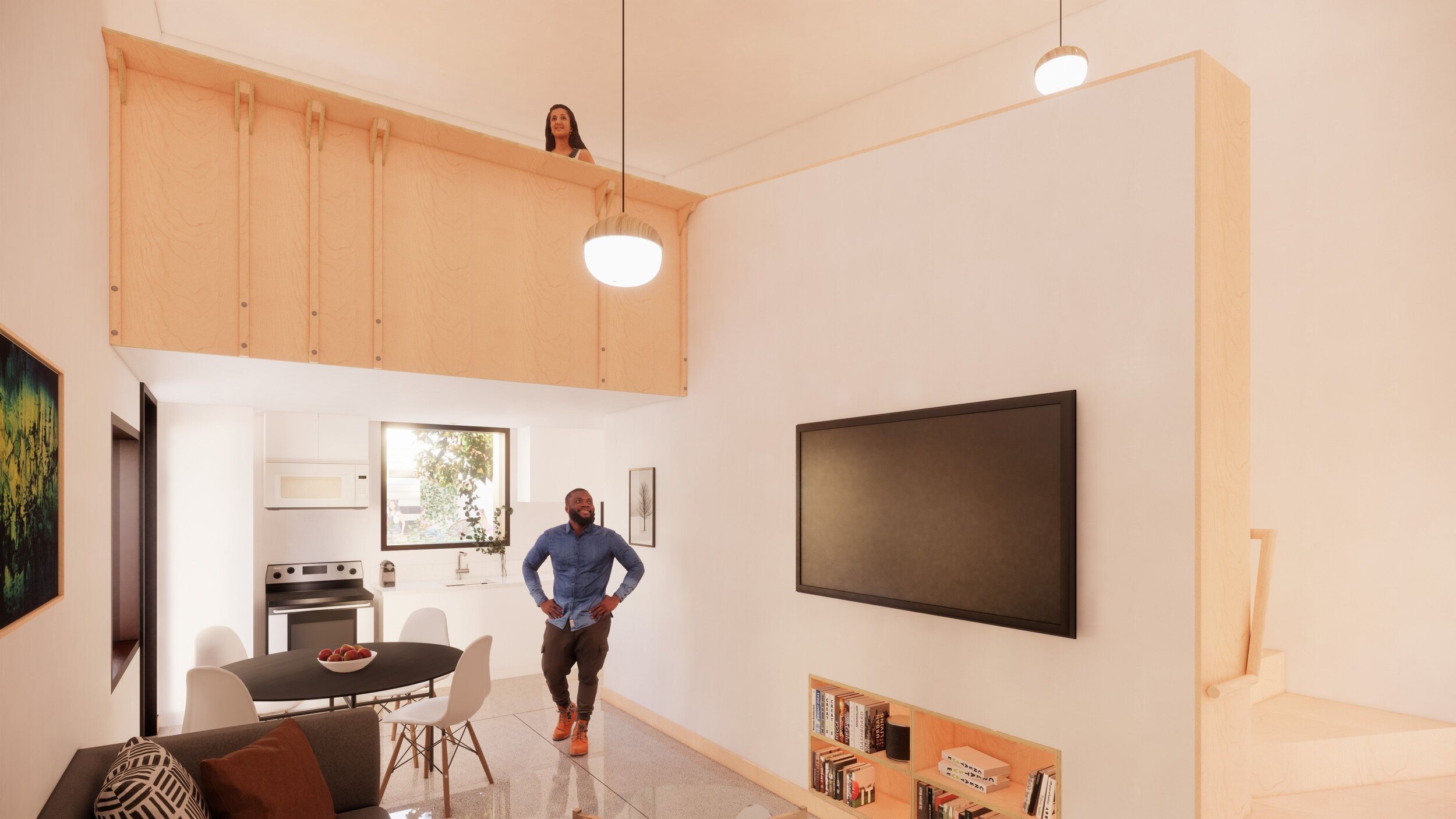
The architecture at Tempe Micro Estates is innovative and modern in its design. It is also sensible to local climate influences with its durable material choices and energy efficient design and construction. The master plan is oriented around community living in a setting that includes a shared garden space as the focal point of the centralized courtyard.
Sustainability was thoughtfully incorporated into the design and function of the residences through the use of material selection, window placement, embodied carbon analysis, solar photovoltaics, a roof water collection site for landscape use and edible gardens. The colors, patterns, materials, and spatial configurations are grounded in biophilic design to promote positive interactions among the residents and immediate environment. For example, each unit features an 'urban camouflage' pattern derived from nature to create visual depth and variety within the community.
These size and energy-efficient, modern homes will be sold for below market value. Homes are priced at as low as $170,000 for those who earn less than 80% of the area median income and $210,000 for higher income earners, (prices are subject to change). Further, the Micro Estates are part of a Community Land Trust, which establishes the homes remain affordable by sharing the property’s appreciation between the owners as proceeds and as a discount to the next buyer. This development in the heart of Tempe can serve as an excellent model for municipalities across the country of simplified and affordable living.
Project Highlights:
Commercial Contractor - 180 Degrees Design + Build
House features include:
600 square feet of living space
One loft bedroom in two-story homes or first-floor bedroom in accessible home
One full-size bathroom
Open-concept kitchen, dining, and living area
Full-size appliances
Private patio and side yard
High-quality, low-maintenance building materials
Water and energy-efficient design
Low heating and cooling needs
Low-waste, low-energy construction
ENERGY STAR® Home Performance certification
Common Room features:
900 square feet of shared space
Indoor and outdoor gathering areas
Community kitchen for hosting events
Laundry facilities with dedicated space for line-drying
Tool library
Book and game library
Community features:
Affordable purchase price and low HOA and land-lease fees
Rainwater harvesting and grey-water reclamation
Environmentally sustainable design


