
Arizona Uses Federal Grants To Protect Gila County Towns From Post-Wildfire Floods

The 2021 Telegraph Fire in the Tonto National Forest (via U.S. Forest Service)
Gila County looks different than it did five years ago. A trio of wildfires since 2019 has reshaped the landscape and created new risk of devastating floods.
To plan for potential hazards, the county is using a federal grant that will give it a new tool to protect structures and save lives should heavy rains in those charred areas create perilous conditions.
The $250,000 Hazard Mitigration Grant through the Federal Emergency Management Agency (FEMA) covers the cost to map the likely future paths of post-wildfire flooding and mudslides, also known as “debris flows.”
It is funded through the federal Bipartisan Infrastructure Law. The grant made it possible for a rural county with a tax base of fewer than 54,000 residents to afford the project.
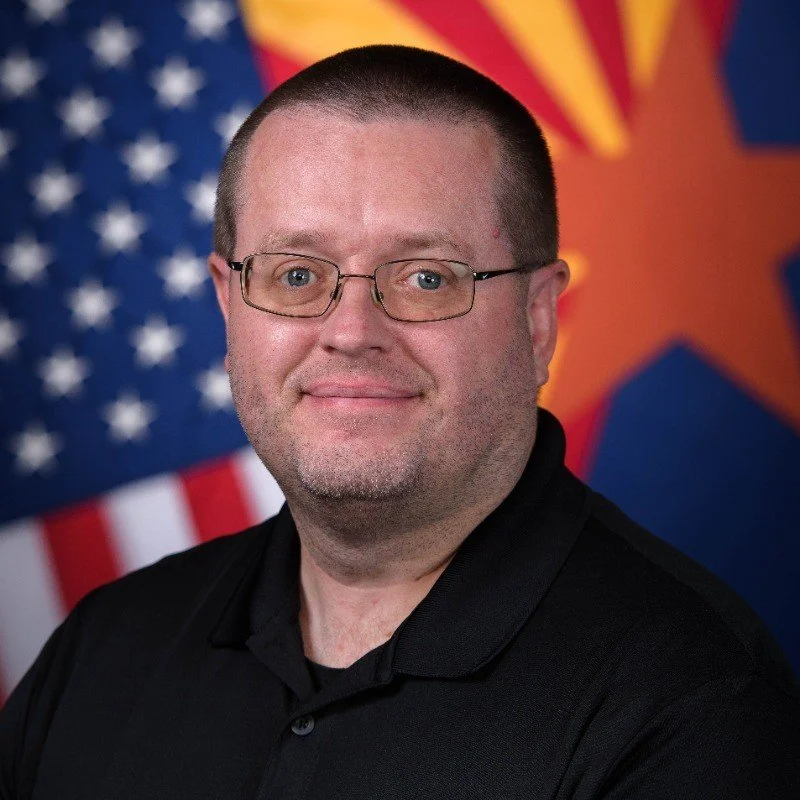
Jacob Roberts, of the Arizona Department of Emergency and Military Affairs
“Most agencies have limited funding. They’re funding for personnel and equipment every year, so things like this sometimes can go on the back burner,” said Jacob Roberts, of the Arizona Department of Emergency and Military Affairs, which applied for the grant. “Additional grant money to help supplement a budget is always welcome.”
Local First Arizona, a statewide economic-development organization, helps rural governments, tribal nations and nonprofits apply for grants like the one funding Gila County’s flood mapping. Arizona communities have received over $80 million with Local First’s help since 2021.
Floods strong enough to carry away vehicles
Many Arizonans are familiar with the devastation a flash flood can bring, especially during monsoon season when heavy rains can create dangerous conditions in areas previously damaged by wildfire.
In recent years, videos have circulated of flash floods in Flagstaff along burn scars that carried away cars, trash bins and mailboxes in raging waters, often mixed with mud, branches and other debris.
Post-wildfire debris mapping, conducted by the Arizona Geological Society, helps municipalities better understand how the landscape has been affected by fire and what measures should be utilized to mitigate risk.
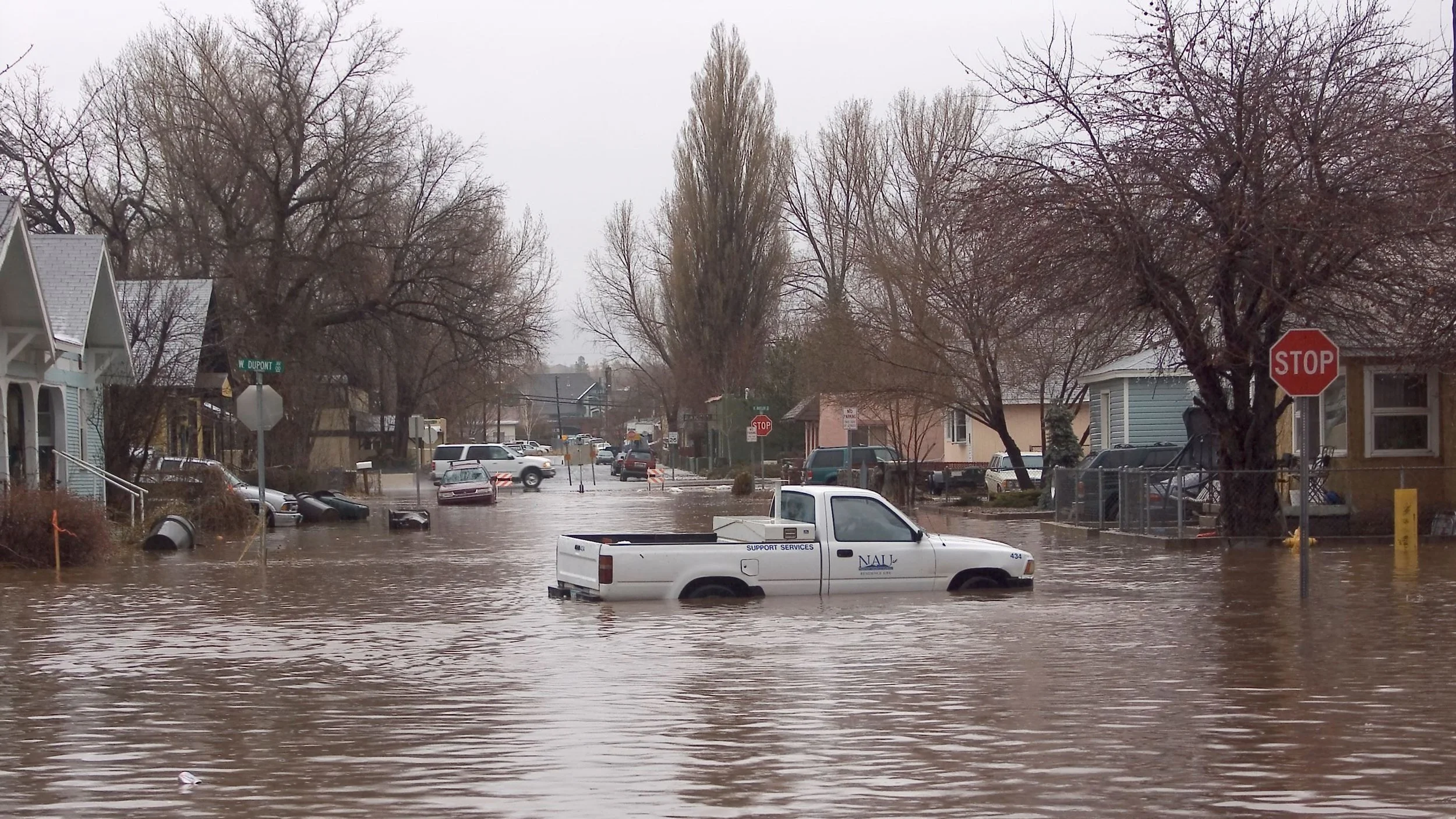
Flash floods swept away cars and damaged homes in Flagstaff after one wildfire (via City of Flagstaff)
Planning ahead to protect Gila County
Counties in Arizona update their hazard mitigation plans every five years, according to Roberts.
Gila County’s most recent plan, created in 2019, did not include post-wildfire debris mapping. Since then, the county experienced the Woodbury Fire in 2019, the Bush Fire in 2020 and the Telegraph Fire in 2021.
The fires collectively burned nearly 500,000 acres, scorching saguaros, trees and buildings and causing evacuations in areas of the Copper Corridor near Apache Lake, El Capitan, Miami, Superior, Tonto National Forest, Top-of-the-World and Tortilla Flat.
The damage dramatically changed what county officials had known about the landscape.

Trees damaged in the Tonto National Forest during the 2019 Woodbury Fire (via U.S. Forest Service)
“Those fires then brought to light that their current flood maps were no longer accurate. It changed the landscape overall,” Roberts said. “They had floods, and that’s what kind of got them motivated to work on this.”
“In Arizona, our emergencies are fire and flooding. I think it’s very important for any community to try to plan ahead,” he added. “Sometimes that flooding can be as much or more destructive than what occurred in the fire. The fire occurs in one spot, but the debris flow can affect that area and everything downstream of where that was. Disasters don’t know county lines or city lines.”
A second grant to protect drivers from highway rock slides
This type of mapping allows the county to update its flood zone maps, which is important for anyone looking to build a new structure. And, it gives the county insight into what structures may now be in harm’s way that previously weren’t, creating opportunities for acquisition or relocation.
“It’s not just saving homeowners money but it’s saving lives as well. We’re trying to build resilience and minimize loss of life,” Roberts said. “Words can’t describe sometimes until you see it. It can take the top soil and plants and everything with it, because the fire has affected the ground itself. It changes everything. You don’t know now where the flow is going to go because it’s altered everything.”
A second federal grant will enable Gila County, along with Pinal and Navajo Counties, to conduct landslide mapping along the U.S. 60 corridor from Florence Junction to Show Low. That $75,000 grant will allow officials to focus on landslide risks along that corridor and find ways to make vulnerable areas safer for motorists.
Jobs created, savings gained
While the projects focus on safety, they also impact local economies.

Gila County will work to protect homes and businesses from floods after fires transformed the landscape (via National Park Service)
Roberts said once grants are awarded, the projects create jobs and offer economic support, both of which are particularly important to more rural areas of the state.
“If a local jurisdiction wants to do a project but doesn’t have the funds, this allows that project to get off the ground, so it does support the local economy because it gets going. That can really make a difference for a smaller town or community with a smaller tax base,” Roberts said. “You’re not just looking at the initial cost to rebuild but also the lost revenue all the way around. The most recent numbers, when they’ve done studies, is for every $1 spent on mitigation, it saves $6 in the future moving forward.”
The Bipartisan Infrastructure Law provides billions of dollars for rural infrastructure, disaster assistance, high-speed internet and more. Also called the Infrastructure Investment and Jobs Act, it was passed by Congress and signed by the president in 2021.
Communities interested in risk mapping funding opportunities can email mitigation@azdema.gov.
Are you a rural Arizona town, tribe or nonprofit? Local First Arizona’s Economic Resource Center may be able to help you find millions of dollars in grants. Visit localfirstaz.com/economic-resource-center to learn more.
